
About John Makini Kapena
Lived 1843 – 1887 (aged 44). John Makini Kapena was a diplomat and politician.
John Mākini Kapena (October 2, 1843 – October 23, 1887) was a politician, diplomat and newspaper editor who served many political roles in the Kingdom of Hawaii. He served as Governor of Maui from 1874 to 1876, Minister of Finance from 1876 to 1878 and again from 1883 to 1886, Minister of Foreign Affairs from 1878 to 1880, Postmaster General from 1881 to 1883 and Collector General of Customs from 1886 to 1887. From 1874 to 1875, he accompanied King Kalākaua on his state visit to the United States to negotiate the Reciprocity Treaty of 1875. In 1882, he traveled to Tokyo as Envoy Extraordinary and Minister Plenipotentiary to the Court of Japan to negotiate Japanese immigration to Hawaii.
Early life and family Born on October 2, 1843, at Lāhainā, on the island of Maui, Kapena was the son of Mākini and High Chiefess Nāʻawa, a relative of the Kalākaua family. He was adopted under the Hawaiian custom of hānai by his uncle Jonah Kapena, an influential statesman, judge and royal advisor since the reign of King Kamehameha III (r. 1825–1854).
Kapena was educated at the Royal School and later at the Oahu College. In 1863 he married Emma Aʻalailoa Malo (1846–1886), the only daughter of early Native Hawaiian historian and Christian minister David Malo and his third wife Rebecca Lepeka. Emma was an accomplished musician and composer and served as an attendant of Princess Liliʻuokalani. Emma died unexpectedly from heart disease on April 18, 1886, at the age of 39.
They had one daughter, Alexandrina Leihulu Kapena (1868–1914). On November 5, 1887, Leihulu married Morris Kahai Keohokālole of Maui. She later divorced Keohokālole and married Henry N. Clark after he divorced his wife Emma Dreier. Leihulu owned property on Hawaii and the mainland United States. She died on March 23, 1914, while living in San Francisco, California. She was the last lineal descendant of David Malo. Leihulu died intestate and her estate was disputed between her widower and her two next of kin: Samuel I. Maikai and David U. K. Maikai (grandsons of John William Elliott Maikai). The Hawaii Supreme Court ruled in favor of her widower as her sole heir.
Editor In 1870, Kapena became the editor of the newspaper Ke Au Okoa, which ran from 1865 until it merged with Ka Nupepa Kuokoa to become Ka Nupepa Kuokoa Me Ke Au Okoa I Huiia in 1873.
Political career Earlier career
During the reign of Kamehameha V (r. 1864–1872), he was commissioned on January 16, 1864, as first lieutenant of the 1st Company of the Yeomanry, a volunteer army regiment in the military of Hawaii.
As part of his first round of political appointments, Kalākaua appointed Kapena as a member of the Privy Council of State and the Governor of Maui, succeeding Paul Nahaolelua, who had resigned the governorship to become Minister of Finance. Kapena served as Governor of Maui from February 23, 1874 until December 15, 1876, when he too resigned the governorship to become Minister of Finance. He was succeeded by William Luther Moehonua as governor. On January 10, 1876, Kapena was appointed by the king to be an official member of the House of Nobles, the upper chamber of the legislature. As a member of the House of Nobles, Kapena served in every legislative session between 1876 and 1886.
From November 17, 1874, to February 15, 1875, Kapena was a member of the Reciprocity Commission and traveled with Kalākaua on his state visit the United States to negotiate the Reciprocity Treaty of 1875.
Kapena held various important cabinet positions during Kalākaua's reign. In 1876, Kapena was appointed to the king's cabinet as Minister of Finance serving alongside three Americans: Henry A. P. Carter, Minister of Foreign Affairs; John Mott-Smith, Minister of the Interior; and Alfred S. Hartwell, Attorney General. He served as the finance minister from December 5, 1876, until Kalākaua demanded the resignation of his entire cabinet in the middle of the night on July 1, 1878. It was widely suspected that Kalākaua's sudden replacement of his cabinet was influenced by American businessman Claus Spreckels, who had refinanced the King's debts the night before in order to secure water rights for his sugarcane plantation on Maui. On July 3, Kapena was appointed as the Minister of Foreign Affairs in a new cabinet with Samuel Gardner Wilder, Minister of the Interior; Simon Kaloa Kaʻai, Minister of Finance; and Edward Preston, Attorney General. Kapena became the first Native Hawaiian to hold the post of foreign minister and the only minister to survive the political shakeup. He held this post from July 3, 1878, to August 14, 1880. During his tenure, the elders (na elemakule) of Tabiteuea in the Gilbert Islands requested annexation to Hawaii. However, Kapena and the king wrote back declining the request due to its political impractically. Other political posts and appointments he held during his political career included Marshal of the Household, member of the Board of Education, Commissioner of Boundaries for Maui, Commissioner of Crown Lands, Commissioner to Codify and Revise Laws and Registrar of Conveyances for Oahu.
Kapena's funeral at St. Andrew's Cathedral the following day was attended by the King, members of the royal family, ranking members of the government and Honolulu society, Viscount Torii and T. Fujita of the Japanese legation, the Lodge Le Progres de L'Oceanie and the Hawaiian Lodge No. 21, F. & A. M., where he was a member. His service was conducted entirely in Hawaiian by Anglican Reverend Alexander Mackintosh with Reverend H. H. Gowen also in the chancel. His daughter Leihulu served as the chief mourner. After the service, a funeral procession brought the hearse carrying his casket to Kawaiahaʻo Church where he was buried with Masonic rites. Kapena was buried next to his wife Emma Malo and his hānai father Jonah Kapena in the Kapena family plot. His grave marker reads, "J. M. Kapena Died Oct 23 1887." Other relatives interred there include Umiuimi, David Kalu and Kahoihoi Pahu.
Don’t just read it —
keep it.
Full-length biographies made to live with: read them, listen on the way to work, watch them tonight.
- E-book
- Audio
- Video
Instant download · yours to keep · every purchase keeps this site free
Important facts
People in John Makini Kapena's life
Named in this biography and alive at the same time


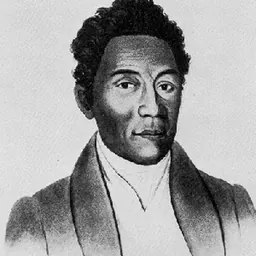

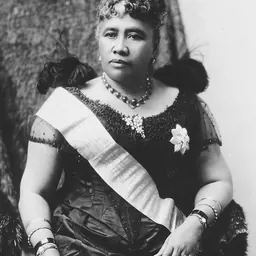

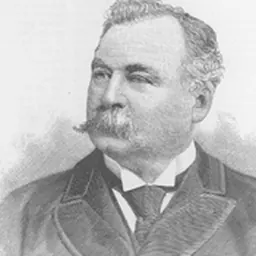

Related people
Same field, nearest in time

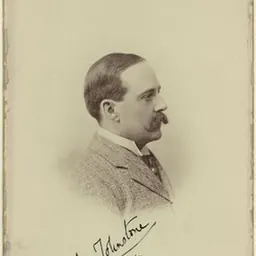
Contemporaries
People whose lives overlapped John Makini Kapena's
Frequently asked questions
Who was John Makini Kapena?
hawaiian politician
When was John Makini Kapena born?
John Makini Kapena was born on 2 October 1843 in Lahaina.
When did John Makini Kapena die?
John Makini Kapena died on 23 October 1887.
What was John Makini Kapena's occupation?
John Makini Kapena was a diplomat and politician.
What nationality was John Makini Kapena?
John Makini Kapena's recorded nationality: Kingdom of Hawaii.
Sources & further reading
· Wikipedia: John Makini Kapena
Cite this page
APA: Biography.guide. (2026). John Makini Kapena. https://biography.guide/john-makini-kapena/
MLA: "John Makini Kapena." Biography.guide, https://biography.guide/john-makini-kapena/.
Chicago: "John Makini Kapena." Biography.guide. https://biography.guide/john-makini-kapena/.
Data last updated: 2026-09-20 · Spot an error? Report a correction.
Page generated 2026-09-27 05:29 UTC