
About John Macoun
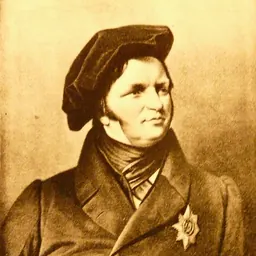
Lived 1831 – 1920 (aged 89). John Macoun was a Canadian botanist, bryologist, naturalist, mycologist, botanical collector and scientific collector.
John Macoun (17 April 1831 – 18 June 1920) was an Irish-born Canadian naturalist.
Early life A plaque in Magheralin dedicated to John MacounMacoun was born in Magheralin, County Down, Ireland in 1831, the third child of James Macoun and Anne Jane Nevin. In 1850, the worsening economic situation in Ireland led his family to emigrate to Canada, where he settled in Seymour Township, Ontario and began farming. Unsatisfied as a farmer, he became a school teacher in 1856. It was during this time that he developed a nearly obsessive interest in botany. Although his formal education was slight, his knowledge and dedication to field work became sufficiently advanced that he gained the notice and respect of several professional botanists. By 1860 he was teaching school in Belleville, and had established correspondence with botanists such as Asa Gray, Sir William Jackson Hooker, George Lawson, and Louis-Ovide Brunet. This allowed him in 1868 to secure a faculty position as a Professor of Botany and Geology at Albert College in Belleville. His marriage on 1 January 1862 to Ellen Terrill of Brighton, Ontario was to lead to two sons and three daughters. His elder son James Melville Macoun was his lifelong assistant. His younger son William Terrill Macoun, became the Dominion Horticulturist for Canada. To this day, over 100,000 samples from his collection of plants are housed in the National Herbarium of Canada, Canadian Museum of Nature, in Ottawa.
Macoun died 18 July 1920 in Sidney, British Columbia, and is interred in Beechwood Cemetery in Ottawa. Macoun marsh, on the cemetery's property, is named for him. Mount Macoun, south of the Rogers Pass is named for him as well.
In 1896, N.L.Britton & A.Brown published Macounastrum (in the family Polygonaceae) in Macoun's honour, this is now a synonym of Koenigia
In 1974 botanist Robert Root Ireland, published Neomacounia nitida, or Macoun's shining moss, which is a moss, that was found only in a small area of Ontario, and the sole species in the genus Neomacounia. This species is the only known endemic Canadian plant to become extinct since the 16th century.
Don’t just read it —
keep it.
Full-length biographies made to live with: read them, listen on the way to work, watch them tonight.
- E-book
- Audio
- Video
Instant download · yours to keep · every purchase keeps this site free
Important facts
People in John Macoun's life
Named in this biography and alive at the same time


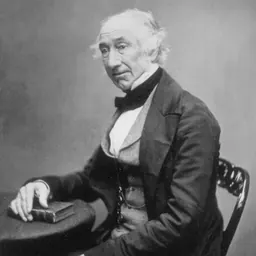
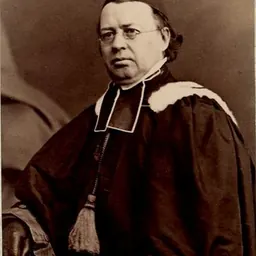



Related people
Same field, nearest in time

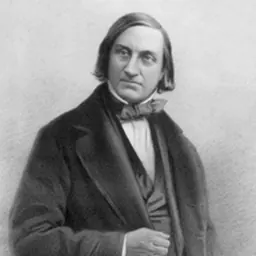

Contemporaries
People whose lives overlapped John Macoun's


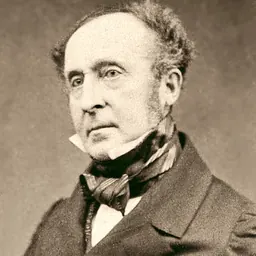
Frequently asked questions
Who was John Macoun?
Canadian botanist (1831-1920)
When was John Macoun born?
John Macoun was born on 17 April 1831 in Magheralin.
When did John Macoun die?
John Macoun died on 18 June 1920 in Sidney.
What was John Macoun's occupation?
John Macoun was a botanist, bryologist, naturalist, mycologist, botanical collector and scientific collector.
What nationality was John Macoun?
John Macoun was Canadian.
Sources & further reading
Cite this page
APA: Biography.guide. (2026). John Macoun. https://biography.guide/john-macoun/
MLA: "John Macoun." Biography.guide, https://biography.guide/john-macoun/.
Chicago: "John Macoun." Biography.guide. https://biography.guide/john-macoun/.
Data last updated: 2026-09-20 · Spot an error? Report a correction.
Page generated 2026-09-27 05:22 UTC