
About John MacBride
Lived 1735 – 1800 (aged 64–65). John MacBride was a British politician and naval officer.
Admiral of the Blue John MacBride ( – 17 February 1800) was a Royal Navy officer and politician who served in the Seven Years' War, American War of Independence and French Revolutionary Wars.
MacBride entered the navy after serving on merchant vessels and distinguished himself in a number of actions during the Seven Years' War, including cutting out a privateer, which secured him the rank of post-captain by the end of the conflict. He was instrumental in establishing and securing a British settlement on the Falkland Islands in the years of peace which followed, and also performed service to the Royal Family by transporting the King's sister, Caroline Matilda. Still in active service by the outbreak of war with the American colonies, MacBride took command of a ship of the line and saw action in engagements under Keppel and Rodney. He was also active against privateers, capturing the Comte d'Artois in a heated battle off the Irish coast. Further service followed with Parker's fleet against the Dutch and with Barrington in the Channel.
MacBride ended the war serving ashore in Ireland, and in 1784 embarked on a political career, becoming MP for Plymouth. Promoted to flag rank with the outbreak of war with Revolutionary France, he commanded squadrons off the enemy coasts, and transported troops to support land operations on the continent. His last active service was in 1795, though he was promoted to Admiral of the Blue shortly before his death in 1800.
Family and early life John MacBride was born in Scotland around 1735, the second son of the Presbyterian minister Robert MacBride. The MacBrides moved to Ireland shortly after John's birth, when Robert became minister of Ballymoney, in County Antrim. John's brother, David MacBride, became a noted medical writer. John MacBride initially went to sea with the merchant service in 1751, and joined the navy as an able seaman three years later, in 1754. He served first aboard the 24-gun in the West Indies for a number of years, before returning to British wars and serving aboard , the flagship in the Downs for a few months. Maidstones captain readily agreed, and at 10 o'clock that night the boats left the British ships and approached the privateer with muffled oars. They came within pistol shot and hailed the French vessel, and on receiving no reply, boarded her. From there he moved to command the sloop on 27 May 1763, still at the rank of commander. After some time spent on the Home station, MacBride received a promotion to post-captain on 20 June 1765, and took command of the 30-gun . This was followed in August 1765 with command of the 32-gun , and a mission to establish a colony on the Falkland Islands.
Falkland Islands MacBride arrived with Jason, and the storeship , in January 1766, with orders to secure a settlement and to inform any existing inhabitants that the islands were a British possession. The British consolidated Port Egmont, made several cruises in the surrounding waters, and in December came across the French settlement. In a cordial meeting MacBride informed the French governor M. de Neville of the British claim, which the French politely rejected. He spent several years aboard Seaford, before transferring to take command of the 32-gun in March 1771, followed by the 32-gun in August that year. He was in command of Southampton in May 1772 when he received orders to command a small squadron tasked with transporting Caroline Matilda, former Queen of Denmark and Norway and sister of King George III, from Elsinore to Stadt. In April 1773 he took command of . During the voyage the British fleet came across a Spanish convoy transporting naval stores from San Sebastián to Cádiz, and engaged it. Instead he reached an agreement with de Lángara, that should the ships encounter a French or Spanish force, he would allow the Fenix to be defended against them. If the Bienfaisant escaped but the Fenix was retaken, de Lángara and his men would consider themselves to still be prisoners of war, but if Fenix escaped and Bienfaisant was taken, then de Lángara and his men would be freed.
MacBride and the Artois connection
Rodney's fleet returned to Britain in March, and MacBride rejoined the Bienfaisant. In early August a large French privateer, the 64-gun Comte d'Artois, was reported to have sailed from Brest to cruise off the Irish south coast. The Charon had only joined the action towards the end of the engagement and had a single man wounded.
In a further coincidence MacBride was appointed in January 1781 to command the 40-gun , a former French ship captured in 1780 by . MacBride served in the North Sea with Sir Hyde Parker's fleet, and fought against the Dutch at the Battle of Dogger Bank on 5 August 1781. Nine men were killed and fifteen wounded on Mars, while 13 were killed and 20 wounded on Hercules. Artois had one man killed and six wounded. MacBride took this opportunity to enter politics, and in 1784 he was elected as MP for Plymouth, holding the seat until 1790. In 1788 he returned to an active, though not a seagoing command, when he took over the Plymouth guardship, the 74-gun .
Following this service he took command of a small squadron in the Western Approaches, flying his flag in a number of different vessels, including the sloop , the 74-gun and the 64-gun . The squadron did not achieve any significant successes, and MacBride had the misfortune to break his leg while mounting his horse, forcing him to temporarily relinquish his duties. He was promoted to Rear-Admiral of the Red on 11 April 1794 and on 4 July to Vice-Admiral of the Blue. Promoted to Vice-Admiral of the White on 1 June 1795, MacBride became commander of the squadron in the North Sea assigned to watch the Dutch fleet in the Texel, flying his flag in the 74-gun . He stepped down from the post in late 1795, and was not actively employed at sea again. He was promoted to Admiral of the Blue on 14 February 1799. Admiral John MacBride died of a paralytic seizure at the Spring Garden Coffee House, London on 17 February 1800.
Family and issue MacBride married early in his career, but no details are known, other than that his wife was the daughter of a naval officer. She is presumed to have died, for MacBride married Ursula Folkes, eldest daughter of William Folkes of Hillington Hall, Norfolk on 14 July 1774. Their son, John David MacBride, became principal of Magdalen Hall, Oxford. MacBride's daughter, Charlotte, married Admiral Willoughby Lake in 1795.
Don’t just read it —
keep it.
Full-length biographies made to live with: read them, listen on the way to work, watch them tonight.
- E-book
- Audio
- Video
Instant download · yours to keep · every purchase keeps this site free
Important facts
People in John MacBride's life
Named in this biography and alive at the same time


Related people
Same field, nearest in time


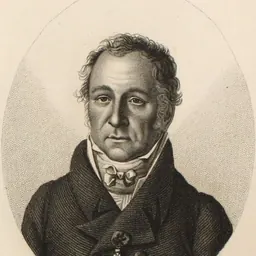

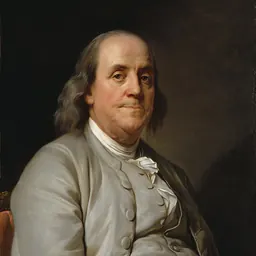
Contemporaries
People whose lives overlapped John MacBride's






Frequently asked questions
Who was John MacBride?
British officer of the Royal Navy and politician (1735-1800)
When was John MacBride born?
John MacBride was born in 1735 in Scotland.
When did John MacBride die?
John MacBride died on 17 February 1800 in London.
What was John MacBride's occupation?
John MacBride was a politician and naval officer.
What nationality was John MacBride?
John MacBride was British.
Sources & further reading
· DBpedia: John MacBride (Royal Navy officer)
Cite this page
APA: Biography.guide. (2026). John MacBride. https://biography.guide/john-macbride-politician/
MLA: "John MacBride." Biography.guide, https://biography.guide/john-macbride-politician/.
Chicago: "John MacBride." Biography.guide. https://biography.guide/john-macbride-politician/.
Data last updated: 2026-09-20 · Spot an error? Report a correction.
Page generated 2026-09-27 05:20 UTC