
John Ligonier, 1st Earl Ligonier
British field marshal;
About John Ligonier, 1st Earl Ligonier
Lived 1680 – 1770 (aged 89). John Ligonier, 1st Earl Ligonier was a British politician, military personnel and general field marshal.
Field Marshal John Ligonier, 1st Earl Ligonier, (born Jean Louis de Ligonnier; 7 November 168028 April 1770), styled Sir John Ligonier from 1743 to 1757, was a British army officer and politician who served in the English and British armies for more than half a century. In 1757, he was appointed Commander-in-chief and raised to the peerage as Viscount Ligonier in 1757, and in 1766, further elevated as Earl Ligonier.
Ligonier was a Huguenot refugee who fled his native Castres for England in 1697, following the 1685 Edict of Fontainebleau, which stripped the rights of French Protestants to practice their religion. He joined the British Army in 1702 as a volunteer and remained dedicated to the British cause for the next six decades. He fought in the European wars of the Spanish Succession, of the Quadruple Alliance, and of the Austrian Succession. During the Seven Years' War, he also served as Master-General of the Ordnance, effectively acting as Minister of War for the Pitt–Newcastle ministry. He retired from active duty in 1763 and died at his home in London on 28 April 1770.
He sat in the House of Commons of Great Britain for Bath from 1748 to 1763 and served as Governor of Guernsey from 1750 to 1752.
Early life and family John Ligonier was born Jean-Louis de Ligonnier in Castres, Languedoc, the second son of Louis de Ligonnier, sieur de Montcuquet, and Louise de Ligonnier, daughter of Louis du Poncet. His parents were married on 28 March 1677 at Roquecourbe. His grandfather built the family's hôtel particulier, , in Castres. Louis de Ligonnier died around 1690. In 1697, he became the first of Louis' three younger sons who left for England, where they altered their name to Ligonier.
His younger brother Antoine de Ligonnier followed in 1698. He served in several of the Duke of Marlborough's campaigns during the War of the Spanish Succession and died unmarried in 1767, with the rank of major. His youngest brother , François-Auguste de Ligonnier, emigrated in 1710.
Their eldest brother, Abel de Ligonnier (1669-1769), inherited his father's estates and stayed in Castres. He married Louise de Boileau, daughter of Jacques de Boileau de Castelnau, sister of Huguenot refugee Charles Boileau, the progenitor of the Boileau family in Britain, many of whom served in the British Army. Abel was recorded living in France as late as 1769.
Military career
In 1702, Ligonier volunteered to join a regiment in Flanders commanded by Lord Cutts. he commanded a company at the battles of Schellenberg in July 1704 where he led the storming of the covered way as well as Ramillies in May 1706, In 1712, he became governor of Fort St. Philip, Menorca. major general in 1739, and George II made him a Knight of the Bath on the field of Dettingen in June 1743. In November 1745, he led a column of troops sent to Lancashire to oppose the rebels. Having been promoted to the rank of general of horse on 3 January 1746, he was placed at the head of the British and British-paid contingents of the Allied army in the Low Countries in June 1746.
He was present at Rocoux in October 1746 and, having been made Lieutenant-General of the Ordnance on 19 March 1747, he fought at Lauffeld in July 1747, where he led the charge of the British cavalry. In this encounter his horse was killed and he was taken prisoner by Louis XV, but was exchanged within a few days. The official despatch reported:it is impossible to commend too much the conduct of the generals both horse and foot. Sir John Legonier, who charged at the head of the British dragoons with that skill and spirit that he has shown on so many occasions, and in which he was so well seconded...
On 6 April 1750 he was appointed Governor of Guernsey and on 3 February 1753 he became colonel of the Royal Horse Guards.
Seven Years' War
In September 1757, following the disgrace of the Duke of Cumberland who had signed the Convention of Klosterzeven, Ligonier was made Commander-in-Chief of the Forces. Colonel of the 1st Regiment of Foot Guards on the same date He was notionally given command of British forces in the event of a planned French invasion in 1759 though it never ultimately occurred.
Fort Ligonier, commanded by Lord Ligonier from 1758 to 1766, became the permanent settlement of Ligonier, Pennsylvania and lent its name to Ligonier Valley and Ligonier Valley Railroad. After extensive excavations, Fort Ligonier was reconstructed in 1954 and was added to the National Register of Historic Places.
Retirement
Ligonier spent his later years at Cobham Park in Cobham, Surrey, which he bought around 1750. He died, still unmarried, on 28 April 1770 and was buried in Cobham Church. There is a monument to him, sculpted by John Francis Moore in Westminster Abbey.
The earldom became extinct but the Irish viscountcy and Cobham Park passed to his nephew Edward (son of his younger brother Francis), who would also be created Earl Ligonier in the Peerage of Ireland six years later.
Don’t just read it —
keep it.
Full-length biographies made to live with: read them, listen on the way to work, watch them tonight.
- E-book
- Audio
- Video
Instant download · yours to keep · every purchase keeps this site free
Important facts
People in John Ligonier, 1st Earl Ligonier's life
Named in this biography and alive at the same time



Related people
Same field, nearest in time


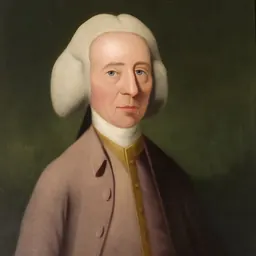

Contemporaries
People whose lives overlapped John Ligonier, 1st Earl Ligonier's

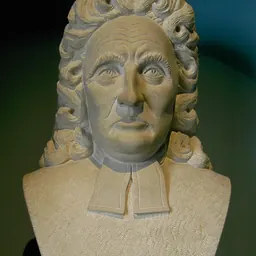


Frequently asked questions
Who was John Ligonier, 1st Earl Ligonier?
British field marshal; (1680-1770)
When was John Ligonier, 1st Earl Ligonier born?
John Ligonier, 1st Earl Ligonier was born on 7 November 1680 in Castres.
When did John Ligonier, 1st Earl Ligonier die?
John Ligonier, 1st Earl Ligonier died on 28 April 1770 in Cobham.
What was John Ligonier, 1st Earl Ligonier's occupation?
John Ligonier, 1st Earl Ligonier was a politician, military personnel and general field marshal.
What nationality was John Ligonier, 1st Earl Ligonier?
John Ligonier, 1st Earl Ligonier was British.
Sources & further reading
· Wikipedia: John Ligonier, 1st Earl Ligonier
· DBpedia: John Ligonier, 1st Earl Ligonier
Cite this page
APA: Biography.guide. (2026). John Ligonier, 1st Earl Ligonier. https://biography.guide/john-ligonier-1st-earl-ligonier/
MLA: "John Ligonier, 1st Earl Ligonier." Biography.guide, https://biography.guide/john-ligonier-1st-earl-ligonier/.
Chicago: "John Ligonier, 1st Earl Ligonier." Biography.guide. https://biography.guide/john-ligonier-1st-earl-ligonier/.
Data last updated: 2026-09-20 · Spot an error? Report a correction.
Page generated 2026-09-27 05:28 UTC