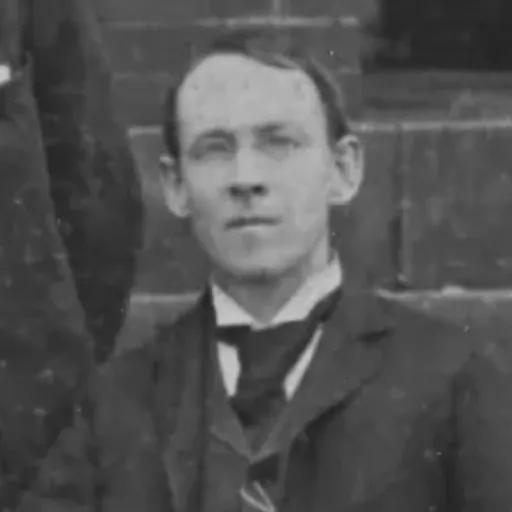
About John Lesslie Hall
Lived 1856 – 1938 (aged 81–82). John Lesslie Hall was an American historian.
John Lesslie Hall (March 2, 1856 – February 23, 1928), also known as J. Lesslie Hall, was an American philologist and translator known primarily for his 1892 verse translation of Beowulf and role as one of the "Seven Wise Men" who helped revive the College of William & Mary after its closure in the early 1880s. He spent nearly forty years on the faculty of William & Mary, serving as professor of English and History, head of the English department and dean of the faculty.
Hall was awarded an honorary degree from William & Mary in 1921. Today, his portrait hangs in the Botetourt Gallery in the college's Swem Library.
Early life and education Hall was born on March 2, 1856, in Richmond, Virginia, the son of Jacob Hall Jr. and great-grandson of Richard Channing Moore, the second bishop of the Episcopal Diocese of Virginia. As a child, he experienced the Siege of Richmond during the American Civil War and would tell his son the he recalled encounters with Robert E. Lee. In the preface for his translation, he thanked famed philologist Francis March and Anglo-Saxon poetry professor James A. Harrison for "advice, sympathy, and assistance."
Career
College of William & Mary St. George Tucker House, Hall's initial residence in Williamsburg In 1888, Hall was recruited by newly appointed college president Lyon Gardiner Tyler to join the reopened College of William & Mary as professor of English and History, a position he accepted while still a doctoral candidate at Johns Hopkins.
When the college curriculum was reorganized in 1898, Hall shifted to teaching English Language and Literature and General History. The translation was noted in Chauncey Brewster Tinker's The Translations of Beowulf: A Critical Bibliography (1903), which described it as faithful in style yet not strictly literal, with a deliberate archaic tone: + Grendel reaches Heorot: Beowulf 710–714 Old English verse Hall's verse Ðá cóm of móre under misthleoþum Grendel gongan· godes yrre bær· mynte se mánscaða manna cynnes sumne besyrwan in sele þám héan· ’Neath the cloudy cliffs came from the moor then Grendel going, God’s anger bare he. The monster intended some one of earthmen In the hall-building grand to entrap and make way with; As the product of an American academic and presented as a Johns Hopkins doctoral dissertation, it contributed to the growing engagement with Anglo-Saxon literature in United States higher education. Hall also co-authored an Anglo-Saxon grammar and contributed original poetry written in the style of Old English verse.
Personal life In 1889, Hall married Margaret Fenwick Farland, of Tappahannock, Virginia. They had four children: three sons—Channing Moore, John Lesslie Jr., and Joseph Farland—and one daughter, Sarah Moore.
Death and legacy Hall died on February 23, 1928, at his home in Williamsburg, Virginia. He was buried in Hollywood Cemetery in Richmond. Hall was explicit about his ambitions: he aspired for Beowulf to achieve among English-speaking readers the familiarity of the Iliad, and he believed the poem's martial grandeur demanded verse rather than the prose renderings that had preceded him. Later criticism has generally focused on this choice. Compared to translations that followed in the twentieth century, including Seamus Heaney's widely acclaimed 1999 version, Hall's rendering is typically described as wooden, its archaisms creating distance rather than intimacy, and its alliterative regularity at times flattening the dramatic tension of the original narrative. Yet for scholars interested in the history of translation, Hall's version remains useful precisely for its literalism and structural fidelity, and it continues to circulate freely as a public-domain text through Project Gutenberg and LibriVox, and is the version used by Standard Ebooks.
For William & Mary, Hall's significance cannot be overstated. As one of the "Seven Wise Men," he helped transform an underfunded institution on the edge of closure into a functioning liberal arts college, and his long service as Dean of the Faculty gave him an administrative influence over the university's institutional culture that few of his contemporaries matched.
Selected works (tr.) Beowulf: An Anglo-Saxon Epic Poem (D. C. Heath, 1892) Judas: A Drama in Five Acts (H. T. Jones, 1894) (tr.) Judith, Phœnix, and Other Anglo-Saxon Poems (Silver, Burdett and Company, 1902) Old English Idyls (Ginn & Company, 1899), original poems in the style of Old English verse Half-hours in Southern History (B. F. Johnson Publishing Co., 1907) English Usage: Studies in the History and Uses of English Words and Phrases (Scott, Foresman and Company, 1917)
Don’t just read it —
keep it.
Full-length biographies made to live with: read them, listen on the way to work, watch them tonight.
- E-book
- Audio
- Video
Instant download · yours to keep · every purchase keeps this site free
Important facts
People in John Lesslie Hall's life
Named in this biography and alive at the same time





Related people
Same field, nearest in time

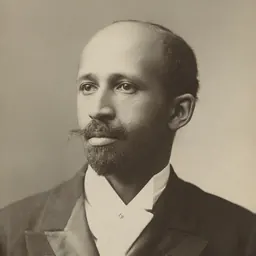
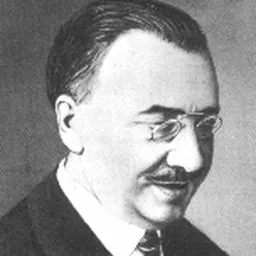
Contemporaries
People whose lives overlapped John Lesslie Hall's
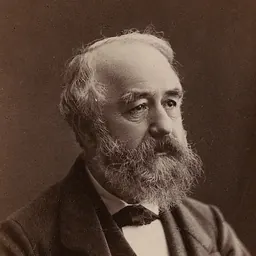

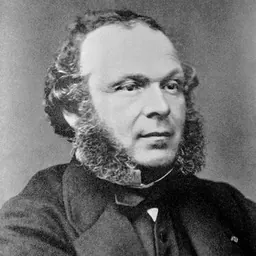

Frequently asked questions
Who was John Lesslie Hall?
American historian and literary scholar (1856–1938)
When was John Lesslie Hall born?
John Lesslie Hall was born on 2 March 1856.
When did John Lesslie Hall die?
John Lesslie Hall died in 1938.
What was John Lesslie Hall's occupation?
John Lesslie Hall was a historian.
What nationality was John Lesslie Hall?
John Lesslie Hall was American.
Sources & further reading
· Wikipedia: John Lesslie Hall
Cite this page
APA: Biography.guide. (2026). John Lesslie Hall. https://biography.guide/john-lesslie-hall/
MLA: "John Lesslie Hall." Biography.guide, https://biography.guide/john-lesslie-hall/.
Chicago: "John Lesslie Hall." Biography.guide. https://biography.guide/john-lesslie-hall/.
Data last updated: 2026-09-23 · Spot an error? Report a correction.
Portrait: Wikimedia Commons · author & licence
Page generated 2026-09-27 05:04 UTC