
About John Lee
Lived 1733 – 1793 (aged 60). John Lee was a British politician and barrister.
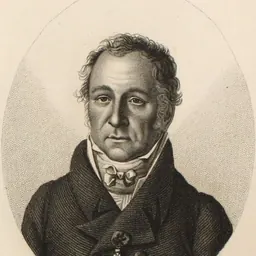
John Lee, KC (6 March 1733 – 5 August 1793), was an English lawyer, politician, and law officer of the Crown. He assisted in the early days of Unitarianism in England.
Early life
Born in Leeds, Yorkshire, on 6 March 1733, he was one of eight sons and ten children of cloth merchant Thomas Lee and his wife, Mary (née Reveley). After his father died in 1736 he was mainly brought up by his mother, a Dissenter and friend of Thomas Secker, later Archbishop of Canterbury, who died in 1750. In the Wilkite agitation of that year around the Society of Gentlemen Supporters of the Bill of Rights, Rockingham brought Lee and Alexander Wedderburn to Wentworth, to steer a moderate course, and in mid-September they found a precedent from 1701 for a petition to the Crown to dissolve parliament.
In 1779 Lee was one of the counsel for Admiral Augustus Keppel, 1st Viscount Keppel when he was tried by court-martial for his conduct in the Battle of Ushant. The trial in Portsmouth was politicised, Keppel being a Whig, and his second-in-command, Sir Hugh Palliser, a Tory, acting for the prosecution. When Keppel's name was cleared, Lee took no fee, but Keppel gave him his own portrait, painted by Sir Joshua Reynolds. In 1780 Lee became a king's counsel. Known at the bar as "honest Jack Lee", he was distinguished for his integrity, and amassed a large fortune. Lister was a Whig, Assheton Curzon a Tory ministerialist, and when the two came to an agreement in 1790 to share the double-member seat, Lee lost out. It meant he had no seat in the 1790 British general election. Later that year, he was brought in for Higham Ferrers by the Whig magnate William Fitzwilliam, 4th Earl Fitzwilliam at a by-election, Viscount Duncannon preferring Knaresborough. He then sat for that constituency till he died. He was buried at Staindrop Church, County Durham. A bust of Lee by Nollekens had already appeared in The Rockingham Mausoleum.
Lee had married in 1769 Mary Hutchinson (1734–1812), daughter of William Hutchinson of Staindrop, and obtained a house and estate there. They had a daughter, Mary Tabitha (1777–1851).
Associations Joseph Priestley and Richard Price were among Lee's friends, and he associated with pro-Americans and radicals. On a later Franklin visit, that of 1773–5, Lee was one of those who met in Ludgate Hill, at the London Coffee House. It was the so-called "fortnight club".
In Franklin's Privy Council hearing of 1774, over the Hutchinson letters affair, Lee acted as his counsel, as second to John Dunning. With Thomas Townshend, Lee was attacked in 1775 by John Shebbeare writing as a government hack for Lord North's administration.
Religious views and Essex Street Chapel By family background in Leeds, Lee was associated with Mill Hill Chapel, which was de facto Unitarian. His own views were influenced by his friend Priestley. He was a sympathetic adviser to the promoters of the Feathers Tavern petition of 1772 to Parliament, asking for lifting of restrictions on religious dissenters.
A leading figure in the petition was Theophilus Lindsey, a priest of the Church of England, who in 1773 resigned his Yorkshire living because of religious scruples of conscience, a step against Lee's wishes because the chances were his replacement would be High Church or an evangelical, rather than a liberal. In 1774 Lee helped Lindsey establish the first avowedly Unitarian congregation in England. It was Lord Shelburne, a financial backer, who directed Lee, and Sir George Saville, towards Lindsey's Unitarians. Before the 1813 Act it was illegal to deny the doctrine of the Trinity, but the temper of the times allowed for some latitude. Lee persuaded the relevant London justices to register the Essex Street Chapel at Hicks Hall, and attended Lindsey's inaugural sermon. In 1775, Lee, Lindsey and his wife and Priestley were meeting regularly on Sunday mornings.
Lee was known as a nonconformist. With Sir William Fowle Middleton, 1st Baronet, he voted in parliament in 1789 for legal relief for dissenters, when the Test Acts and Corporation Act were debated.
Later years In 1779 Burke consulted Lee on his own affairs, and a case concerning the Irish army officer Bigoe Armstrong (died 1794). With Charles James Fox and others, Lee worked successfully for the release of John Trumbull, during the American Revolutionary War. In the small group of Rockingham Whigs involved in the Yorkshire Association petition of early 1780, with Shelburne, Burke, Keppel and George Byng, he wrote again to Christopher Wyvill in support of the Association in 1782.
John Burgoyne, on parole in England after his capture by the Continental Army, was summoned back to America in 1781 (apparently tit-for-tat, in relation to the detention in the Tower of London of Henry Laurens. The advice of Lee and Charles James Fox led to an appeal to Benjamin Franklin, carried out by Burke.
In Fytch's Case, Lee won the case, on a resignation bond given for a church living, in the Court of Common Pleas in 1782 against the Bishop of London, on behalf of Lewis Disney Fytche. The decision was reversed on appeal.
Samuel Heywood was one of Lee's friends from the Northern Circuit. In 1783, Lee represented the owners of the slave ship Zong in court, after its owners tried to force their insurers to pay them for the loss of 132 slaves murdered by the ship's crew. His legal argument invoked the concept of chattel slavery and became notorious in abolitionist circles; it cannot be taken as his personal view, and the same goes for Heywood, another dissenter on the insurers's legal team.
Don’t just read it —
keep it.
Full-length biographies made to live with: read them, listen on the way to work, watch them tonight.
- E-book
- Audio
- Video
Instant download · yours to keep · every purchase keeps this site free
Important facts
People in John Lee's life
Named in this biography and alive at the same time



Related people
Same field, nearest in time



Contemporaries
People whose lives overlapped John Lee's






Frequently asked questions
Who was John Lee?
English lawyer, politician, and law officer of the Crown; (1733-1793)
When was John Lee born?
John Lee was born on 6 March 1733.
When did John Lee die?
John Lee died on 5 August 1793.
What was John Lee's occupation?
John Lee was a politician and barrister.
What nationality was John Lee?
John Lee was British.
Sources & further reading
· DBpedia: John Lee (Attorney-General)
Cite this page
APA: Biography.guide. (2026). John Lee. https://biography.guide/john-lee-politician/
MLA: "John Lee." Biography.guide, https://biography.guide/john-lee-politician/.
Chicago: "John Lee." Biography.guide. https://biography.guide/john-lee-politician/.
Data last updated: 2026-09-20 · Spot an error? Report a correction.
Page generated 2026-09-27 05:18 UTC