
About John Lanigan
Lived 1758 – 1825 (aged 66–67). John Lanigan was an Irish historian, theologian, church historian and hebraist.
John Lanigan (1758 – 7 July 1828) was an Irish historian. Born in County Tipperary, he studied at the Irish College in Rome. He was a professor at the University of Pavia, where he earned a Doctor of Divinity degree. When Napoleon's army took the city, he lost most of his possessions, and returned to Ireland destitute. Lanigan found difficulty obtaining a clerical appointment due to suspicions of having Jansenist sympathies. He became sub-librarian at the Royal Dublin Society and was involved in the literary life of the city.
Lanigan is most known for his massive and detailed work The Ecclesiastical History of Ireland, published in four volumes.
Life John Lanigan was born in 1758 in Cashel, County Tipperary, Ireland, the eldest of sixteen children born to Thomas and Mary Anne (Dorkan) Lanigan. His father was a schoolmaster. He received his early training from his father and in a private Protestant Classical school at Cashel, similar Catholic schools being forbidden in Ireland at that time by law.
He decided to become a priest, and was encouraged by James Butler. In 1776, at the age of sixteen, on the recommendation of James Butler, Archbishop of Cashel, Lanigan received a burse to study at the Irish College at Rome. He sailed from Cork to London, where he was robbed of his money by a fellow-passenger; but fortunately a priest afforded him a refuge in his house until a remittance from home enabled him to continue his journey to Rome.
In Italy, he found inspiration in the scholarship and ideals of Muratori. Along with his classmate Charles O'Conor (1764-1828), he joined the Academy of Cortona, which promoted the study and archeology of Etruscan culture. Cortona was a centre of Jasenism, a controversial religious movement founded by Dutch theologian Cornelius Otto Jansen (1585-1638). While Jansen attempted to reform the Catholic Church in the direction of the original Christian teachings, the papacy rejected him.
Lanigan demonstrated great ability in his studies, and after a rapid course, he was ordained to the priesthood. By the advice of Pietro Tamburini, an open supporter of Jasenism, he left Rome and accepted the chair of ecclesiastical history and Hebrew in the University of Pavia, where he worked as a professor from 1789 to 1796. In 1786 he refused to take part in the famous diocesan Synod of Pistoia, though offered the position of theologian to the synod.
In 1793 he published his Institutionum biblicarum pars prima (Pavia), a learned work concerning the history of the books of the Old and New Testaments; the two other parts which he had planned were not written. On 28 June 1794, he received the degree of Doctor of Divinity from the University of Pavia. (which appeared in 1845).
Don’t just read it —
keep it.
Full-length biographies made to live with: read them, listen on the way to work, watch them tonight.
- E-book
- Audio
- Video
Instant download · yours to keep · every purchase keeps this site free
Important facts
People in John Lanigan's life
Named in this biography and alive at the same time
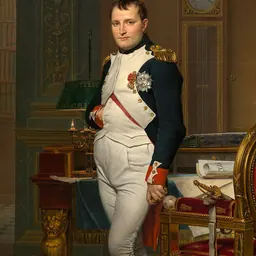

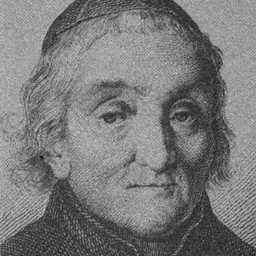
Related people
Same field, nearest in time

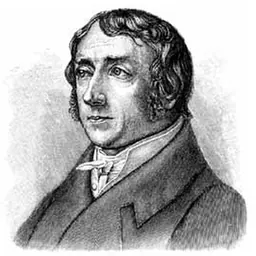

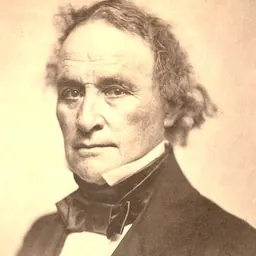

Contemporaries
People whose lives overlapped John Lanigan's




Frequently asked questions
Who was John Lanigan?
Irish historian
When was John Lanigan born?
John Lanigan was born in 1758 in Cashel.
When did John Lanigan die?
John Lanigan died on 8 July 1825 in Finglas.
What was John Lanigan's occupation?
John Lanigan was a historian, theologian, church historian and hebraist.
What nationality was John Lanigan?
John Lanigan was Irish.
Sources & further reading
· DBpedia: John Lanigan (historian)
Cite this page
APA: Biography.guide. (2026). John Lanigan. https://biography.guide/john-lanigan-historian/
MLA: "John Lanigan." Biography.guide, https://biography.guide/john-lanigan-historian/.
Chicago: "John Lanigan." Biography.guide. https://biography.guide/john-lanigan-historian/.
Data last updated: 2026-09-22 · Spot an error? Report a correction.
Page generated 2026-09-27 05:27 UTC