
About John L. O'Sullivan
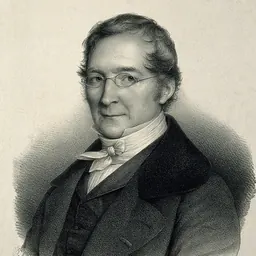
Lived 1813 – 1895 (aged 81). John L. O'Sullivan was an American journalist, diplomat, politician and editor.
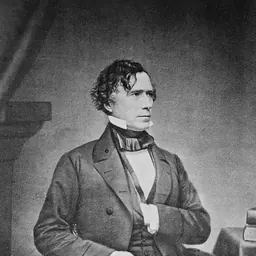
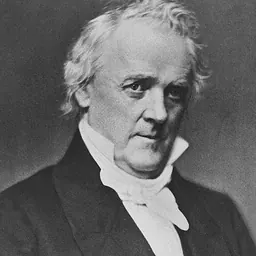
John Louis O'Sullivan (November 15, 1813 – March 24, 1895) was an American columnist, editor, and diplomat who is known for coining the iconic phrase "manifest destiny" in 1845, in order to promote the annexation of Texas and the Oregon Country into the United States. O'Sullivan was an influential political writer and advocate for the Democratic Party at the time, who also served as U.S. minister to Portugal during the administration of President Franklin Pierce (1853–1857) and President James Buchanan (1857-1861).
Early life and education John Louis O'Sullivan, born on November 15, 1813, the son of John Thomas O'Sullivan, an Irish-born American diplomat and sea captain, and Mary Rowly, a genteel Englishwoman. According to legend, he was born at sea on a British warship off the coast of Gibraltar.
O'Sullivan enrolled at Columbia College in New York city at the age of 14. He graduated in 1831. In 1834, he received a Masters of Arts and became a lawyer.
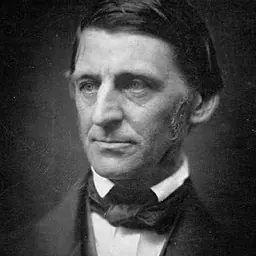
Career In 1837, he founded and edited The United States Magazine and Democratic Review, based in Washington. It espoused the more radical forms of Jacksonian democracy and the cause of a democratic, American literature. It published some of the most prominent American writers, including Nathaniel Hawthorne, Ralph Waldo Emerson, Henry David Thoreau, John Greenleaf Whittier, William Cullen Bryant, and Walt Whitman. O'Sullivan was an aggressive reformer in the New York State Legislature, where he led the unsuccessful movement to abolish capital punishment. By 1846, investors were dissatisfied with his poor management, and he lost control of his magazine.
O'Sullivan opposed the coming of the American Civil War, hoping that a peaceful solution, or ultimately a peaceful separation of North and South, could be settled. In Europe when the war began, O'Sullivan became an active supporter of the Copperhead movement; he may have been on the Confederate payroll at some point. O'Sullivan wrote a number of pamphlets promoting the Confederate cause, arguing that the Lincoln presidency had become too powerful and that states' rights needed to be protected against encroachment by the central government. Although he had earlier supported the "free soil" movement, he now defended the institution of slavery, writing that blacks and whites could not live together in harmony. Not surprisingly, his perceived ideological shift greatly disappointed some of his old friends, including Hawthorne. Towards the end of the Civil War, O'Sullivan appealed to his southern "comrades in arms" to burn Richmond, stating "let every man set fire to his own house".
Don’t just read it —
keep it.
Full-length biographies made to live with: read them, listen on the way to work, watch them tonight.
- E-book
- Audio
- Video
Instant download · yours to keep · every purchase keeps this site free
Important facts
People in John L. O'Sullivan's life
Named in this biography and alive at the same time



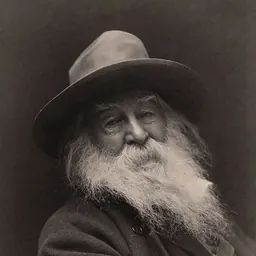
Related people
Same field, nearest in time


Contemporaries
People whose lives overlapped John L. O'Sullivan's




Frequently asked questions
Who was John L. O'Sullivan?
American politician (1813-1895)
When was John L. O'Sullivan born?
John L. O'Sullivan was born on 15 November 1813.
When did John L. O'Sullivan die?
John L. O'Sullivan died on 24 March 1895 in New York City.
What was John L. O'Sullivan's occupation?
John L. O'Sullivan was a journalist, diplomat, politician and editor.
What nationality was John L. O'Sullivan?
John L. O'Sullivan was American.
Sources & further reading
· Wikipedia: John L. O'Sullivan
Cite this page
APA: Biography.guide. (2026). John L. O'Sullivan. https://biography.guide/john-l-o-sullivan/
MLA: "John L. O'Sullivan." Biography.guide, https://biography.guide/john-l-o-sullivan/.
Chicago: "John L. O'Sullivan." Biography.guide. https://biography.guide/john-l-o-sullivan/.
Data last updated: 2026-09-20 · Spot an error? Report a correction.
Page generated 2026-09-27 05:22 UTC