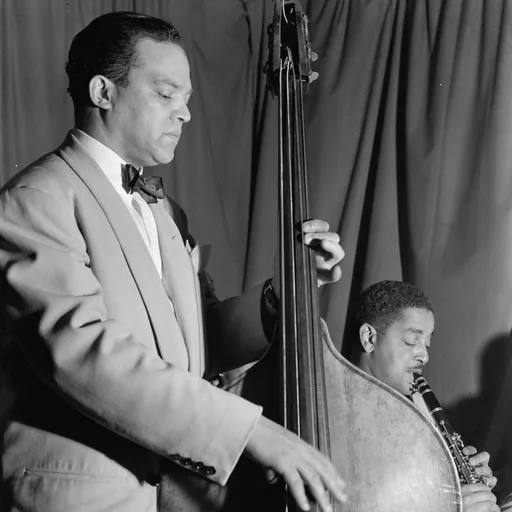
About John Kirby
Lived 1908 – 1952 (aged 43). John Kirby was an American bandleader, jazz musician, conductor and musician.
John Kirby (December 31, 1908 – June 14, 1952), In addition to sideman work (prominently with Benny Goodman), Kirby lead a chamber jazz sextet in the late 1930s and early 1940s, which scored several hit songs including "Loch Lomond" and the debut recording of "Undecided", a jazz standard. He was the first musician in the chamber jazz genre. Earlier in his career he also played trombone and tuba.
Background Kirby was born John Kirk in Winchester, Virginia, United States, on 31 December 1908. His mother, Dolly Kirk (died October 1925) gave him up for adoption in 1908 and he was raised by Reverend Washington Johnson and his wife, Nancy, at 442 North Kent Street in Winchester. (Kirby is listed as a household member in the 1920 United States Federal Census, but not in the 1910 census.) Kirby was a student at the Winchester Colored School, renamed Douglass School in 1916. He took piano lessons from Nancy and valve trombone lessons around 1917 under the guidance of Professor Powell Gibson, the principal of Douglass School, as well as a math, drama, and music teacher. A photo of Kirby can be seen on page 13 of the History of Douglas School Winchester, Virginia by Judy Humbert and June Gaskins, Kirby's cousin. Kirby later stated that Bach's work fascinated him as a child and that he learned to play music just as it was written.
Kirby's formal education ended around 1923. That same year, he met Mary Moten of Airmont, Virginia and they married on 25 August 1925. On 14 December 1925, Mary gave birth to Yvonne Constance Kirk. Based on known affiliations (Yvonne, Powell Gibson, Mary Moten and former schoolmate, Anna Bertha), Kirby's biological father lived in Baltimore and was a frequent visitor to the Winchester area. Kirby left the Winchester area in 1928 as a trombonist and played in the Baltimore area for two years. By 1936, Kirby was a successful sideman on the New York City jazz scene and Yvonne, now a student at Douglass herself, heard stories about her successful father from Gibson.
Bands and recording In 1928, Kirby arrived in Baltimore, where he met trombonist Jimmy Harrison, saxophonist Coleman Hawkins and composer Duke Ellington. Harrison persuaded Kirby to switch from trombone to tuba. Shortly after his arrival in New York, Kirby played tuba with Bill Brown and His Brownies at the Star Ballroom on Forty-Second Street. Later, he performed with pianist Charlie Sheets at the Bedford Ballroom in Brooklyn and then with John C. Smith's Society Band at Harlem's Alhambra Ballroom.
Kirby joined the Fletcher Henderson orchestra as a tuba player in 1930.
Securing a gig at the Onyx Club on 52nd Street in 1937 confirmed Kirby's status as a bandleader, Kirby's sextet was soon known as the Onyx Club Boys, and took the shape it would basically hold until World War II, usually with Charlie Shavers (trumpet), Buster Bailey (clarinet), Russell Procope (alto saxophone), Billy Kyle (piano), O'Neil Spencer (drums).
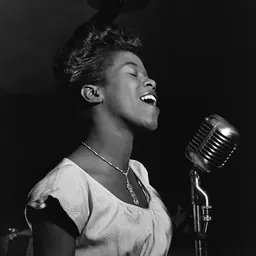
As Kirby's career declined, he drank heavily and was beset by diabetes. After the war, Kirby got the surviving sextet members back together, with Sarah Vaughan as vocalist, but the reunion did not last. A concert at Carnegie Hall in December 1950, with Bailey plus drummer Sid Catlett, attracted only a small audience, which "crushed Kirby's spirit and badly damaged what little was left of his career.
Kirby and his orchestra had a 30-minute radio program, Flow Gently, Sweet Rhythm (also known as The John Kirby Show) on CBS April 7, 1940–January 12, 1941. The program also featured Sullivan and the Golden Gate Quartet.
Awards and honors In 1993 Kirby was inducted into the North San Diego County, California Big Band and Jazz Hall of Fame. In 2010 a historical marker was placed in front of Kirby's childhood home located at 442 North Kent Street in Winchester, Va. The marker is listed on the Virginia Historical Registry commemorating Virginia's legacy of African American culture The Winchester Star 6/26/2010. Since 2004, Kirby has been honored at various locations in Winchester, Va., with the latest on April 9, 2022, at Shenandoah University. In 2008 New Yorker magazine listed The John Kirby Sextet album "Night Whispers 1938-1946, #26 of 100 essential jazz albums. On the same "Essential Jazz albums" list, Kirby performed tuba and bass on #6 Fletcher Henderson's "Tidal Wave", as tuba and bassist on #17 saxophonist Coleman Hawkins, "The Essential Sides Remastered", as bassist on #19 Billie Holiday's "Lady Day, The Masters Takes and Singles", and as bassist on #27 Chick Webb and His Orchestra with vocalist Ella Fitzgerald "Stompin at the Savoy."
In 1961, saxophonist Dave Pell recorded the tribute album I Remember John Kirby. Clarinetist Don Byron paid tribute to Kirby (along with Duke Ellington and Raymond Scott) on his 1996 album Bug Music.
Discography 1938–39 John Kirby and His Orchestra The Chronological (Classics, 1994) 1939–41 John Kirby and His Orchestra The Chronological (Classics, 1994) 1941–43 John Kirby and His Orchestra The Chronological (Classics, 1994) 1945–46 John Kirby and His OrchestraThe Chronological (Classics, 1994) 1941.00 Complete Associated Transcriptions Vol. 1 (Storyville, 2000) 1941–43 Complete Associated Transcriptions Vol. 2 (Storyville, 2002) 1943–44 Complete Associated Transcriptions Vol. 3 (Storyville, 2002) John Kirby and His Orchestra (Columbia, 1951) Intimate Swing (Harmony/Columbia, 1958) Boss of the Bass (Columbia, 1977) John Kirby (Atlantis, 1986) The Biggest Little Band in the World (Living Era/ASV, 1999) Complete Columbia and RCA Recordings (2xCD) (Definitive Recs., 1992) Night Whispers (Jazz Legends, 2005)
As sideman With Benny Goodman The Complete RCA Victor Small Group Recordings (RCA Victor, 1997)
Don’t just read it —
keep it.
Full-length biographies made to live with: read them, listen on the way to work, watch them tonight.
- E-book
- Audio
- Video
Instant download · yours to keep · every purchase keeps this site free
Important facts
People in John Kirby's life
Named in this biography and alive at the same time

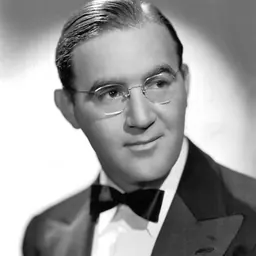


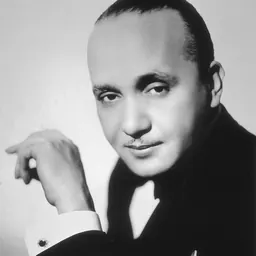

Related people
Same field, nearest in time



Contemporaries
People whose lives overlapped John Kirby's


Frequently asked questions
Who was John Kirby?
American jazz bassist (1908–1952)
When was John Kirby born?
John Kirby was born on 31 December 1908 in Winchester, Baltimore.
When did John Kirby die?
John Kirby died on 14 June 1952 in Hollywood.
What was John Kirby's occupation?
John Kirby was a bandleader, jazz musician, conductor and musician.
What nationality was John Kirby?
John Kirby was American.
Sources & further reading
· DBpedia: John Kirby (musician)
Cite this page
APA: Biography.guide. (2026). John Kirby. https://biography.guide/john-kirby-bandleader/
MLA: "John Kirby." Biography.guide, https://biography.guide/john-kirby-bandleader/.
Chicago: "John Kirby." Biography.guide. https://biography.guide/john-kirby-bandleader/.
Data last updated: 2026-09-20 · Spot an error? Report a correction.
Portrait: Wikimedia Commons · author & licence
Page generated 2026-09-27 04:58 UTC