
About John Kessler
Lived 1761 – 1840 (aged 78). John Kessler was a historian.
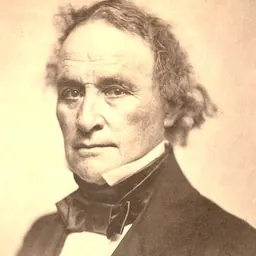
John Kessler (September 21, 1761 – March 17, 1840) volunteered for military service in the American Revolution. His combat sea service in the American Revolution produced valued notes, records, and articles used by historians and biographers to define early American naval history together with Captain John Barry's naval leadership and service securing America's independence from the British.
Early life Kessler, the second son of German immigrants Leonard Kessler and Mary Ritchouer Kessler, started with Philadelphia apprenticeships in wholesale dry goods, malting, brewing, and tobacco merchandising in 1772 before joining the American Revolution Military at age 16 in 1776. His initial service was part-time in a volunteer unit that later marched to Perth Amboy and Elizabeth Town. He continued his apprenticeship until he accepted privateer sea service. Barry grew to identify with America as his country, and Philadelphia as his home. By the time the American Revolutionary War began, Barry was a seasoned mariner and received a captain's commission in the Continental Navy from the President of Congress, John Hancock, in March, 1776. He promoted Kessler from landsman to steward, clerk, and later Captain of Marines. Collins, Kessler, and their fellow sailors were greeted by their captor, Sir Hyde Parker, with: ”My Lads, you will now consider yourselves as belonging to his Britannic Majesty’s Ship Phoenix, and if you behave yourselves well you will be treated the same as the rest of the crew. But had I my will, I would hang every one of you for fighting against your King and Country.” Barry's courage, integrity, leadership, and sailing knowledge insured his, Midshipman Kessler's, and the Alliance’s survival under combat and severe weather. Kessler's duties expanded to ship's log keeper, allowing him to enter accounts of major naval combat activities.
On May 29, 1781, Alliance was engaged by two British sloops-of-war, HMS Atalanta and HMS Trepassey. Initially the Alliance was adrift by calm winds. The two British ships used their sweeps to maneuver themselves into advantageous positions off Alliances stern. For three hours, their combined broadsides swept the deck and quarterdeck of the privateer, tearing into the rigging while inflicting numerous casualties. Kessler was wounded in the leg, and Barry was seriously wounded in the shoulder. Barry's loss of blood required his removal from the main deck but when his Lieutenant, Hoystead Hacker, suggested surrender, an enraged Barry emphatically declared that surrender would not be considered, and he demanded to be brought back to the Alliances deck if Hacker had truly lost his will to keep fighting. to establish John Barry's exemplary war accomplishments and place in American naval history. Barry and Kessler had become trusted friends during America's struggle for independence. They both resided in the Philadelphia area in the years following the American Revolutionary War and maintained their friendship. After Barry's death, their mutual friend John Brown teamed with Kessler to write early sketches of Barry's life for a magazine publication, Port Folio. Kessler's autobiographical sketch and his writings on Barry are on file at the Pennsylvania State Archives.
Distinguished Philadelphia citizen John Kessler's post-war business and government career began in Boston. He married Abigail Anderson on October 6, 1783. Abigail gave birth to their first son, John, on July 11, 1784. He first moved his small family and fledgling business activities to Waldeborough, Maine. He moved to Philadelphia in May, 1793, and initially established himself as a shopkeeper. From their marriage until her death on December 3, 1793, Abigail gave birth to a total of six children. Five of them died shortly after birth. Only their first son survived to maturity. Voigt assisted David Rittenhouse with the construction and repair of an orrery for Princeton University. Voigt produced the surveying instrument used by U. S. Surveyor General, Isaac Briggs, to survey the Louisiana Purchase. His surveying instrument, inscribed “Henry Voigt Philadelphia”, was transferred to the Smithsonian National Museum of American History in 1891. Later, Kessler's niece, Maria Kessler, married Voigt's son Thomas. This clock is functional today and stands in President Jefferson's study at his home, Monticello. and is in daily operation today near the main entrance to the U. S. Senate chambers.
John Kessler, died on March 17, 1840, and resides along with his wife, descendants, Henry, Maria, and Thomas Voigt at Laurel Hill National Park near Philadelphia, PA.
Epilogue alt=John Kessler's descendants visit Commodore John Barry's Statue at Wexford, Ireland. John Kessler's descendants visit Commodore John Barry's Statue at Wexford, Ireland. After the American Revolution ended with the Treaty of Paris, Captain Barry focused on securing back pay for his sailors. He also engaged in private shipping cruises to rebuild his own finances. In 1794, President Washington recognized that the young nation needed an organized Navy in addition to its Army. He offered six distinguished officers a commission in the new U.S. Navy as Captain with relative seniority rank. Barry became the U.S. Navy's first and highest ranking Captain.
As a US Navy PT boat commander in World War II, President (then lieutenant, j.g.) John F. Kennedy was also wounded engaging his country's enemy - Japan. His blockade of Cuba, accompanied by his willingness to leave his opponents room to find a peaceful solution to the Cuba Missile Crisis, made sure that the event remained only a crisis. And, while his advisors debated strategy in the Oval Office, John Barry's cutlass – the same one he used while serving with John Kessler, hung on the office wall. When President Kennedy visited Ireland, he placed a wreath at Commodore Barry's statue at Wexford, Ireland on June 27, 1963.
Don’t just read it —
keep it.
Full-length biographies made to live with: read them, listen on the way to work, watch them tonight.
- E-book
- Audio
- Video
Instant download · yours to keep · every purchase keeps this site free
Important facts
People in John Kessler's life
Named in this biography and alive at the same time





Related people
Same field, nearest in time

Contemporaries
People whose lives overlapped John Kessler's




Frequently asked questions
Who was John Kessler?
german-American Seaman and historian
When was John Kessler born?
John Kessler was born on 21 September 1761.
When did John Kessler die?
John Kessler died on 17 March 1840.
What was John Kessler's occupation?
John Kessler was a historian.
Sources & further reading
· DBpedia: John Kessler (naval historian)
Cite this page
APA: Biography.guide. (2026). John Kessler. https://biography.guide/john-kessler/
MLA: "John Kessler." Biography.guide, https://biography.guide/john-kessler/.
Chicago: "John Kessler." Biography.guide. https://biography.guide/john-kessler/.
Data last updated: 2026-09-20 · Spot an error? Report a correction.
Page generated 2026-09-27 05:05 UTC