
About John Kelly
Lived 1871 – 1936 (aged 65). John Kelly was a British military personnel.
Admiral of the Fleet Sir John Donald Kelly (13 July 1871 – 4 November 1936) was a Royal Navy officer. He served in the First World War as commanding officer of the cruiser HMS Dublin which came close to intercepting the German battlecruiser SMS Goeben. After the War he took charge of a naval force dispatched to strengthen the Mediterranean Fleet during the Chanak Crisis. After serving as Fourth Sea Lord and then commander of the 1st Battle Squadron, Kelly, known for his skill in personnel matters, was asked to take command of the Atlantic Fleet in the aftermath of the Invergordon Mutiny. He rapidly restored discipline and issued a report which was quite critical of the Admiralty Board's handling of the pay cuts issue in the first place. He went on to be Commander-in-Chief, Portsmouth.
Naval career Early career Born the second son of Lieutenant-Colonel Henry Holdworth Kelly of the Royal Marine Artillery and Elizabeth Kelly (née Collum), Kelly joined the training ship HMS Britannia as a cadet on 15 January 1884. Promoted to midshipman on 15 November 1886, he joined the corvette HMS Calliope in January 1887. and to lieutenant on 31 December 1893, he joined the cruiser HMS Katoomba on the Australia Station in February 1894. he became gunnery officer in HMS Forte on the Cape of Good Hope and West Coast of Africa Station and saw action in her during the Second Boer War. Kelly became Executive Officer in the armoured cruiser HMS Sutlej on the China Station in November 1904, Executive Officer in the cruiser HMS Hawke in the Reserve Fleet in 1906 and Executive Officer in the battleship HMS Cornwallis in the Atlantic Fleet in January 1907. He went on to be a member of the teaching staff at the Royal Naval College, Dartmouth in July 1908 and, having been promoted to captain on 22 June 1911, he became a member of the teaching staff at the Royal Naval War College in October 1912 and Captain of the School of Physical Training at Portsmouth in January 1913. Kelly did so, but eventually lost sight of the German ships. Howard Kelly continued to shadow the Germans, and at 8.30 p.m. Milne ordered HMS Dublin, sailing in company with two destroyers, to launch a torpedo attack that night. Using the reports from HMS Gloucester of the Germans' speed and course, HMS Dublin and the destroyers took up position on the Germans' bow, and waited to intercept them. They hoped to make contact at 3.30 a.m. on the morning of 7 August 1914, but the British had been spotted by SMS Breslau, which warned SMS Goeben. The Germans passed unseen to starboard. He went on to be commanding officer of the cruiser HMS Weymouth in the Grand Fleet in September 1916 and commanding officer of the battlecruiser HMS Princess Royal also in the Grand Fleet in July 1917. He was appointed a Companion of the Order of the Bath on 1 January 1919, appointed an officer of the French Legion of Honour on 27 May 1919 and awarded the French Croix de Guerre on 4 May 1920.
Post war
Kelly became Director of Operations at the Admiralty in July 1919 and acquired Greenham Hall at Wellington in Somerset for use as a country home in 1920. He was appointed a naval aide-de-camp to the King on 21 March 1921. Promoted to rear admiral on 21 November 1921, he became commander of the 4th Battle Squadron in July 1922 and took charge of a naval force dispatched to strengthen the Mediterranean Fleet during the Chanak Crisis in September 1922. became commander of the 1st Battle Squadron and second-in-command of the Mediterranean Fleet with his flag in the battleship HMS Warspite in April 1927. before being promoted to full admiral on 12 December 1930. In September 1931 the National Government led by Prime Minister Ramsay MacDonald decided to reduce the wages of all public sector employees: the wage reduction in the Royal Navy was particularly severe and led directly to the Invergordon Mutiny later that month. In the aftermath of the mutiny Kelly, known for his skill in personnel matters, was asked to take command of the Atlantic Fleet in October 1931. He insisted that the mutineers be transferred out of the fleet and his fleet be renamed the Home Fleet before he took up his new command flying his flag in the battleship HMS Nelson. and also First and Principal Naval Aide-de-Camp on 31 July 1934. He went on to be Commander-in-Chief, Portsmouth in January 1935, was advanced to Knight Grand Cross of the Order of the Bath on 3 June 1935 and attended the funeral of King George V in January 1936. Promoted to Admiral of the Fleet on 12 July 1936, Kelly died at a nursing home at Marylebone in London on 4 November 1936 and was buried at sea at a ceremony on board the cruiser HMS Curacoa on 7 November 1936.
Family In 1915 Kelly married Mary Kelly from Sydney, the sister of the composer and rower Frederick Septimus Kelly; they had a daughter.
Don’t just read it —
keep it.
Full-length biographies made to live with: read them, listen on the way to work, watch them tonight.
- E-book
- Audio
- Video
Instant download · yours to keep · every purchase keeps this site free
Important facts
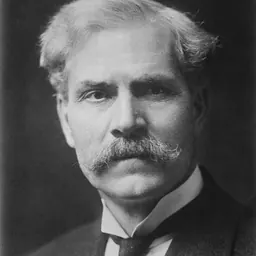
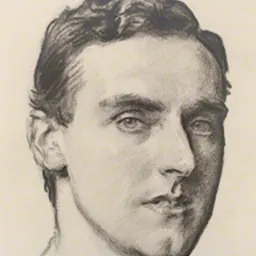
People in John Kelly's life
Named in this biography and alive at the same time


Related people
Same field, nearest in time





Contemporaries
People whose lives overlapped John Kelly's


Frequently asked questions
Who was John Kelly?
Royal Navy admiral
When was John Kelly born?
John Kelly was born on 13 July 1871 in Southsea.
When did John Kelly die?
John Kelly died on 4 November 1936 in Marylebone.
What was John Kelly's occupation?
John Kelly was a military personnel.
What nationality was John Kelly?
John Kelly was British.
Sources & further reading
· DBpedia: John Kelly (Royal Navy officer)
Cite this page
APA: Biography.guide. (2026). John Kelly. https://biography.guide/john-kelly-military-personnel/
MLA: "John Kelly." Biography.guide, https://biography.guide/john-kelly-military-personnel/.
Chicago: "John Kelly." Biography.guide. https://biography.guide/john-kelly-military-personnel/.
Data last updated: 2026-09-20 · Spot an error? Report a correction.
Page generated 2026-09-27 05:34 UTC