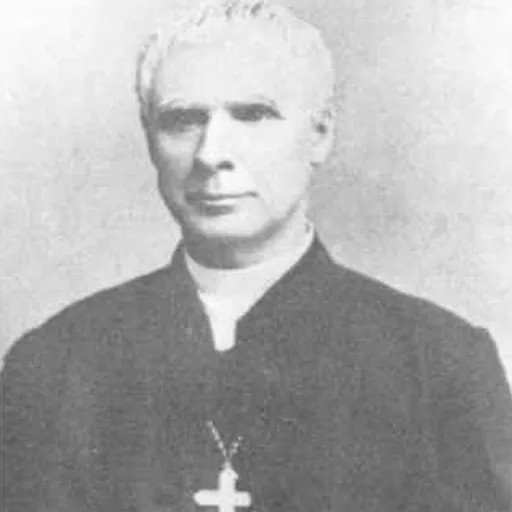
About John Joseph Hogan
Lived 1829 – 1913 (aged 83). John Joseph Hogan was an American catholic priest and catholic bishop.
John Joseph Hogan (May 10, 1829 – February 21, 1913) was an American Catholic prelate. A native of Ireland, he came to Missouri as a missionary and served as the first Bishop of St. Joseph (1868–1880) and the first Bishop of Kansas City (1880–1913) before the two dioceses were united.
Early life and education John Hogan was born on May 10, 1829, in Cahir Guillamore, a townland in County Limerick, Ireland. His father, James Hogan, was a farmer. His mother, Ellen Hogan (née Connor), died in 1832 when John was three years old. John was the second youngest of their nine children. At his confirmation, he took the middle name Joseph.
Hogan received his early education at schools in Raheen and Holycross. From 1839 to 1842, he studied under a private tutor, who taught him Latin, Greek, French, and English. He then attended classical schools at Meanus, Croom, and Herbertstown in County Limerick and at Charleville in County Cork.
At the age of nineteen, Hogan decided to study for the priesthood and become a missionary in the United States. He later recounted:
Hogan departed from Ireland in October 1848 and arrived in St. Louis the following December. He was accepted by Archbishop Peter Richard Kenrick as a candidate for the priesthood, and completed his philosophical and theological studies at the diocesan seminary in Carondelet.
Priesthood Hogan was ordained a priest on April 10, 1852, by Archbishop Kenrick. He then served as an assistant pastor at St. Joachim Church in Old Mines for a year. While there, he taught a catechism class to about 40 African Americans, preparing them for First Communion. He then served as pastor of St. James Church in Potosi for two years before being recalled to St. Louis in 1854, serving as an assistant at St. John Church for a year.
In 1857, after repeated requests, Hogan received permission from Archbishop Kenrick to start Catholic missions in northern Missouri, with Father Patrick Feehan (the future Archbishop of Chicago) succeeding him as pastor of St. Michael Church. Hogan established his base at Chillicothe, where he erected St. Columban Church in 1858. For the next 10 years, he traveled between Chillicothe, Macon, Brookfield, Mexico, and Cameron, making monthly visits to each city to provide the sacraments.
Irish Wilderness In 1858, in addition to his work in northern Missouri, Hogan established a settlement for Irish Catholics (now known as the Irish Wilderness) in Oregon County.
Hogan purchased land in the southern part of the state near the Arkansas border, where the price of land was cheaper than in northern Missouri. He later recounted:
However, the settlement collapsed during the Civil War, under the intense conflict in the region given Missouri's status as a border state. Hogan later recounted: "The [settlement] in Southern Missouri especially became broken and scattered; all who could, having fled therefrom. Ripley County, in which my southern settlement was principally located, suffered more than any other part of the state."
Postwar activities With many schools left without teachers or funding during the Civil War, Hogan opened a school for Catholic and non-Catholic children at Chillicothe in 1861. He operated the school for two years, until the reorganization of the public school system.
In 1865, the Missouri Constitutional Convention amended the state constitution, adding a requirement for all clergy to swear a loyalty oath under penalty of fine and imprisonment. Hogan refused to take the oath, believing it was "very foolish" for the state government to "assume an authority that does not belong to it, and to declare in contravention of God's ordination, who shall or shall not preach or teach the Gospel of Christ." In his opinion, the oath was not a question of "loyalty or disloyalty," but "whether the Church shall be free or not, to exercise her natural and inherent right of calling into or rejecting from her ministry whom she pleases." After delivering several sermons without taking the oath, Hogan was indicted by a grand jury in December 1865. He was subsequently escorted to the Livingston County Courthouse, where he posted bail. With Mordecai Oliver serving as his attorney, he was initially arraigned in Chillicothe before his case was transferred to Adair County. In 1867, however, his case was dismissed after the U.S. Supreme Court ruled in favor of another Catholic priest who had been convicted on the same charge in Cummings v. Missouri.
Episcopal career Bishop of St. Joseph At the Second Plenary Council of Baltimore in 1866, the Catholic bishops of the United States recommended the creation of several new dioceses, including the Diocese of St. Joseph in northern Missouri. On March 3, 1868, Pope Pius IX officially erected the diocese and named Hogan as its first bishop.
At the beginning of Hogan's tenure in 1868, the Diocese of St. Joseph contained five priests and 3,000 Catholics. He laid the cornerstone of the new Cathedral of St. Joseph in September 1869. By the time of his death in 1913, the diocese had 117 priests, 75 churches with a resident priest, 26 missions with churches, 15 stations, 30 chapels, 48 parochial schools, and 60,000 Catholics. Hogan laid the cornerstone of the new Cathedral of the Immaculate Conception in 1882.
In June 1896, at the age of 67, Hogan received John J. Glennon as a coadjutor bishop of Kansas City.
Death and legacy Hogan died on February 21, 1913, at his residence in Kansas City. He is buried at Mount St. Mary's Cemetery in Kansas City.
Hogan Preparatory Academy in Kansas City and Bishop Hogan Memorial School in Chillicothe are named in his honor.
Views Slavery While traveling on a steamboat in northern Missouri in 1857, Hogan observed the condition of enslaved people aboard the ship with strong disapproval. In his memoir On the Mission in Missouri, 1857-1868, he wrote:
He also noted that, during his time as a seminarian in St. Louis, he wrote an essay on slavery that was "somewhat in the strain of Thomas Moore and Daniel O'Connell on the same subject." According to Hogan, his professor then warned him that, when he began work as a missionary, "if you give expression to sentiments such as these, you will be driven from home decorated with a coat of tar and feathers, and fortunate you will be, if nothing worse befalls you."
Civil War During the Civil War, Hogan supported the Union, criticizing the Confederacy for adopting "the bad principle of national disruption." He praised the Missouri Constitutional Convention for voting against secession, saying, "Missouri owes an everlasting debt of gratitude to her steady and wise statesmen, who safeguarded her destiny in that dark and tempestuous hour."
Don’t just read it —
keep it.
Full-length biographies made to live with: read them, listen on the way to work, watch them tonight.
- E-book
- Audio
- Video
Instant download · yours to keep · every purchase keeps this site free
Important facts
People in John Joseph Hogan's life
Named in this biography and alive at the same time




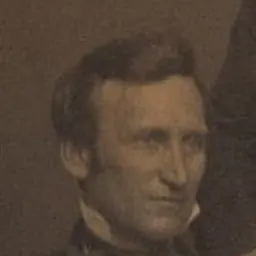
Related people
Same field, nearest in time
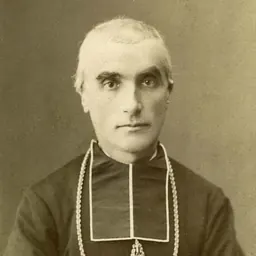
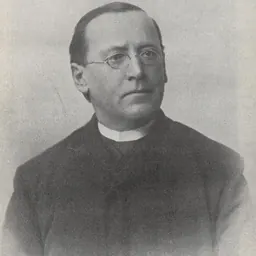

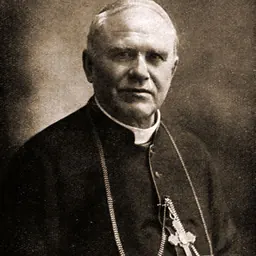
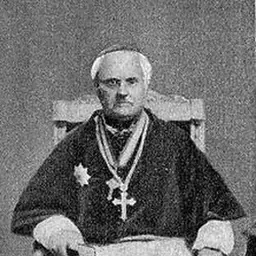
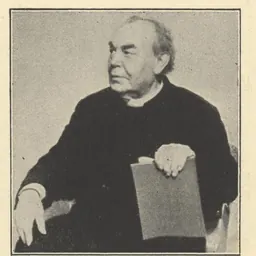
Contemporaries
People whose lives overlapped John Joseph Hogan's




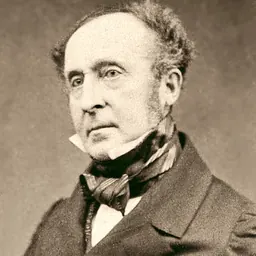
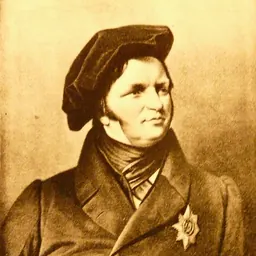
Frequently asked questions
Who was John Joseph Hogan?
Roman Catholic bishop (1829-1913)
When was John Joseph Hogan born?
John Joseph Hogan was born on 10 May 1829 in Bruff, County Limerick, Ireland.
When did John Joseph Hogan die?
John Joseph Hogan died on 21 February 1913 in Kansas City, Missouri.
What was John Joseph Hogan's occupation?
John Joseph Hogan was a catholic priest and catholic bishop.
What nationality was John Joseph Hogan?
John Joseph Hogan was American.
Sources & further reading
· Wikipedia: John Joseph Hogan
Cite this page
APA: Biography.guide. (2026). John Joseph Hogan. https://biography.guide/john-joseph-hogan/
MLA: "John Joseph Hogan." Biography.guide, https://biography.guide/john-joseph-hogan/.
Chicago: "John Joseph Hogan." Biography.guide. https://biography.guide/john-joseph-hogan/.
Data last updated: 2026-09-20 · Spot an error? Report a correction.
Page generated 2026-09-27 05:10 UTC