
About John Jinks
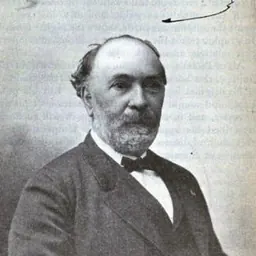
Lived 1872 – 1934 (aged 61–62). John Jinks was an Irish politician.
Avenue in Sligo named for Jinks (with his name misspelled with greengrocers' apostrophe). John Jinks (4 May 1871 – 11 September 1934) (often known as Alderman Jinks from his position as an Alderman on Sligo Corporation) was an Irish politician who served in Dáil Éireann from June to August 1927.
Biography He was born as John Jenk, to Patrick Jenk (also Jinks), a farmer, and Bridget Gilmartin, of Drumcliff, County Sligo.
An auctioneer and licensed grocer, he was elected to Dáil Éireann as Teachta Dála (TD) for the 7-seat Leitrim–Sligo constituency at the June 1927 general election for the National League Party.
He is most famous for his absence from a crucial vote on 16 August 1927. The Labour Party had proposed a motion of no confidence in the Cumann na nGaedheal Executive Council. They proposed an alternative coalition government with the National League, supported by Fianna Fáil, which had just entered the Dáil. Jinks's abstention resulted in a tied vote (71–71) and the government survived on the casting vote of the Ceann Comhairle. His absence had been unannounced and unauthorised by the party. Many colourful stories have grown up over the years as to the means by which his absence from the voting lobbies was secured. It has been written that two fellow Sligomen and Protestants, Major Bryan Cooper and Bertie Smyllie of The Irish Times "induced" Jinks to take the train back to Sligo that morning and absent himself from the vote lest his constituents discover he had voted for Éamon de Valera. He afterwards explained that he had been opposed to the proposed alliance between the National League, Labour and Fianna Fáil, but did not want to create a split by voting against the party or by announcing his decision in advance. He described the "sensational rumour" of a kidnapping as "sheer invention".
Jinks resigned from the National League on 18 August, stating that he could not "remain any longer a member of a party from which my political outlook so distinctly differs". After Cumann na nGaedheal won two by-elections held on 24 August, a new general election was called. In the September 1927 general election, he stood as an independent candidate, but was not re-elected.
In 1928 and 1934, he was elected to Sligo County Council as a Cumann na nGaedheal and Fine Gael candidate respectively.
A racehorse, Mr Jinks, was named after him and had some success in races in England.
Don’t just read it —
keep it.
Full-length biographies made to live with: read them, listen on the way to work, watch them tonight.
- E-book
- Audio
- Video
Instant download · yours to keep · every purchase keeps this site free
Important facts
People in John Jinks's life
Named in this biography and alive at the same time


Related people
Same field, nearest in time





Contemporaries
People whose lives overlapped John Jinks's


Frequently asked questions
Who was John Jinks?
Irish politician
When was John Jinks born?
John Jinks was born in 1872 in Drumcliff.
When did John Jinks die?
John Jinks died on 11 September 1934 in County Sligo.
What was John Jinks's occupation?
John Jinks was a politician.
What nationality was John Jinks?
John Jinks was Irish.
Sources & further reading
· DBpedia: John Jinks (politician)
Cite this page
APA: Biography.guide. (2026). John Jinks. https://biography.guide/john-jinks/
MLA: "John Jinks." Biography.guide, https://biography.guide/john-jinks/.
Chicago: "John Jinks." Biography.guide. https://biography.guide/john-jinks/.
Data last updated: 2026-09-20 · Spot an error? Report a correction.
Page generated 2026-09-27 05:19 UTC