
John Jacobs
American activist
About John Jacobs
Lived 1947 – 1997 (aged 50). John Jacobs was an American.
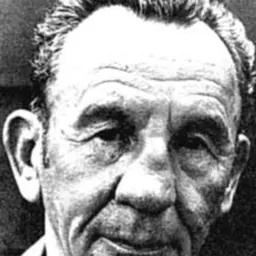
John Gregory Jacobs (September 30, 1947 – October 20, 1997) was an American student and anti-war activist in the 1960s and early 1970s. He was a leader in both Students for a Democratic Society and the Weatherman group, and an advocate of the use of violent force to overthrow the government of the United States. A fugitive after 1970, he died in 1997 in Canada.
Early life John Jacobs was born to Douglas and Lucille Jacobs, a prominent leftist Jewish couple, in New York State in 1947. He had an older brother, Robert. His father was a well-known leftist journalist who had been one of the first Americans to report on the Spanish Civil War. His parents later moved to Connecticut, where his father owned a bookstore. His childhood appeared to have been happy, and he was close to his parents. His first semester at Columbia, Jacobs met fellow freshman Mark Rudd, and the two became friends. Jacobs became very active in the group. A series of protests against on-campus military, CIA and corporate recruitment and ROTC induction ceremonies rocked Columbia's campus for the next two years. Jacobs organized a protest in February 1967 against CIA recruiting at Columbia. Initially, the SDS chapter disavowed the action. But when Jacobs' sit-in proved popular among Columbia students, SDS claimed J.J. as one of their own. The CIA protest led to Jacobs' rapid rise within the chapter. Despite its growing influence on campus, the SDS chapter was deeply divided. One group of SDSers, called the "Praxis Axis," advocated more organizing and nonviolence. A second group, the "Action Faction," called for more aggressive action. In the early spring 1968, the Action Faction took control of Columbia University's SDS chapter. Jacobs was an active member of the Action Faction, and soon became one of its leaders. When Martin Luther King Jr. was assassinated on April 4, 1968, riots broke out in many American cities. Jacobs wandered the streets of Harlem alone for most of the night, thrilled by the violence and inability of the police to maintain order. Thousands of students went on strike the next week, refusing to attend classes, and the university canceled final exams. The events catapulted Rudd into national prominence, and Rudd and Jacobs became national leaders in SDS. Jacobs began using the phrase "bring the war home," and it was widely adopted within the anti-war movement. Jacobs became a recognized national leader of SDS and looked to by those who saw violence as the only way to respond to the governing political and economic system of the day. He became one of SDS' earliest and most prominent ideological thinkers, and was widely recognized as a charismatic persuasive speaker. Palmer argued, contrary to current SDS thinking, that President Richard Nixon's "silent majority" did exist. Most Americans, Palmer said, wouldn't oppose imperialism, militarism and capitalism if they were only shown the truth. Rather, most Americans knew the truth, and supported these ideologies actively and whole-heartedly. One of the Old Left's slogans had been "Serve the People." Convinced Palmer was correct, Jacobs proposed at the June 1968 convention that SDS adopt the slogan "Serve the People Shit" to reflect the public's support for greed and war.
SDS leadership subsequently adopted a new policy in 1968 aimed at ending the factionalism. As the SDS National Council meeting convened in December 1968, National Secretary Mike Klonsky published an article in the New Left Notes (SDS' newsletter) titled "Toward A Revolutionary Youth Movement." A central document in SDS' final year, Klonsky's article advocated that SDS openly align itself with the working class and begin engaging in direct action. The goal of SDS should be to build class consciousness among students by organizing working people and moving off campus, and by attacking racism, militarism and the reactionary use of state police power. The "Revolutionary Youth Movement" (RYM) proposal was aimed squarely at PL, staking out some of the party's positions as the leadership's own while denouncing PL as deviant on others. The policy provoked five days of fierce debate, even shouting matches, between SDS' national leadership and supporters of PL. But on December 31, 1968, it passed and became national SDS policy.
Jacobs, however, felt that the RYM was insufficient. Within weeks of its adoption, he was hard at work on a new document which pushed the theoretical envelope even further. Although the other 10 SDS leaders had contributed to the document, Jacobs was the primary author of what came to be called the "Weatherman manifesto." and repudiated PL's claim that youth culture was bourgeois. The Weatherman manifesto also called for revolutionary violence at home to stop imperialism, and the formation of collectives in major cities to support the military struggle and stop factionalism. The Weatherman faction counted on RYM supporters to help them not only control the convention but also to pass the Weatherman manifesto. But Klonsky, Bob Avakian, and Les Coleman—all key members of the pro-RYM caucus—disagreed with many of the positions advocated in the Weatherman statement. They issued their own position paper, "Revolutionary Youth Movement II" (RYM II). Although the Weatherman and RYM II factions were opposed to PL and nearly constituted a majority of delegates, they still lost control of the convention. Leaders of the Black Panther Party made an appearance designed to attack PL supporters on the issue of racism. But when the Panthers made references to "pussy power," they and the SDS leadership were accused of male chauvinism. The next day, the Panthers accused PL of deviating from "true" Marxism–Leninism. PL leaders accused the Panthers and SDS leadership of redbaiting. Dohrn, Rudd, Jacobs, Klonsky and Robbins huddled in an attempt to strategize a way to defeat the PL faction. Dohrn took to the podium and demanded that all "true" SDSers follow her out of the convention hall. Gathering in an adjoining hall, Dohrn demanded that SDS expel all PL supporters. On June 20, the Weatherman and RYM II caucuses re-entered the main convention hall, accused the PL supporters of racism and being insufficiently opposed to imperialism, and demanded that all PL supporters be ejected. When they were not, Dohrn, Rudd, Jacobs and the other national leaders led approximately two-thirds of the delegates out of the convention hall.
To help start the "all-out civil war", Bill Ayers bombed a statue commemorating the policemen killed in the 1886 Haymarket Affair on the evening of October 6.
But the "Days of Rage" were a failure. Jacobs told the Black Panthers there would be 25,000 protesters in Chicago for the event, Jacobs proceeded to compare the coming protest to the fight against fascism in World War II:
There is a war in Vietnam and we are a Vietnam within America. We are small but we have stepped in the way of history. We are going to change this country. ... The battle of Vietnam is one battle in the world revolution. It is the Stalingrad of American imperialism. We are part of that Stalingrad. We are the guerrillas fighting behind enemy lines. ... We will not commit suicide. We will not fight here. We will march to where we are within the symbol-the very pig fascist architecture. ... But we will make a political stand today.
Finally, at 10:25 p.m., Jeff Jones gave the pre-arranged signal over a bullhorn, and the Weatherman action began. Jacobs, Jones, David Gilbert and others led a charge south through the city toward the Drake Hotel and the exceptionally affluent Gold Coast neighborhood, smashing windows in automobiles and buildings as they went. The mass of the crowd ran about four blocks before encountering police barricades. The mob charged the police but splintered into small groups, and more than 1,000 police counter-attacked. Although many protesters had—as J.J. did—motorcycle or football helmets on, the police were better trained and armed and nightsticks were expertly aimed to disable the rioters. Large amounts of tear gas were used, and at least twice police ran squad cars full speed into crowds. After only a half-hour or so, the riot was over: 28 policemen were injured (none seriously), six Weathermen were shot and an unknown number injured, and 68 protesters were arrested.
The 'Days of Rage' cost Chicago and the state of Illinois about $183,000 ($100,000 for National Guard payroll, $35,000 in damages, and $20,000 for one injured citizen's medical expenses). Most of Weatherman and SDS' leaders were jailed, and the Weatherman bank account emptied of more than $243,000 in order to pay for bail. She then held up three fingers in what she called the "Manson fork salute." In the evening, the groups reconvened for a mass "wargasm"—practicing karate, engaging in physical exercise, singing songs, and listening to speeches.
Two major decisions came out of the "War Council." The first was to immediately begin a violent, armed struggle against the state without attempting to organize or mobilize a broad swath of the public. The second was to create underground collectives in major cities throughout the country. The collective's first target was Judge John Murtagh, who was overseeing the trial of the "Panther 21". On February 21, 1970, the New York City collective planted a fire-bomb outside Judge Murtagh's home. The device detonated, but did little damage.
On the morning of March 6, the collective began unloading several large, heavy boxes from a white station wagon and bringing them into the townhouse.
But other leaders in Weatherman began to reconsider armed struggle as a tactic. Dohrn called for a meeting in late April 1970 of all of Weatherman's top leadership at the collective safe house in Mendocino, California, north of San Francisco. Exhausted from months on the run, consumed by fear, and depressed by the deaths of Robbins, Oughton and Gold, the leadership agreed to lay some ground rules for the Mendocino debates. There would be no shouting, and no discussion of theory or philosophy in the evenings. Jacobs vehemently disagreed, and was largely excluded from the ensuing discussions. Over the next several days, the leaders of the Weather Underground discussed how to respond to the townhouse blast. After several days, the group concluded that Jacobs and Robbins had committed "the military error" by advocating armed revolution. As leader of the group, Dohrn had the power to expel Jacobs. She did so, and Jacobs left quietly. He never participated in radical activities again.
In 1996, Jacobs was diagnosed with melanoma. The cancer soon spread to his brain, lungs, and lymph nodes, and his skin became painfully sensitive to the slightest touch.
In the fiction novel American Pastoral by Philip Roth, the daughter of the central character appears to be a member of the Weather Underground. The novel incorporates Jacobs' "We're against everything that's 'good and decent' ..." statement at the 1969 "War Council" in Flint.
Don’t just read it —
keep it.
Full-length biographies made to live with: read them, listen on the way to work, watch them tonight.
- E-book
- Audio
- Video
Instant download · yours to keep · every purchase keeps this site free
Important facts
People in John Jacobs's life
Named in this biography and alive at the same time


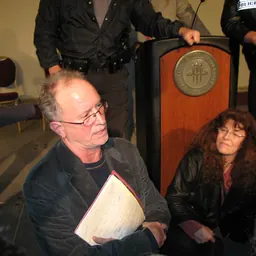


Contemporaries
People whose lives overlapped John Jacobs's



Frequently asked questions
Who was John Jacobs?
American activist (1847–1997)
When was John Jacobs born?
John Jacobs was born on 30 September 1947 in New York.
When did John Jacobs die?
John Jacobs died on 20 October 1997 in Vancouver.
What nationality was John Jacobs?
John Jacobs was American.
Sources & further reading
· DBpedia: John Jacobs (activist)
Cite this page
APA: Biography.guide. (2026). John Jacobs. https://biography.guide/john-jacobs-1947/
MLA: "John Jacobs." Biography.guide, https://biography.guide/john-jacobs-1947/.
Chicago: "John Jacobs." Biography.guide. https://biography.guide/john-jacobs-1947/.
Data last updated: 2026-09-20 · Spot an error? Report a correction.
Page generated 2026-09-27 05:20 UTC