
About John Jacob Astor I
Lived 1763 – 1848 (aged 84). John Jacob Astor I was an American entrepreneur, wholesaler and merchant.
John Jacob Astor (born Johann Jakob Astor; July 17, 1763 – March 29, 1848) was a German-born American businessman, merchant, real estate mogul, and investor. Astor made his fortune mainly in a fur trade monopoly, by exporting opium into the Chinese Empire, and by investing in real estate in or around New York City during the late 18th and early 19th centuries. He was the first prominent member of the Astor family and the first multi-millionaire in the United States.
Born in Germany, Astor immigrated to England as a teenager and worked as a musical instrument manufacturer. He moved to the United States after the American Revolutionary War (1775–1783). Seeing the expansion of population to the west, Astor entered the fur trade and built a monopoly, managing a business empire that extended to the Great Lakes region and north into British North America (future Dominion of Canada). It later expanded into the Western United States and the American frontier West and extended to the far West Coast and Pacific Ocean.
At the time of his death, Astor's estate was estimated to be $20 to $30 million,
Early life Johann Jakob Astor was born in 1763 in Walldorf, a town near Heidelberg in the Electoral Palatinate, which is in the present-day German state of Baden-Württemberg. He was the youngest son of Johann Jacob Astor and Maria Magdalena vom Berg. His three older brothers were George, Henry, and Melchior. In his childhood, Johann worked in his father's butcher shop and as a dairy salesman.
The Astor family ancestors were Waldensians who had presumably fled France due to religious persecution. There, he rented a room from Sarah Cox Todd, a widow, and began a flirtation with his landlady's daughter, also named Sarah Cox Todd. The young couple married in 1785. His intent had been to join his brother Henry, who had established a butcher shop in New York City.
A chance meeting with a fur trader on his voyage inspired him to join the North American fur trade as well.
Fortune from fur trade
Astor took advantage of the 1794 Jay Treaty between Great Britain and the United States, which opened new markets in Canada and the Great Lakes region. In London, Astor at once made a contract with the North West Company, which from Montreal rivaled the trade interests of the Hudson's Bay Company, then based in London.
Astor imported furs from Montreal to New York and shipped them to Europe. By 1800, he had amassed over a quarter of a million dollars (equivalent to about $ million in ) and had become one of the leading figures in the fur trade. His agents worked throughout the western areas and were ruthless in competition. In 1800, following the example of the Empress of China, the first American trading vessel to China, Astor traded mostly opium, but also, furs, teas, and sandalwood at the port of Canton in China, and greatly benefited from it. He later formed subsidiaries: the Pacific Fur Company, and the Southwest Fur Company, in which Canadians had a part, in order to control fur trading in the Great Lakes areas and Columbia River region.
His Columbia River trading post at Fort Astoria, established in April 1811, was the first United States community on the Pacific coast. He financed the overland Astor Expedition in 1810–1812 to reach the outpost. Members of the expedition discovered South Pass, through which hundreds of thousands of settlers on the Oregon, Mormon, and California Trails later used to pass through the Rocky Mountains.
Astor's fur trading ventures were disrupted during the War of 1812, when the British captured his trading posts. In 1816, he joined the opium smuggling trade. His American Fur Company purchased ten tons of Ottoman-produced opium, and shipped the contraband to Canton onboard the packet ship Macedonian. Astor later left the Chinese opium trade and sold opium solely in Britain.
In 1817, Astor's business rebounded after the U.S. Congress passed a protectionist law that barred foreign fur traders from U.S. territories. The American Fur Company came to dominate trading in the area around the Great Lakes, absorbing competitors in a monopoly. Astor had a townhouse at 233 Broadway in New York
In the 1830s, Astor foresaw that the next big boom would be the build-up of New York, which would soon emerge as one of the world's greatest cities. Astor sold his interests in the American Fur Company, and all his other ventures, and used the money to buy and develop large tracts of Manhattan Island real estate. Astor correctly predicted New York's rapid growth northward on Manhattan, and he purchased more and more land beyond the then-existing city limits. Astor rarely built on his land, but leased it to others for rent and their use. After retiring from his business, Astor spent the rest of his life as a patron of culture. He supported the ornithologist John James Audubon in his studies, artwork, and travels, and the presidential campaign of Henry Clay. Her parents were Scottish immigrants Adam Todd and Sarah Cox. Although she brought him a dowry of only $300, she possessed a frugal mind and a business judgment that he declared better than that of most merchants. She assisted him in the practical details of his business, and managed Astor's affairs when he was away from New York. He and Sarah moved to a townhouse on Prince Street in New York.
They had eight children. Magdalena Astor (1788–1832), first married Adrian Benjamin Bentzon in 1807, and then John Bristed in 1820. She was the mother of Charles Astor Bristed. William Backhouse Astor Sr. (1792–1875), who married Margaret Alida Rebecca Armstrong, daughter of Senator John Armstrong Jr., in 1818.
Dorothea Astor (1795–1874), married Walter Langdon. They owned the Langdon Estate Gatehouse. He was president of the German Society of the City of New York from 1837 to 1841.
Death Astor died on March 29, 1848 in New York City. Astor is buried in Trinity Church Cemetery in Manhattan. Many members of his family had joined its congregation, but Astor remained a member of the local German Reformed congregation to his death. At the time of his death in 1848, Astor was the wealthiest person in the United States, leaving an estate estimated to be worth between $20 and $30 million,
In the short story Bartleby, the Scrivener, Herman Melville used Astor as a symbol of men who made the earliest fortunes in New York.
The pair of marble lions that sit by the entrance of the New York Public Library Main Branch at Fifth Avenue and 42nd Street were originally named Leo Astor and Leo Lenox, after Astor and James Lenox, who founded the library from his own collection. Next, they were called Lord Astor and Lady Lenox (both lions are males). Mayor Fiorello La Guardia renamed them "Patience" and "Fortitude" during the Great Depression.
The neighborhood of Astoria in Queens, New York City, is named after Astor.
Astor Place in Manhattan, New York City, was named after Astor, soon after his death.
The coastal town of Astoria, Oregon, is named after Astor, as well as an elementary school named in his honor. The background to the founding of this town is described in Washington Irving's Astoria, a book whose writing was financed by Astor.
The historic neighborhood of Astor Park in Green Bay, Wisconsin, is named after Astor. In 1835, John Jacob Astor founded the Town of Astor in Wisconsin. After the Town of Astor was united with the Town of Navarino to form the Borough of Green Bay, one neighborhood was named after him.
A popular intersection in the inner city of Budapest is named after him, as well as the corresponding metro station, indirectly, through the Grand Budapest Astoria Hotel, which is located there.
In 1908, when the association football club FC Astoria Walldorf was formed in Astor's birthplace in Germany, the group added "Astoria" to its name in his, and the family's, honor.
Don’t just read it —
keep it.
Full-length biographies made to live with: read them, listen on the way to work, watch them tonight.
- E-book
- Audio
- Video
Instant download · yours to keep · every purchase keeps this site free
Important facts
Family & relationships
People in John Jacob Astor I's life
Named in this biography and alive at the same time



Related people
Same field, nearest in time
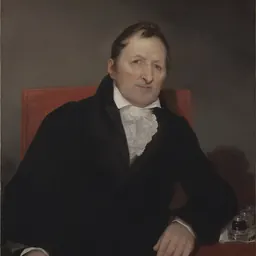

Contemporaries
People whose lives overlapped John Jacob Astor I's





Frequently asked questions
Who was John Jacob Astor I?
German-American businessman (1763-1848)
When was John Jacob Astor I born?
John Jacob Astor I was born on 17 July 1763 in Walldorf.
When did John Jacob Astor I die?
John Jacob Astor I died on 29 March 1848 in Manhattan.
What was John Jacob Astor I's occupation?
John Jacob Astor I was an entrepreneur, wholesaler and merchant.
What nationality was John Jacob Astor I?
John Jacob Astor I was American.
Sources & further reading
· Wikipedia: John Jacob Astor I
Cite this page
APA: Biography.guide. (2026). John Jacob Astor I. https://biography.guide/john-jacob-astor-i/
MLA: "John Jacob Astor I." Biography.guide, https://biography.guide/john-jacob-astor-i/.
Chicago: "John Jacob Astor I." Biography.guide. https://biography.guide/john-jacob-astor-i/.
Data last updated: 2026-09-22 · Spot an error? Report a correction.
Page generated 2026-09-27 05:21 UTC