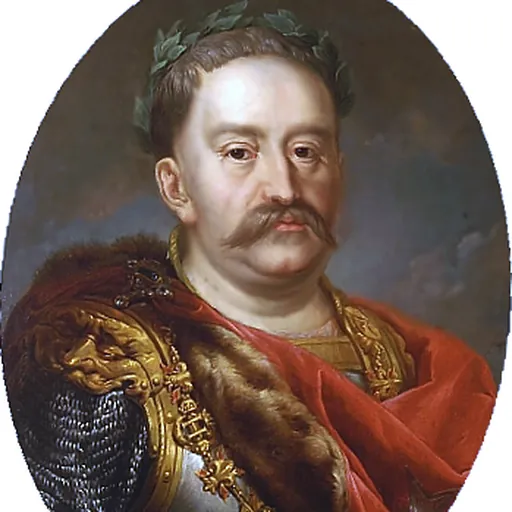
John III Sobieski
King of Poland and Grand Duke of Lithuania
About John III Sobieski
Lived 1629 – 1696 (aged 66). John III Sobieski was a Polish military leader, politician and monarch.
John III Sobieski ( ; ; 17 August 1629 – 17 June 1696) was King of Poland and Grand Duke of Lithuania from 1674 until his death in 1696.
Born into Polish nobility, Sobieski was educated at the Jagiellonian University and toured Europe in his youth. As a soldier and later commander, he fought in the Khmelnytsky Uprising, the Russo-Polish War and during the Swedish invasion known as the Deluge. Sobieski demonstrated his military prowess during the war against the Ottoman Empire and established himself as a leading figure in Poland and Lithuania. In 1674, he was elected monarch of the Polish–Lithuanian Commonwealth following the sudden and unexpected death of King Michael Korybut Wiśniowiecki.
Sobieski's 22-year reign marked a period of the Commonwealth's stabilization, much needed after the turmoil of previous conflicts. Popular among his subjects, he was an able military leader, most famously for his victory over the Ottoman Empire at the Battle of Vienna in 1683. The defeated Ottomans named Sobieski the "Lion of Lechistan", and the Pope hailed him as the saviour of Western Christendom. Suffering from poor health and obesity in later life, Sobieski died in 1696 and was buried at Wawel Cathedral in Kraków. He was succeeded by Augustus II the Strong.
Biography Youth
John Sobieski was born on 17 August 1629, in Olesko, now in Ukraine, then part of the Ruthenian Voivodeship in the Crown of the Kingdom of Poland, Polish–Lithuanian Commonwealth to a renowned noble family de Sobieszyn Sobieski of Janina coat of arms. His father, Jakub Sobieski, was the Voivode of Ruthenia and Castellan of Kraków; his mother, Zofia Teofillia Daniłowicz was a granddaughter of Hetman Stanisław Żółkiewski. After finishing his studies, John and his brother Marek Sobieski left for western Europe, where he spent more than two years travelling. They visited Leipzig, Antwerp, Paris, London, Leiden, and The Hague.
Both brothers returned to the Commonwealth in 1648. Upon receiving the news of the death of King Władysław IV Vasa and the hostilities of the Khmelnytsky Uprising, they volunteered for the army. They both fought in the siege of Zamość. John was promoted to the rank of pułkownik and fought with distinction in the Battle of Berestechko. In 1653, he voluntarily spent time as a hostage in the Crimean Tatar capital of Bakhchysarai. A promising commander, John was sent by King John II Casimir Vasa as one of the envoys in the diplomatic mission of Mikołaj Bieganowski to the Ottoman Empire. There, Sobieski learned the Tatar language and the Turkish language and studied Ottoman military traditions and tactics. During the three-day-long battle of Warsaw of 1656, Sobieski commanded a regiment of 2,000 men of Tatar cavalry. He took part in a number of engagements over the next two years, including the Siege of Toruń in 1658. He participated in the Sejm of 1665, and after some delays, accepted the prestigious office of the Marshal of the Crown on 18 May that year. The court faction called openly for confiscation of his estates and dismissal from office, and declared him an "enemy of the state". Sobieski eventually succeeded in balancing politics and national defense, and a combination of his military victories over the invaders, and successful negotiations at the Sejm in April 1673, led to a compromise in which the court faction dropped its demands and challenges against him. Sobieski became a king of a country devastated by almost half a century of constant war. The treasury was almost empty and the court had little to offer the powerful magnates, who often allied themselves with foreign courts rather than the state.
Sobieski had a number of long-term plans, including establishing his own dynasty in the Commonwealth, regaining lost territories, and strengthening the country through various reforms. At the beginning of his reign, however, the Polish state was in dire fiscal straits and faced military threats to the north. King Louis XIV of France promised to mediate a truce between the Ottomans and Poland so that Sobieski could focus his attentions on Prussia. The negotiations ended in failure and Sobieski's Baltic goals had to be tempered by the immediate reality of the Ottoman threat to the south. Sobieski also greatly increased the number of cannon and introduced new artillery tactics. Regaining control of this autonomous province was in the Commonwealth's best interest, and Sobieski also hoped for it to become part of his family domain. This did not end the existence of strong internal opposition to Sobieski; however, it changed a number of allegiances, and further opposition was temporarily weakened through the king's successful political maneuvering, including granting the Grand Hetman office to one of the opposition's chief leaders, Stanisław Jan Jabłonowski.
Conscious that Poland lacked allies and risked war against most of its neighbours (a situation similar to the Deluge), Sobieski allied himself by 1683 with Leopold I, of the Holy Roman Empire. Although aimed directly against the Ottomans and indirectly against France, it had the advantage of gaining internal support for the defense of Poland's southern borders.
Meantime, in the spring of 1683, royal spies uncovered Ottoman preparations for a military campaign. Sobieski feared that the target might be the Polish cities of Lwów and Kraków. men (including 22,000, –27,000 Poles At 5:30 pm, Sobieski entered the deserted tent of Kara Mustafa Pasha and the Battle of Vienna ended. In a letter to his wife, he wrote, "All the common people kissed my hands, my feet, my clothes; others only touched me, saying: "Ah, let us kiss so valiant a hand!"
The war against the Ottomans was not yet over, and Sobieski continued the campaign with the Battle of Párkány on 7–9 October. After early victories, the Poles found themselves a junior partner in the Holy League, gaining no lasting territorial or political rewards.
King John III Sobieski died in Wilanów, Poland on 17 June 1696 from a sudden heart attack. although his heart is interred separately in the Church of the Transfiguration in Warsaw, Poland. He was succeeded by Augustus II the Strong.
Legacy and significance
Sobieski is remembered in Poland as a "hero king", victor at Vienna who defeated the Ottoman threat, an image that became particularly well recognised after his story was told in many works of 19th century literature. In the Polish Biographical Dictionary he is described as "an individual above his contemporaries, but still one of them"; an oligarch and a magnate, interested in personal wealth and power.
He failed to reform the ailing Commonwealth and to secure the throne for his heir.
Gallery
Family
On 5 July 1665, he married the widow of Jan Zamoyski, Marie Casimire d'Arquien (1641–1716), of Nevers, Burgundy, France. Their children were:
Jakub Ludwik Sobieski (2 November 1667 – 19 December 1737), married Countess Palatine Hedwig Elisabeth of Neuburg and had issue, including Maria Clementina Sobieska, mother of Charles Edward Stuart; Twin daughters (9 May 1669), stillborn or died shortly after birth; Teresa Teofila (October 1670); Adelajda Ludwika (15 October 1672 – 10 February 1677), called "Barbelune"; Maria Teresa (18 October 1673 – 7 December 1675), called "La Mannone"; Daughter (October 1674), stillborn or died shortly after birth; Teresa Kunegunda (4 March 1676 – 10 March 1730), married Maximilian II Emanuel, Elector of Bavaria, and had issue, including Charles VII, Holy Roman Emperor; Aleksander Benedykt (6 September 1677 – 19 November 1714), died unmarried; Daughter (13 November 1678), stillborn or died shortly after birth; Konstanty Władysław (1 May 1680 – 28 February 1726), married Maria Józefa Wessel but had no issue; Jan (4 June 1683 – 1 January/12 April 1685); Daughter (20 December 1684), stillborn or died shortly after birth.
Royal titles Official title : Ioannes III, Dei Gratia rex Poloniae, magnus dux Lithuaniae, Russiae, Prussiae, Masoviae, Samogitiae, Livoniae, Smolensciae, Kijoviae, Volhyniae, Podlachiae, Severiae, Czernichoviaeque, etc. Official title : Jan III, z łaski Bożej, król Polski, wielki książę litewski, ruski, pruski, mazowiecki, żmudzki, kijowski, wołyński, podlaski i czernichowski, etc. English translation: John III, by the grace of God King of Poland, Grand Duke of Lithuania, Ruthenia, Prussia, Masovia, Samogitia, Livonia, Smolensk, Kyiv, Volhynia, Podlasie, Severia, and Chernihiv, etc.
Literary references Vincenzo da Filicaja (1642–1707) wrote a collection of odes or canzoni about the raising of the siege of Vienna by King John III Sobieski titled "Canzoni in occasione dell'assedio, e liberazione di Vienna," published by Piero Matini in Florence in 1684. the first known book review journal Nouvelles de la république des lettres (News from the Republic of Letters), edited and largely written by the Protestant philosopher Pierre Bayle, included a number of works about King Sobieski's victory in its 1st volume: an address to the King (pp. 179–180), Motet Dramatique ou Oratoire (pp. 181–182), Parallèle de Jules Cesar et du Roi de Pologne ("Venit, vidit, vicit..." (pp. 183–185) William Wordsworth wrote on 4 February 1816, and published the same year among the "Sonnets dedicated to Liberty" (or "Poems dedicated to Independence and Liberty" ) his "Siege of Vienna Raised by John Sobieski", which was his take on da Falicaia's ode to Sobieski's victory, about which Wordsworth wrote, "This, and his other poems on the same occasion [of Sobieski's raising the siege of Vienna], are superior perhaps to any lyrical pieces that contemporary events have ever given birth to, those of the Hebrew Scriptures only excepted. - W. W. (1816 and 1820)" Jan Gawiński wrote the poem Clipaeus christianitatis (The shield of Christianity), in praise of Sobieski's defeating the Ottoman Empire.
Don’t just read it —
keep it.
Full-length biographies made to live with: read them, listen on the way to work, watch them tonight.
- E-book
- Audio
- Video
Instant download · yours to keep · every purchase keeps this site free
Important facts
Family & relationships
People in John III Sobieski's life
Named in this biography and alive at the same time
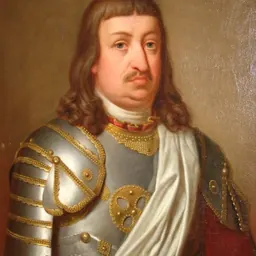




Related people
Same field, nearest in time

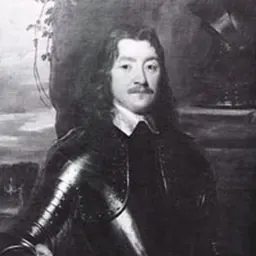


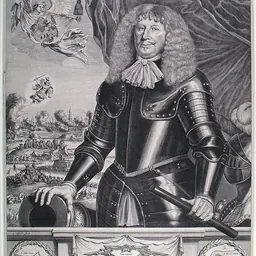
Contemporaries
People whose lives overlapped John III Sobieski's




Frequently asked questions
Who was John III Sobieski?
King of Poland and Grand Duke of Lithuania (1629–1696)
When was John III Sobieski born?
John III Sobieski was born on 17 August 1629 in Olesko.
When did John III Sobieski die?
John III Sobieski died on 17 June 1696 in Wilanów Palace.
What was John III Sobieski's occupation?
John III Sobieski was a military leader, politician and monarch.
What nationality was John III Sobieski?
John III Sobieski was Polish.
Sources & further reading
· Wikipedia: John III Sobieski
Cite this page
APA: Biography.guide. (2026). John III Sobieski. https://biography.guide/john-iii-sobieski/
MLA: "John III Sobieski." Biography.guide, https://biography.guide/john-iii-sobieski/.
Chicago: "John III Sobieski." Biography.guide. https://biography.guide/john-iii-sobieski/.
Data last updated: 2026-09-20 · Spot an error? Report a correction.
Portrait: Wikimedia Commons · author & licence
Page generated 2026-09-27 05:24 UTC