
About John Hyde
Lived 1738 – 1796 (aged 58). John Hyde was a judge.
John Hyde (14 January 1738 – 8 July 1796) was a Puisne Judge on the Supreme Court of Judicature at Fort William in Bengal from 1774 to his death. He is the primary author of Hyde's Notebooks, a series of 74 notebooks that are a trove of information for the first years of the Supreme Court of Judicature at Fort William, the highest court in Bengal from 1774 to 1862. The originals of these are kept at the Victoria Memorial in Kolkata. Partial microfilms are held at the National Library of India, Kolkata. The digitized microfilm is available online. The originals, which vary slightly from the microfilm, were digitized in 2015 but are not yet released.
Judicial Record Hyde gained a reputation as a morally upright judge in a time of general corruption in the British East India Company. While Chief Justice Elijah Impey and puisne judge Sir Robert Chambers both accepted bribes from Governor-General of Bengal Warren Hastings in return for compromising their judicial positions, Hyde refused offers. Hyde was unique among the judges in thinking that all individuals in Bengal, Indians and British alike, deserved the same rights, noting that the Supreme Court's charter called everyone residing in Bengal British subjects: “it seems to me that in this clause his majesty expressly calls all the inhabitants of Bengal, Bahar and Orissa, his subjects, which is a fact that the servants of the Company here are not willing to allow.” Hyde's Notebooks comprise 22,000 pages of handwritten notes in 74 bound volumes written between 1775 and 1798. Of these, 24 were written by Hyde alone, 41 were by Hyde in collaboration with his fellow judges, Sir Robert Chambers, and Sir William Jones, and 9 were by Chambers' alone after Hyde's death. They can be divided as follows:
14 by Hyde. 1775-1783 41 by Hyde, Chambers, and Jones. 1783-1794 10 by Hyde. 1794-1796 9 by Chambers. 1796-1798 Weston's shorthand system was first published in 1727.
Notebooks' history After Hyde's death the notebooks passed to Chief Justice Sir Robert Chambers who continued writing them till his retirement in 1798. Chambers intended to have the notebooks published but died in 1803 before doing so. The notebooks then passed to Chambers' wife Frances Wilton Chambers, who gave them to Sir Charles Harcourt Chambers, the nephew of Robert Chambers and puisne judge at the Bombay Supreme Court. When Charles Harcourt Chambers died in 1828, the notebooks returned to Frances Wilton Chambers who gave them to Sir William Russell, the Chief Justice of the Supreme Court of Judicature at Fort William in 1832. The notebooks remained in the Supreme Court's library until the creation of the High Court of Calcutta in 1862 when they were transferred to the High Court's Bar Library. However, these digitised images have not yet been released to the public.
Disappeared records The notebooks (volumes 1-3) from 1775 to 1777, which contained the important Nanda Kumar trial were mostly destroyed for unknown reasons at some point in the 18th or 19th century. The records from the first term of 1780 have disappeared, as well as a small volume with a brass clasp which contained Hyde's detailed notes on some particularly controversial trials.
Personal life Hyde refused knighthood despite being offered it. He married Mary Seymour, daughter of Lord Francis Seymour, in 1773. After his death, she married the Rev. John Payne of Droxford. Hyde's youngest daughter Caroline Frances married Robert Walpole.
Don’t just read it —
keep it.
Full-length biographies made to live with: read them, listen on the way to work, watch them tonight.
- E-book
- Audio
- Video
Instant download · yours to keep · every purchase keeps this site free
Important facts
People in John Hyde's life
Named in this biography and alive at the same time



Related people
Same field, nearest in time

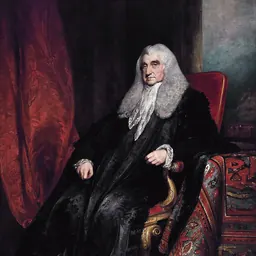
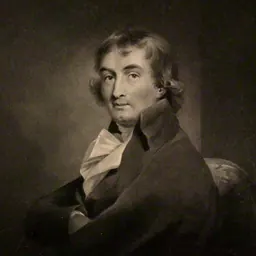
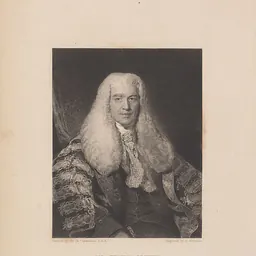
Contemporaries
People whose lives overlapped John Hyde's


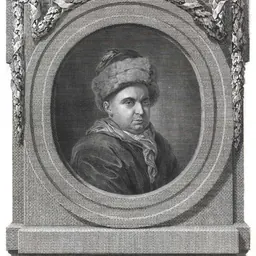



Frequently asked questions
Who was John Hyde?
British judge in Bengal (1738–1796)
When was John Hyde born?
John Hyde was born on 14 January 1738.
When did John Hyde die?
John Hyde died on 8 July 1796 in Kolkata.
What was John Hyde's occupation?
John Hyde was a judge.
What nationality was John Hyde?
John Hyde's recorded nationality: History of British nationality law.
Sources & further reading
Cite this page
APA: Biography.guide. (2026). John Hyde. https://biography.guide/john-hyde-judge/
MLA: "John Hyde." Biography.guide, https://biography.guide/john-hyde-judge/.
Chicago: "John Hyde." Biography.guide. https://biography.guide/john-hyde-judge/.
Data last updated: 2026-09-27 · Spot an error? Report a correction.
Page generated 2026-09-27 05:17 UTC