
About John Holt
Lived 1721 – 1784 (aged 62–63). John Holt was a journalist.
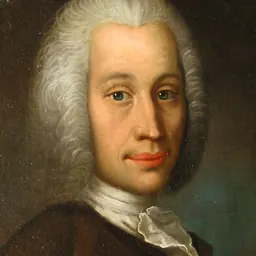
John Holt (1721—1784) was a colonial American newspaper publisher, printer, postmaster, and mayor of Williamsburg, Virginia, United States. He was involved with publishing the Connecticut Gazette, the New York Gazette, and the New-York Journal newspapers. He worked with Benjamin Franklin, the prominent publisher James Parker, and Founding Father Samuel Adams. He had a store that sold miscellaneous supplies, ink, paper, and books on a variety of subjects including religion, freemasonry, economics, history, archaeology, poetry, and biographies.
The publications Holt printed reflected his readers' struggle between the colonies and England. He openly challenged the Stamp Act of 1765, which was a direct British tax on the colonies in America for many types of papers used that included legal documents, magazines, playing cards, and newspapers. Holt was the favorite printer of the Sons of Liberty, a political organization active in the Thirteen American Colonies founded to advance the rights of the colonists and to fight taxation by the British government.
Early life
Colonial Williamsburg printing office (reconstructed), where Holt learned the trade. "Ravenscroft site" ruins in colonial Williamsburg, home of young Holt. Holt was born in 1721 (exact date unknown), at colonial Williamsburg in the colony of Virginia. He received his formal schooling and training as a merchant in the colonial town. His brother-in-law, William Hunter, the "public printer", likely taught him the printing business there.
Holt first became a store shop merchant at Duke of Gloucester street in colonial Williamsburg on lots numbers 49 and 50 in a "new store" he built about 1745, now known as "Holt's storehouse" on the northeast side of the street. William Nelson obtained a loan from Holt in 1745 and gave a mortgage to his town lots numbers 266, 267, 268 as collateral. After several loans, Nelson, eventually sold the lots to the printer publisher Joseph Royle in 1763 for the amount of 500 pounds of the then current money. Royle had a house on lots 267 and 268 at the corner of Nicholson and Botetourt Streets, known today as the "Ravenscroft Site". it was the first newspaper printed in the colony of Connecticut.
Holt went to Parker in the summer of 1755 with a recommendation letter from others about his skills. Parker gave him a job in the printing business helping publish the Connecticut Gazette. The front page appeared with the co-partnership name of "James Parker and Company" on December 13, 1755. Holt became the junior partner and resident editor conducting the printing business of the newspaper publication at New Haven. He also ran the New Haven post office at the same time. Parker spent most of his time at his printing-house in New York City, so was often away from his New Haven businesses, that Holt totally managed. While in New York, Holt took on William Goddard, printer and publisher, as a silent partner. Goddard, along with Benjamin Franklin would later establish the U.S. Post Office.
Holt then became one of the two deputy postmasters-general for the British American colonies. He worked with the Parker as a junior deputy based in New Haven, Connecticut. Holt moved to New York City in the early summer of 1760 to manage Parker's publishing of the newspaper the New-York Gazette and Weekly Post-Boy that then appeared with the imprint James Parker & Company, with Holt again being a junior partner and the Company referred to. The two also controlled the postriders from New York City to Hartford, who met the riders that carried the mail from the city of Boston.
Holt was quite concerned about the postal system and gave extensive improvement suggestions in a letter to Samuel Adams on January 29, 1776. The suggestions were based from the practical experience he gained as a deputy postmaster. Part of the letter suggested that the Continental Congress should adequately supply whatever was necessary to provide reliable postal service. Another suggestion Holt recommended was good delivery of all letters to and from soldiers on duty and that they might go free of postage. Holt in the New York Journal or General Advertiser newspaper was the first person in New York to recommend a newsdealers' system for the delivery of newspapers instead of using post riders, which was dangerous.
The partnership broke up on May 6, 1762. Holt then became the sole publisher and general manager of the newspaper and changed the name to New-York Journal or General Advertiser. He rented the publishing facilities from Parker on a four-year lease. He then moved to the lower end of Broad Street and Water Street, opposite the Exchange in May 1766. Holt additionally then published books and other materials (i.e. pamphlets, handbills, broadsides) that were generally political.
The publications Holt printed reflected his readers' struggle between the colonies and England. He also printed laws and other court actions for the Provincial Congress of New York. He also had a store that sold miscellaneous books on a variety of subjects including religion, freemasonry, economics, history, archaeology, poetry, and biographies. It also sold ink, paper, and other stationery supplies.
Holt openly challenged the Stamp Act of 1765 while being the publisher of the New-York Gazette and Weekly Post-Boy. He was the favorite printer of the Sons of Liberty. Holt almost stopped the publication of this newspaper because of the heavy tax he would have to pay the English for stamped paper. The Sons of Liberty, with a threat of bodily harm, persuaded Holt to continue the newspaper in defiance of the tax. Holt then continued the newspaper on unstamped paper and even published for meetings of groups against the Stamp Act. He added to the heading of his newspaper the words, The united voice of all his Majesty's free and loyal subjects in America – Liberty and property and no stamps.
Holt had a close relationship with the Sons of Liberty, which helped him get printing equipment. Once, they bailed him out of debtor's jail with a fee of over £400. The Sons of Liberty even subsidized him to publish the New-York Gazette and Weekly Post-Boy as a Whig newspaper. He changed the name of the paper to New-York Gazette or General Advertiser in May 1766, where he printed his relationship with Parker. Holt learned that Parker would not resume the New-York Gazette and Weekly Post-Boy, so he continued the newspaper using the title until October 9, 1766 (no. 1240). On October 16 of the same year Holt changed the title to New-York Gazette or General Advertiser (no. 1241) and Parker then followed suit with the same number and printed his version of the New-York Gazette or General Advertiser. Parker resumed his original newspaper that he had owned before leasing it to Holt. Holt's newspaper (issue number 1756) discontinued in New York City on August 29, 1776. This was when the British troops were about to occupy New York City. Holt made a fast exit from the city to New Haven, Connecticut, just as the British occupied New York City, leaving behind all his printing equipment and materials, which the British destroyed.
Holt went into the printing business in Norfolk, Virginia, in 1770, in a shop supervised by his son John Hunter. Holt ran the printing business under his son's name "John H. Holt and Company." There he printed the Virginia Gazette (aka the Norfolk Intelligencer). Holt printed some unfavorable remarks about certain ancestors of Lord Dunmore and started a quarrel with him, the royal governor of the colony of Virginia. Dunmore sent fifteen of King George's soldiers to Holt's printing shop and took all of the types and parts of the printing press. In the presence of two to three hundred spectators the soldiers took these printing accessories and carried them back onto Dunmore's ship offshore. He is buried in the churchyard of St. Paul's Chapel in New York. After Holt's death in 1784 his widow continued the Independent New-York Gazette newspaper until her death in 1788, when it passed to others and was published until March 8, 1800. Holt's widow also had a lawsuit against the State of New York for unpaid public printing done by Holt during the Revolutionary War. Holt was a member of Sons of Liberty of New York, and Burton Parish Church of colonial Williamsburg.
Family Holt married Elizabeth Hunter, sister to the colonial Williamsburg publisher William Hunter, in 1744. According to biographer Layton Barnes Murphy they had two children: Elizabeth Holt (b. April 19, 1746), married Eleazer Oswald (editor of Philadelphia Independent Gazette). John Hunter Holt (b. July 1748), became publisher of the Virginia Gazette or the Norfolk Intelligencer.
Works Major publications: Connecticut Gazette, James Parker & Company (1755-1760) New York Gazette and Weekly Post-Boy (1762–1766) New York Journal or General Advertiser (1766–1782) Independent New-York Gazette or the New York Journal Revived (1783–1784)
Printed examples of works contributed to Holt:
Don’t just read it —
keep it.
Full-length biographies made to live with: read them, listen on the way to work, watch them tonight.
- E-book
- Audio
- Video
Instant download · yours to keep · every purchase keeps this site free
Important facts
Family & relationships
People in John Holt's life
Named in this biography and alive at the same time


Related people
Same field, nearest in time



Contemporaries
People whose lives overlapped John Holt's




Frequently asked questions
Who was John Holt?
publisher
When was John Holt born?
John Holt was born in 1721 in Colonial Williamsburg.
When did John Holt die?
John Holt died on 30 January 1784.
What was John Holt's occupation?
John Holt was a journalist.
Sources & further reading
· DBpedia: John Holt (publisher)
Cite this page
APA: Biography.guide. (2026). John Holt. https://biography.guide/john-holt/
MLA: "John Holt." Biography.guide, https://biography.guide/john-holt/.
Chicago: "John Holt." Biography.guide. https://biography.guide/john-holt/.
Data last updated: 2026-09-22 · Spot an error? Report a correction.
Page generated 2026-09-27 05:24 UTC