
John Hervey, 2nd Baron Hervey
English courtier, political writer and memoirist
About John Hervey, 2nd Baron Hervey
Lived 1696 – 1743 (aged 46). John Hervey, 2nd Baron Hervey was a British and English aristocrat, courtier, political writer, memoirist and politician.
John Hervey, 2nd Baron Hervey, (13 October 16965 August 1743) was an English courtier and political writer. Heir to the Earl of Bristol, he obtained the key patronage of Walpole, and was involved in many court intrigues and literary quarrels, being apparently caricatured by Pope and Fielding. His memoirs of the early reign of George II were too revealing to be published in his time and did not appear for more than a century.
Family background Hervey was the eldest son of John Hervey, 1st Earl of Bristol, by his second wife, Elizabeth Hervey, Countess of Bristol. He was known as Lord Hervey from 1723, upon the death of his elder half-brother, Carr, the only son of his father's first wife, Isabella, but Lord Hervey never became Earl of Bristol, as he predeceased his father.
Life Hervey was educated at Westminster School and at Clare College, Cambridge, where he took his M.A. degree in 1715. His father then sent him to Paris in 1716, and thence to Hanover to pay court to George I. In spite of repeated requests he received no further preferment until after 1740, when he became Lord Privy Seal. suggest that Pope's friend and fellow-satirist Henry Fielding intended the character of Beau Didapper in Joseph Andrews to be read as Hervey. Beau Didapper is described as obedient to the commands of a "Great Man" (presumably Walpole) "which he implicitly submitted to, at the Expence of his Conscience, his Honour, and of his Country." Didapper is also compared to Hylas, and is mistaken for a woman in the dark on account of his soft skin.
The malicious caricature of Sporus does Hervey great injustice, and he is not much better treated by Horace Walpole, who in reporting his death in a letter (14 August 1743) to Horace Mann, said he had outlived his last inch of character. Nevertheless, his writings prove him to have been a man of real ability, condemned by Walpole's tactics and distrust of able men to spend his life in court intrigue, the weapons of which, it must be owned, he used with the utmost adroitness. His wife Lady Hervey (1700–1768), of whom an account is to be found in Lady Louisa Stuart's Anecdotes, was a warm partisan of the Stuarts. She retained her wit and charm throughout her life, and has the distinction of being the recipient of English verses by Voltaire. married 1747 George FitzGerald, of Turlough, County Mayo, and was the mother of the notoriously eccentric duellist George Robert FitzGerald, hanged for conspiracy to murder in 1786 Frederick Augustus Hervey, 4th Earl of Bristol (1730–1803), married 1752 Elizabeth Davers, had issue General William Hervey (13 May 1732 – 1815), unmarried Amelia Caroline Nassau Hervey (1734–1814), unmarried Caroline Hervey (1736–1819), unmarried
Hervey was bisexual. He had an affair with Anne Vane, and possibly with Lady Townshend, Lady Mary Wortley Montagu and Princess Caroline. He lived with Stephen Fox often during the decade after he followed him to Italy in 1728. He wrote passionate love letters to Francesco Algarotti, whom he first met in 1736. He may have had a sexual affair with Prince Frederick before their friendship dissolved. He was in fact denounced as a sexually ambiguous figure in his time most notably by William Pulteney, then leader of the Opposition and as cited above, by Alexander Pope in his "Sporus" portrait: "Let Sporus tremble/What that thing of silk...His wit all seesaw between that and this/Now high, now low, now master up, now miss/And he himself one vile antithesis...". He was also attracted to Henry Fox before his affair with Stephen Fox.
Ancestry
Writings See Hervey's Memoirs of the Court of George II, edited by John Wilson Croker (1848); and an article by G. F. Russell Barker in the Dictionary of National Biography. Besides the Memoirs he wrote numerous political pamphlets, and some occasional verses.
Modern portrayals Hervey appears as a character in the 1999 British television series Aristocrats, where he is portrayed by Anthony Finigan. He is shown acting as a patron to the younger Henry Fox.
Hervey appears as a character in the historical novel Peter: The Untold True Story (2013) by Christopher Mechling, a tale of 18th-century feral child Peter the Wild Boy, whom the author believes to have been the inspiration for Peter Pan.
Don’t just read it —
keep it.
Full-length biographies made to live with: read them, listen on the way to work, watch them tonight.
- E-book
- Audio
- Video
Instant download · yours to keep · every purchase keeps this site free
Important facts
People in John Hervey, 2nd Baron Hervey's life
Named in this biography and alive at the same time
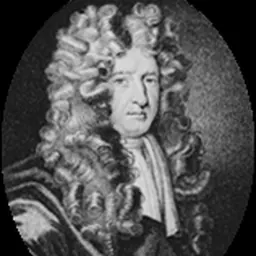
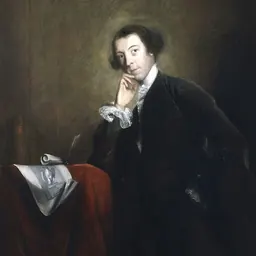

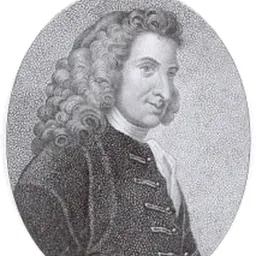
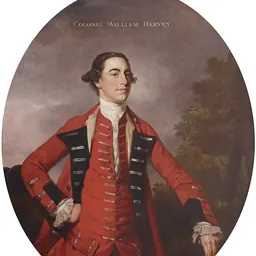
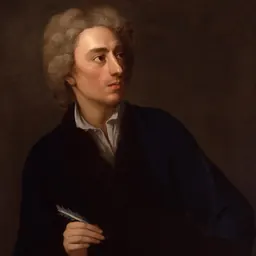

Related people
Same field, nearest in time



Contemporaries
People whose lives overlapped John Hervey, 2nd Baron Hervey's


Frequently asked questions
Who was John Hervey, 2nd Baron Hervey?
English courtier, political writer and memoirist (1696-1743)
When was John Hervey, 2nd Baron Hervey born?
John Hervey, 2nd Baron Hervey was born on 13 October 1696 in London.
When did John Hervey, 2nd Baron Hervey die?
John Hervey, 2nd Baron Hervey died on 5 August 1743 in London.
What was John Hervey, 2nd Baron Hervey's occupation?
John Hervey, 2nd Baron Hervey was an aristocrat, courtier, political writer, memoirist and politician.
What nationality was John Hervey, 2nd Baron Hervey?
John Hervey, 2nd Baron Hervey was British and English.
Sources & further reading
· Wikipedia: John Hervey, 2nd Baron Hervey
· DBpedia: John Hervey, 2nd Baron Hervey
Cite this page
APA: Biography.guide. (2026). John Hervey, 2nd Baron Hervey. https://biography.guide/john-hervey-2nd-baron-hervey/
MLA: "John Hervey, 2nd Baron Hervey." Biography.guide, https://biography.guide/john-hervey-2nd-baron-hervey/.
Chicago: "John Hervey, 2nd Baron Hervey." Biography.guide. https://biography.guide/john-hervey-2nd-baron-hervey/.
Data last updated: 2026-09-20 · Spot an error? Report a correction.
Page generated 2026-09-27 05:26 UTC