
About John Henry Kirby
Lived 1860 – 1940 (aged 79). John Henry Kirby was an American businessperson and clerk.
John Henry Kirby (November 16, 1860 – November 9, 1940) was an American businessman whose ventures made him the largest lumber manufacturer in Texas and the Southern United States. In addition to serving two terms in the Texas Legislature, he also established the Kirby Petroleum Company. With his successful reputation, he was known by his business peers as "The Prince of the Pines" and "The Father of Industrial Texas". He was also active in anti-union and subversive political activities, co-founding the Southern Committee to uphold the Constitution, which supported racism, fascism, and sought to block the reelection of Franklin D. Roosevelt. First taught to read and write by his mother, his formal education later on was limited to rural schools and one semester at Southwestern University, Georgetown, where he studied law. With the influence of state senator Samuel Bronson Cooper, he served as a clerk in the Texas Senate from 1882 to 1884. During his clerkship he married Lelia Stewart of Woodville. He practiced law for four years before moving to Houston to join the law firm of Hobby and Lanier.
In 1887, with Cooper's influence, Kirby provided legal services to a group of investors from Boston, Massachusetts. With their financial backing, the east Texas timberland was harvested for lumber under the name Texas Pine Land Association. This business alone provided Kirby with a small fortune. In 1893 he partnered with a lawyer named Nathaniel D. Silsbee, an investor from Boston. These two, along with an investor named Ellington Pratt, established the Gulf, Beaumont and Kansas City Railroad from Beaumont to San Augustine. Upon the railroad's completion, Kirby sold it to the Atchison, Topeka and Santa Fe Railway which extended its line to the new lumber processing site at Silsbee, the town named after the investor. The sale of the railroad yielded a high profit for Kirby. It was at this location in 1900 that the Kirby Lumber Company was established. This business became the largest lumber producer in the south, with Kirby controlling 300,000 acres (1200 km²) of timberland. At its peak between 1910 and 1920, it had some 16,500 employees and included twelve operating mills and five logging camps.
Business venture in oil The following year, and after the discovery of oil at Spindletop, Kirby partnered with Patrick Calhoun of the Houston Oil Company of Texas. Kirby created an unusual business relationship between his lumber company and the oil entity: the Kirby Lumber Company gained timber rights onto extensive east Texas land, where as the Houston Oil Company gained land and maintained mineral rights. Several years later, legal problems arose because Kirby overestimated the value of the lumber, and the partners failed to clearly define ownership of certain land areas. The Kirby Lumber Company still continued to prosper despite court ordered receivership status for both companies. In 1902, Kirby took over the Higgins Oil and Fuel Company owned by Pattillo Higgins for 3 million dollars. In 1921, Kirby established the Kirby Petroleum Company, a Houston-based oil and gas exploration company.
In 1923, Kirby received an honorary law degree from Lincoln Memorial University. Due to the Great Depression, his lumber company suffered financial strain and fell into the hands of the Atchison, Topeka and Santa Fe Railway in 1933 due to bankruptcy. He remained president of the enterprise until his death on November 9, 1940.
Later political and anti-union activities Perceptions of Kirby's treatment of his employees were at times mixed. On one hand he was known to provide Christmas dinners, bibles, toys, other gifts, and funds for college educations for children and of mill towns. He was also one of the earliest in the region to reduce work hours from 10 to 8 in his mills. However, these actions have been criticized as being paternalistic. Additionally, unionization efforts were met with hostility. Following the organization of the Brotherhood of Timber Workers in 1910 Kirby stated that "In the view of the owners such efforts, if successful, will be absolutely destructive of the industry." The Southern Lumber Operators Association, spearheaded by Kirby who was sitting president of the organization, preemptively attempted to discredit the union in the public eye, decrying it as a socialist, anarchistic, and radical organization. Furthermore, he and other operators constructed yellow dog contracts, triggering several strikes and the closure of mills. On 27 July 1910, it was decided that Kirby would close 11 mills in the vicinity of DeRidder, Louisiana, locking out approximately 3,000 employees beginning 7 August. Kirby and 125 other operators agreed to close 300 mills across Texas, Arkansas, and Louisiana, and Mississippi. Kirby and Muse, would go on to found the Southern Committee to Uphold the Constitution in 1934, of which Kirby was Chairman. Among this organization's principal goals were to prevent the reelection of Franklin D. Roosevelt by harnessing the Southern white vote through stoking anti-Black racism and attacking CIO unions. The group also openly supported Fascism.
In 1929, Kirby donated part of what is today the 626-acre (2.5 km²) John Henry Kirby State Forest, which is located in Tyler County in southeastern Texas.
Biographies John Henry Kirby: Prince of the Pines, by Mary Lasswell Smith (1967)
Don’t just read it —
keep it.
Full-length biographies made to live with: read them, listen on the way to work, watch them tonight.
- E-book
- Audio
- Video
Instant download · yours to keep · every purchase keeps this site free
Important facts
People in John Henry Kirby's life
Named in this biography and alive at the same time



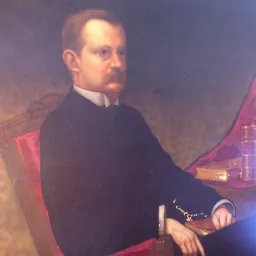


Related people
Same field, nearest in time
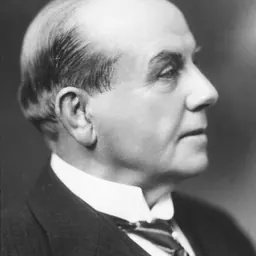
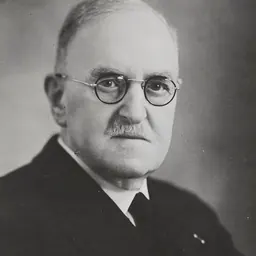


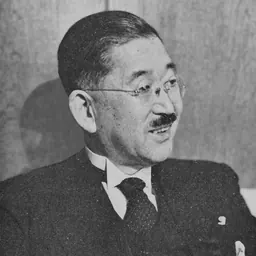
Contemporaries
People whose lives overlapped John Henry Kirby's

Frequently asked questions
Who was John Henry Kirby?
American businessman (1860–1940)
When was John Henry Kirby born?
John Henry Kirby was born on 16 November 1860 in Tyler County.
When did John Henry Kirby die?
John Henry Kirby died on 9 November 1940 in Houston.
What was John Henry Kirby's occupation?
John Henry Kirby was a businessperson and clerk.
What nationality was John Henry Kirby?
John Henry Kirby was American.
Sources & further reading
Cite this page
APA: Biography.guide. (2026). John Henry Kirby. https://biography.guide/john-henry-kirby/
MLA: "John Henry Kirby." Biography.guide, https://biography.guide/john-henry-kirby/.
Chicago: "John Henry Kirby." Biography.guide. https://biography.guide/john-henry-kirby/.
Data last updated: 2026-09-25 · Spot an error? Report a correction.
Page generated 2026-09-27 05:12 UTC