
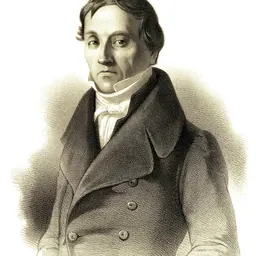
John Hayes
Commodore of Bombay Marine and explorer for the British East India Company
About John Hayes
Lived 1768 – 1831 (aged 63). John Hayes was a British and Australian explorer and military officer.
Voyage of 1793 and Exploration of Tasmania
In early 1793, Hayes undertook a privately backed commercial and exploratory voyage aboard the Duke of Clarence, accompanied by the Duchess, a smaller snow of 100 tons. The expedition was organised in Calcutta by a group of East India Company merchants—Udney, Frushard, and Laprimandaye—interested in the spice trade. Hayes, Captain Court, and a Mr. Robertson agreed to serve without pay, with only their living expenses covered. The expedition departed Calcutta on 6 February 1793.
Originally intending to sail to western New Guinea, the ships encountered unexpected southeast trade winds and altered course. On 24 April, they reached Van Diemen's Land (now Tasmania), and Hayes landed the following day at Adventure Bay, unaware that the French expedition under Antoine Bruni d'Entrecasteaux had departed from the same location only weeks earlier.
Hayes undertook extensive coastal surveys in southeastern Tasmania, naming features such as Risdon Cove, Ralphs Bay, and Court’s Island. He renamed the French Rivière du Nord the River Derwent, and further inland he identified what he called King George’s Plains. He also designated the estuary as Fletcher Hayes' Gulf.
His chart of Van Diemen’s Land, dedicated to John Shore, 1st Baron Teignmouth, chairman of the East India Company, bore a number of English place names. These included New Yorkshire (north of the Derwent), New Cumberland (west of what is now D'Entrecasteaux Channel), and The Honourable William Pitt’s Isle (now Bruny Island). D’Entrecasteaux Channel itself appeared on Hayes’s map as Seton’s Strait, named after another company merchant, while Betsey Island may have been named for a Bombay Marine vessel.
Though Hayes later realised many of his ‘discoveries’ had already been recorded by the French, his charts were still influential. Matthew Flinders used a copy during his circumnavigation of Tasmania in 1798–99, correcting terminology but preserving most names.
During the expedition, tensions emerged with Mr. Robertson, the supercargo, who challenged Hayes’s authority and attempted to assert ownership over the ships. Hayes confined him and reported the matter to Calcutta authorities.
Hayes continued his voyage on 9 June, departing for New Caledonia, again unknowingly retracing the path of d’Entrecasteaux. In correspondence, Hayes expressed pride in his discoveries, writing: “I have discovered a strait abounding with many fine harbours... On the west side... some fine plains extending to the foot of a large mountain... I called [them] King George’s Plains.” He recorded the location at 42°47′30″ S, 147°30′54″ E, noting the presence of white cockatoos and colourful stones akin to carnelian.
Although ultimately overshadowed by French explorers and British surveyors like Flinders and George Bass, Hayes's 1793 voyage was a significant early British exploration of southeastern Tasmania. His naming of Risdon Cove proved especially enduring: a decade later, it became the site of the first British settlement in Tasmania under Lieutenant John Bowen.
Don’t just read it —
keep it.
Full-length biographies made to live with: read them, listen on the way to work, watch them tonight.
- E-book
- Audio
- Video
Instant download · yours to keep · every purchase keeps this site free
Important facts
People in John Hayes's life
Named in this biography and alive at the same time
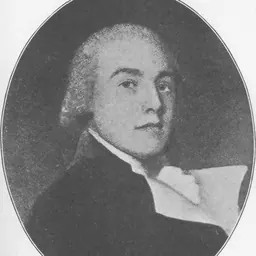
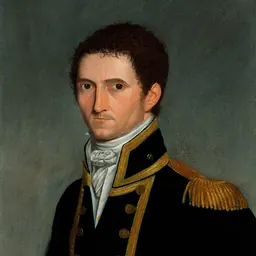


Related people
Same field, nearest in time

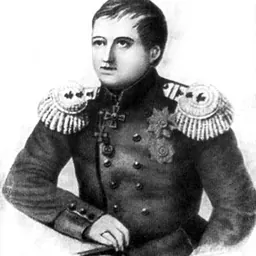


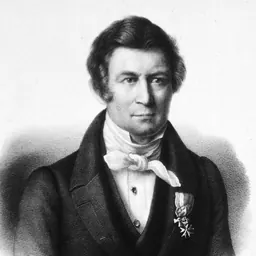
Contemporaries
People whose lives overlapped John Hayes's




Frequently asked questions
Who was John Hayes?
Commodore of Bombay Marine and explorer for the British East India Company
When was John Hayes born?
John Hayes was born on 11 February 1768 in Cumberland.
When did John Hayes die?
John Hayes died on 3 July 1831 in Cocos (Keeling) Islands.
What was John Hayes's occupation?
John Hayes was an explorer and military officer.
What nationality was John Hayes?
John Hayes was British and Australian.
Sources & further reading
· DBpedia: John Hayes (explorer)
Cite this page
APA: Biography.guide. (2026). John Hayes. https://biography.guide/john-hayes-explorer/
MLA: "John Hayes." Biography.guide, https://biography.guide/john-hayes-explorer/.
Chicago: "John Hayes." Biography.guide. https://biography.guide/john-hayes-explorer/.
Data last updated: 2026-09-20 · Spot an error? Report a correction.
Page generated 2026-09-27 05:24 UTC