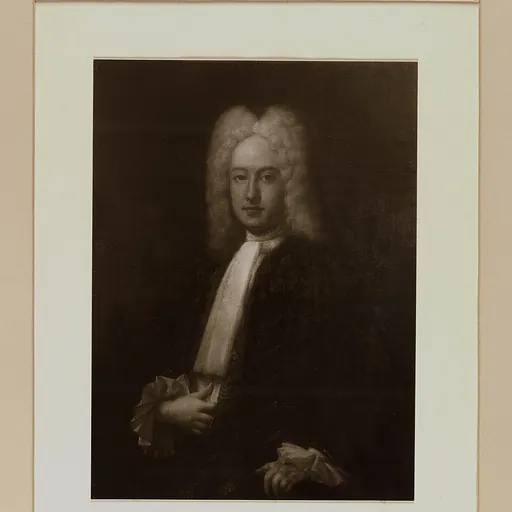
John Hay
Scottish noble and courtier
About John Hay
Lived 1691 – 1740 (aged 48–49).
John Hay of Cromlix (1691–1740) was a Scottish Jacobite army officer and courtier in the service of James Francis Edward Stuart (known as the "Old Pretender"). He was from the Clan Hay. He was made Jacobite Duke of Inverness by the Old Pretender in 1727, having served as Jacobite Secretary of State.
Early life His parents were Thomas Hay, seventh earl of Kinnoull (c.1660–1719) and Elizabeth (née Drummond, 1669–1696). He was their third son, with their first son, George (d. 1758), succeeding their father. The family was sympathetic to the Stuart kings, but felt that being Protestant, serving Queen Anne and supporting the Harley administration did not mar this sympathy and loyalty.
Hay's maternal grandfather William Drummond, first viscount of Strathallan, bequeathed Hay an estate at Cromlix, Perthshire. Hay purchased a commission in command of a foot guards company in 1714 and a year later married Marjorie Murray (d. in or after 1765), daughter of David Murray, fifth Viscount Stormont, and sister of the Earl of Mansfield and the Jacobite James Murray, "Earl of Dunbar".
Jacobite courtier Hay arrived from Paris at the exiled Jacobite court in Rome on 26 May 1717. Two days later, he visited Pope Pius VI and kissed the Pontiff's foot. In February 1718, he was made a groom of the bedchamber to James Francis Edward Stuart (the "Old Pretender"). On 5 October 1718, James created Hay Earl of Inverness, Viscount of Innerpaphrie and Lord Cromlix and Erne in the Jacobite Scottish peerage. The Old Pretender appointed him his Secretary of State in 1725, and his wife and brother-in-law governess and tutor to the royal children at the same time. Thus John Hay and John Murray became known as the "King's favourites". Hay and his wife exerted considerable influence at the factious Jacobite court.
In 1725, one of James Stuart's wife Clementina's cited reasons for retiring to a convent was ill-treatment by Lord and Lady Inverness, and another was Murray's being imposed on her as her children's governor despite being a Protestant. These complaints may, however, have been influenced somewhat by the children's former governess Mrs Sheldon, sister-in-law of John Erskine, 6th Earl of Mar. Mar's failed rebellion in 1715 and further intrigues had eventually led to his being replaced by Hay as James Stuart's intermediary between the exiled Jacobites and those still in Britain, and Mar had sworn revenge on Hay for this loss of royal favour. However, other Jacobites' correspondence suggests that some ill-treatment of Clementina by the Hays did occur, though the suggestion that Lady Inverness and James Stuart were having an affair, with Lord Inverness turning a blind eye, is less likely to be a fact than merely a rumour begun by Mar and the English government. Whatever the reasons for Clementina's retirement, however, it began to alienate James Stuart's supporters in Britain as well as the main contributors to his pension, Pope Benedict XIII and the King of Spain, and so he reluctantly accepted Hay's resignation as Secretary of State in 1727, upon which Clementina left the convent but threatened to return at any time should her husband or his court step out of line. James nevertheless elevated Hay in April 1727 to the titular Dukedom of Inverness and further created him Baron Hay in the Jacobite Peerage of England.
Later life Hay moved out of active political involvement into retirement in the Jacobite colony in Avignon, France by 1738, to which James Murray also retired later. In that year, with his brother William garnering European support for James and a Jacobite invasion of Britain, and Anglo-French relations on the slide, Thomas wrote to Dr. Robin Wright, James Francis Edward Stuart's physician, stating:
While in Avignon, Hay and his wife converted to Roman Catholicism. They made a trip to Italy in 1730–1. Hay died in Avignon in 1740.
Don’t just read it —
keep it.
Full-length biographies made to live with: read them, listen on the way to work, watch them tonight.
- E-book
- Audio
- Video
Instant download · yours to keep · every purchase keeps this site free
Important facts
People in John Hay's life
Named in this biography and alive at the same time


Contemporaries
People whose lives overlapped John Hay's



Frequently asked questions
Who was John Hay?
Scottish noble and courtier
When was John Hay born?
John Hay was born in 1691.
When did John Hay die?
John Hay died in 1740.
Sources & further reading
· DBpedia: John Hay of Cromlix
Cite this page
APA: Biography.guide. (2026). John Hay. https://biography.guide/john-hay-1691/
MLA: "John Hay." Biography.guide, https://biography.guide/john-hay-1691/.
Chicago: "John Hay." Biography.guide. https://biography.guide/john-hay-1691/.
Data last updated: 2026-09-22 · Spot an error? Report a correction.
Portrait: Wikimedia Commons · author & licence
Page generated 2026-09-27 05:01 UTC