
John Haslette Vahey
British writer (1881-1938); detective Story Author from the Gold Age of Detective Novels
About John Haslette Vahey
Lived 1881 – 1938 (aged 57). John Haslette Vahey was a British novelist, military personnel and writer.
John George Haslette Vahey (5 March 188115 June 1938) was a Northern Irish author of detective fiction in the genre's Golden Age in the 1920s and 1930s. Although his work has remained largely out of print since the end of the golden age, he is now enjoying a resurgence of popularity, and some of his work is again in print, or available as e-books.
Early life Vahey was born in Belfast, Ireland on 5 March 1881, the second son of Herbert Vahey (c. 18396 December 1910), an Inland Revenue Inspector, and Jane Lowry (c. 18502 April 1930), who had married on 20 February 1879, at the Weslyn Church in Donegall Square, Belfast. He attended Foyle College in Derry and was also educated at Hannover.
The 1901 census found Vahey living with his parents at 4 Sydenham Avenue, Victoria, County Down, Ireland. He was an apprentice architect. After four years as an architect's pupil he switched careers and took the exams necessary to become a chartered accountant. He abandoned this career when he started writing fiction, only returning to it during the First World War where he served in Wales as a Corporal in the Army Pay Corps.
Authorship and marriage The 1911 census found Vahey in lodgings with his elder brother Herbert Lowry Vahey (6 December 18799 January 1958) at Venetian House, Westhill Road, Bournemouth, Hampshire, England. Herbert has continued with architecture, but was also writing both short fiction for the magazines and published two novels in 1911, both with Stanley Paul. The first, A Prisoner in Paradise, about a man who finds his home in the tropics, was favourably received. The second, Camilla Forgetting herself, a story of all conquering love, which was lambasted by the critics.
Vahey had also published short fiction in the magazines and two novels which were very well received. He now recorded his profession as author. Vahey married Gertrude Crowe Barendt (c. 18806 November 1958) on 12 June in Poole, Dorset, England. The couple lived in London after the war, and at 5 Elms Avenue, Hendon, Middlesex, in the mid-1920s, and eventually settled at Branksome Park, in Bournemouth. It is not clear when they moved to Bournemouth, certainly it was in the late 1920s as the electoral register for 1925 found them in Hendon, and by 1931 Vahey had writing to The Observer talking about a grey squirrel raiding a nest that he had seen two years previously in Bournemouth.
Moss reports that the jacket biography on Loder's Two Dead (1934), states that Vahey's initial attempt at writing a novel was when he was in bed convalescent. The same bio make a number of claims: Vahey once wrote a novel on a boarding-house table in twenty days, serialised in both England and the US under different names. He worked very quickly, and thought two hours in the morning quite enough for anyone. He composed directly on a typewriter, and did not ever re-write.
Writing as John Haslette Frontispiece illustration for Desmond Rourke, Irishman by Howard HeathVahey began writing under the name John Haslette derived from joining his first and third given names. He published short magazine fiction and seven novels under this name between 1909 and 1917, when he enlisted in the army. His first novel was The Passion of the President, set in South America and centred abound the political struggle between the President of a country and his bitterest enemy. The book was very well received, judging by the reviewers' quotations in the publisher's display advertisements: South American Presidents have a way of being embroiled in a breathless game of political check and counter check. In this Mr. Haslette gives a good account of himself, Somebody always has a scrape to get out of, and the puzzled reader is on tenterhooks to see how he will do it. — The Times An interesting and effective story of love and intrigue. ... If this is a first novel the author has begun well. — The Globe Don Ramon is a personage to be remembered. . . . The book can recommended as a good example of a class of novel that never seems to lose its attraction. — The Outlook Mr Haslette's story grips one at once. His name is new to us, but we expect to see it soon again. — Daily Chronicle Mr. Haslette writes with as pretty a touch and as engaging a style as one has observed for long time. . . . If a tithe of the novels were turned out in this fashion in literary term, what happy world it would be. — Northern Whig
Five of the John Halsette novels were set in Latin America.
+Novels published under the name John Haslette No. Year Title Publisher Pages Notes 1 1909 The Passion of the President Everett & Co, London 320 p., 8º 2 1910 The Carven Ball Digby, Long & Co, London 317 p., 8º 3 1911 Desmond Rourke, Irishman Sampson Low, London 308 p., 8º 4 1912 The Mesh Sampson Low, London 319 p., 8º 5 1913 The Shadow of Salvador Heath Cranton & Ouseley, London 320 p., 8º 6 1914 Johnnie Maddison Smith, Elder & Co., London 310 p., 8º 7 1916 The man who pulled the strings Eveleigh Nash, London 312 p., 8º
Army service Vahey enlisted in the Army on 23 July 1917, two months after his brother Hubert had enlisted. Vahey was in the Army Pay Corps in Wales. He was discharged on 14 January 1919 under paragraph 392 XVI of the King's Regulations. This paragraph refers to the discharge of a soldier no longer physically fit for war service. Vahey was awarded a 20% pension based on Debility as a result of sickness. Wales was badly affected by the Spanish Influenza pandemic in late 1918. The age group worst affected by the flu was the 25 to 45 age group. It is not certain that Vahey has debilitated by the Spanish Flu. He was only 38 years-old at the time, so his health must have been seriously compromised to have qualified for such a pension. It is notable the Vahey did not publish a novel again until the mid-1920s, another hint that he had been badly affected by whatever the illness was.
Writing after the First World War When Vahey started writing again in the 1920s he used his own name and a range of pseudonyms. His initial output was short fiction for magazines like The Cornhill Magazine, or Chambers Journal. Vahey's use of pseudonyms was quite complex, with some pseudonyms restricted to book with a particular publisher. The list of pseudonyms was taken from Gribben, which includes the Timony pseudonym, missing from other sources such as Hubin, and Kemp, but does not include the Varney pseudonym. Vahey's output works will be listed under each of the pseudonyms. It is possible that Vahey used other pseudonyms, or that there are titles that are not listed.
+Pseudonym known to have been used by Vahey Pseudonym Books From To Notes John Haslette 7 1909 1917 John Haslette Vahey 15 1925 1935 Arthur N. Timony 3 1925 1928 Anthony Lang 5 1927 1930 George Varney 2 1927 1929 Vernon Loder 22 1928 1938 Walter Proudfoot 4 1931 1933 John Mowbray 1 1931 1931 Henrietta Clandon 7 1933 1938
One of the reasons for Vahey's use of pseudonyms become clear when one notes his phenomenal productivity. He published up to seven books a year, necessitating the use of more than one identity. He only wrote seven books in total in his first eight years as a writer, up to 1917.
+ Number of books by year and pseudonym for writing after the First World War. 1925 1926 1927 1928 1929 1930 1931 1932 1933 1934 1935 1936 1937 1938 John Haslette Vahey 2 3 1 2 1 1 4 1 1 1 Arthur N. Timony 1 1 1 Anthony Lang 1 2 1 1 Vernon Loder 1 2 2 2 1 3 2 1 3 2 3 Walter Proudfoot 1 1 2 John Mowbray 1 Henrietta Clandon 1 1 1 2 1 1 All books in that year 3 4 2 6 3 4 5 6 7 4 3 5 3 4 Names used in the year 2 2 2 4 2 3 4 3 4 3 3 2 2 2
Writing as John Haslette Vahey Vahey used his own name (dropping the George) when he began writing books again in 1925. He was very productive, publishing three books in 1925 and four in 1926, using both this own name and the Timony pseudonym. The books under his own name ranged from romances to thrillers and whodunnits, with one western. He also published one illustrated children's book of verse' The New Zoo, and a collection of essays and sketches on fishing, which he selected and edited, The Humane Angler. Vahey continued to publish books under his own name until 1935.
+ Books written under his own name No Year Title Publisher Pages Notes 1 1925 Down River Ward, Lock & Co, London 307 p., 8º 2 1925 Fiddlestrings Ward, Lock & Co, London 320 p., 8º 3 1926 The Storm Lady Ward, Lock & Co, London 319 p., 8º 4 1926 Up North Ward, Lock & Co, London 313 p., 8º 5 1926 The New Zoo Faber & Gwyer, London 62 p., 8º 6 1927 Payment Down Ward, Lock & Co, London 319 p., 8º 7 1928 Solitude Limited Ward, Lock & Co, London 314 p., 8º 8 1928 The Money Barons Ward, Lock & Co, London 320 p., 8º 9 1930 Mr. Nemesis Ward, Lock & Co, London 127 p., 8º 10 1931 Mystery at the Inn Ward, Lock & Co, London 317 p., 8º 11 1932 Death by the Gaff Skeffington & Son, London 287 p., 8º 12 1932 The Wavering Balance Ernest Benn, London 159 p., 8º 13 1932 Witness in Support Skeffington & Son, London 288 p., 8º 14 1932 The Humane Angler Hutchinson, London xiv, 256 p., ill., 8º 15 1933 Tragic Lesson Hutchinson, London 287 p., 8º 16 1934 Spies in Ambush Eyre & Spottiswoode, London 279 p., 8º 17 1935 Secrets for Sale Eyre & Spottiswoode, London 280 p., 8º
Writing as Arthur N. Timony Vahey only used the Timony pseudonym for three novels, published from 1925 to 1928. This pseudonym is sometimes overlooked and while included in the list of Vahey pseudonyms given by Gribben, Neither Hubin nor Kemp include it in their lists of Vahey pseudonyms. The Timony novels were a mixed bag, ranging from thriller to romance. They were not reviewed as positively as some of his other work.
+ Books written as Arthur N. Timony No Year Title Publisher Pages Notes 1 1925 Blind sight Collins, London 310 p., 8º 2 1926 The Delilah of the moment Collins, London 300 p., 8º 3 1928 A Hedge without a Field Alston Rivers, London 315 p., 8º
Writing as Anthony Lang The five Anthony Lang Books were all whodunnits. All were published by Melrose, an example of Vahey keeping a particular pseudonym with a particular publisher.
+ Books written as Anthony Lang No Year Title Publisher Pages Notes 1 1927 The Crime Melrose, London 288 p., 8º 2 1928 Fly Country Melrose, London 287 p., 8º 3 1928 The Case with Three Threads Melrose, London 287 p., 8º 4 1929 The Daring Diana Melrose, London 287 p., 8º 5 1930 Evidence Melrose, London 287 p., 8º
Writing as George Varney Vahey seems to have written only two books under the Varney pseudonym. They are a thriller and a whodunnit. This is the most elusive of Vahey's pseudonyms, with relatively few sources identifying it. However the identification is without doubt as Vahey registered copyright in the United States for the books written under this name.
+ Books written as George Varney No Year Title Publisher Pages Notes 1 1927 The Missing Link Jarrolds 287 p., 8º 2 1929 The Bungalow of Dead Birds T. Nelson & Sons, Ltd., London vi, 288 p., 8º
Writing as Vernon Loder Vahey's most productive pseudonym was that of Vernon Loder. Using this name he published 22 novels, all with Collins. All of those after 1930, when the Collins Crime Club was established, were Crime Club books, for crime novels and as Collins Mystery Novels for the three spy stories featuring Secret Service agent Donald Cairn. The dating of Crime Club issues is taken from the listing for Vernon Loder in Curran's Hooded Gunman: An Illustrated History of Collins Crime Club.
+ Books written as Vernon Loder No Year Title Publisher Pages Notes 1 1928 The Mystery at Stowe Collins, London vi, 292 p., 8º 2 1929 The Vase Mystery Collins, London; Glasgow 252 p., 8º 3 1929 Whose Hand? Collins, London viii, 274 p., 8º 4 1930 The Shop Window Murders Collins, London 252 p., 8º 5 1930 The Essex Murders Collins, London 251 p., 8º 6 1931 Death of an Editor Collins, London 251p., 8º 7 1931 Red Stain Collins, London 266 p., 8º 8 1932 Death in the Thicket Collins, London 252 p., 8º 9 1933 Death at the Wheel Collins, London 252 p., 8º 10 1933 Suspicion Collins, London 252 p., 8º 11 1934 Murder from Three Angles Collins, London 252 p., 8º 12 1934 Two Dead Collins, London 252 p., 8º 13 1935 Death at the horse show Collins, London 252 p., 8º 14 1935 The Case of the Dead Doctor Collins, London 252 p., 8º 15 1936 Ship of secrets Collins, London 252 p., 8º 16 1936 The Deaf-Mute Murders Collins, London 252 p., 8º 17 1936 The Little Man Murders Collins, London 284 p., 8º 18 1937 Choose Your Weapon Collins, London 252 p., 8º 19 1937 The Men with the Double Faces Collins, London 252 p., 8º 20 1938 A Wolf in the fold Collins, London 252 p., 8º. 21 1938 The button in the plate Collins, London 252 p., 8º 22 1938 Kill in the Ring Collins, London 252 p., 8º
Writing as Walter Proudfoot The Walter Proudfoot books were mostly thrillers. Two of them feature Inspector Vallence. All of the Proudfoot books were published by Hutchinson over a three-year period from 1931 to 1933.
+ Books written as Walter Proudfoot No Year Title Publisher Pages Notes 1 1931 Crime in the arcade Hutchinson, London 288 p., 8º 2 1932 The Trail of the Ruby Hutchinson, London 288 p., 8º 3 1933 Arrest Hutchinson, London 286 p., 8º 4 1933 Conspiracy Hutchinson, London 288 p., 8º
Writing as John Mowbray The problem with the John Mowbray pseudonym is that it was also used by Gunby Hadath. John Mowbray were the given names of both Hadath's maternal grandfather Rev. John Mowbray Pearson (11 Feb 180919 July 1850), and a maternal uncle of the same name (fourth quarter of 1838). Fourteen unique titles under this name are listed in The British Library catalogue.
Kemp attributes all of the Mowbray novels to Vahey, but of the five crime stories, only one, Call in the Yard (1931) is now attributed to Vahey by Hubin in his updated Crime Fiction IV: A Comprehensive Bibliography 1749–2000. Edwards says Mowbray had been identified with Hadath until the British Museum (now Library) catalogue firmly declared Mowbray the pseudonym of one J. G. H. Vahey, with no additional proof. The British Library sometimes indicates pseudonymous authorship unequivocally, as in the case of Harry Collingwood where his books are listed in the catalogue as being authored by Collingwood, Harry, pseud. (i.e. William Joseph Cosens Lancaster.) In the case of John Mowbray, there is now no such unequivocal assignment, it is merely that the year of birth and death are the same as those of Vahey, with Mowbray listed as: Mowbray, John, 1881–1938. This contrasts with the treatment of Mowbray by the British Museum in 1963 where he is described as: Mowbray (John) pseud, (i.e. John George Haslette Vahey.) The British Library Catalogue also gives coincident birth and death dates for John Haslette, Vernon Loder, Henrietta Clandon, Anthony Lang, Walter Proudfoot, and Arthur N. Timony.
The evidence for Hadath's authorship of the books by John Mowbray is as follows: The Mowbray novels, with one exception, are all juvenile fiction, whereas all the books published by Vahey under his other pseudonyms, with two exceptions are adult thriller, crime novels and romances (and often combine all there). The only juvenile book definitively by Vahey was The New Zoo, an illustrated book of verse for younger children. The pseudonym, John Mowbray, like the other two pseudonyms which Hadath used for published books, can be found in his family tree. Some of the school novels by Mowbray share characters with novels by Hadath. Some of the Mowbray novels are situated near where Hadath spent his summers. The plots of the school novels are common (unjustly accused boys, initial conflict ending in friendship) etc. with many of Hadath's works. Kirkpatrick noted that the Mowbray school stories are similar to those written by Hadath Reviewers praise the same facets in Mowbray's school stories that they do in Hadath's, his realism.
Hubin's bibliography of crime fiction in 1984 listed five titles as being by Vahey, using the pseudonym John Mowbray. These were Call the Yard. Skeffington, 1931 The Frontier Mystery. Collins, 1940 The Megeve Mystery. Collins, 1941 On Secret Service. Collins, 1939 The Radio Mystery. Collins, 1941 A sixth title, The Way of the Weasel. Partridge, 1922 was listed as being a questionable inclusion.
Of these titles: Only one of these, Call in the Yard is an adult novel, and this is the only one now attributed to Vahey by Hubin in his updated Crime Fiction IV: A Comprehensive Bibliography 1749–2000. This attribution is correct as Vahey registered his copyright of this novel in the United States, as he generally did with his books. The next four titles were juvenile fiction, were all published after Vahey's death in 1938, and in most cases had plots centred on the Second World War, which began more than a year after Vahey had died. The Way of the Weasel is a public-school story about a boy nicknamed The Weasel.
+ Books written as John Mowbray – Vahey probably wrote Call in the Yard, Gunby Hadath, the remainder. No Year Title Publisher Pages Notes 1 1924 The way of the Weasel S.W. Partridge, London 159 p., 1 ill., 8º 2 1925 Something like a hero Cassell & Co, London 215 p., 8º 3 1925 Barkworth's Last Year Cassell & Co, London 185 p., 8º 4 1926 The Black Sheep of the School Cassell & Co, London 185 p., 8º 5 1927 Feversham's fag Cassell & Co, London 215 p., 8º 6 1928 Dismal Jimmy of the fourth Cassell & Co, London 215 p., 8º 7 1929 Feversham's brother Cassell & Co, London 215 p., 8º 8 1930 The feud at Fennell's Cassell & Co, London 215 p., 8º 9 1931 The strongest chap in the school Cassell & Co, London 215 p., 8º 10 1931 Call the Yard Skeffington & Son, London 256 p., 8º 11 1939 On secret service Cassell & Co, London 303 p., 8º 12 1940 The frontier mystery Cassell & Co, London 256 p., 8º 13 1941 The radio mystery Collins, London 254 p., 8º 14 1941 The Megève mystery Cassell & Co, London 256 p., 8º
Writing as Henrietta Clandon All of the Clandon novels were published by Geoffrey Bles who was known for his flair in discovering writing talent. This is another example of Vahey working with a single publisher for a particular pseudonym. The Clandon novels are all Whodunnits, although the last, and the last book published by Vahey, features spies. This was at the end of the 1930s when the world was inexorably moving towards war. This was something that could be seen across the pseudonyms, with more spy stories featuring in Vahey's output.
+ Books written as Henrietta Clandon No Year Title Publisher Pages Notes 1 1933 Inquest Geoffrey Bles, London 285 p., 8º 2 1934 The Ghost Party Geoffrey Bles, London 288 p., 8º 3 1935 Rope by Arrangement Geoffrey Bles, London 294 p., 8º 4 1936 Good By Stealth Geoffrey Bles, London 285 p., 8º 5 1936 This Delicate Murder Geoffrey Bles, London 288 p., 8º 6 1937 Power on the Scent Geoffrey Bles, London 287 p., 8º 7 1938 Fog off Weymouth Geoffrey Bles, London 284 p., 8º
Death and legacy Vahey died on 15 June 1938. He was living at Flat 4, Reedley, Lindsay Road, Bournemouth, his widow was his executor and his estate was valued at just over £950. His widow survived him by a little more than 20 years, dying in Bournemouth on 6 November 1958, at 78 years of age.
Vahey published 59 books between 1925 and1938, an average of over four a year. All but two of these were novels. He worked on edits, proofs, covers, rights, serialization etc. He also produced shorter fiction for newspapers and magazines. His work as Loder was of high quality, as the Collins Crime Club was selective. Similarly his writing as Henrietta Clandon was well regarded, and four of the Clandon books have now been reissued as e-books. Two of the Loder novels have been reissued by Collins.
Moss states that: Loder never quite achieved the first rank of detective novelists, and has received scant attention in commentaries of the genre. Nonetheless, he was a popular, dependable author in the 1930s, and better than many; perhaps a paradigm of the English Golden Age mystery writer. Kemp states that Vahey matured into a competent hack writer. In the reviews of his work phrases like competent, craftsman, and well-drawn character frequently appear. Vahey had remained out of print since the 1930s, but is now starting to return to print. Six of his novels are currently available as commercial e-books, and three more are on archival sites.
In the preface to the first Vernon Loder novel published, the editor of the Collins Detective Story Club wrote that: Mr Vernon Loder is one of the most promising recruits to the ranks of detective story writers . . . He certainly knows how to provide a mystery baffling enough to satisfy the most exacting reader. In 2018 Moss hoped that the reissue of some of the Loder books would help Vahey to be: rediscovered and enjoyed by a new wider readership.
Don’t just read it —
keep it.
Full-length biographies made to live with: read them, listen on the way to work, watch them tonight.
- E-book
- Audio
- Video
Instant download · yours to keep · every purchase keeps this site free
Important facts
People in John Haslette Vahey's life
Named in this biography and alive at the same time


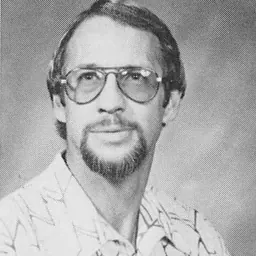
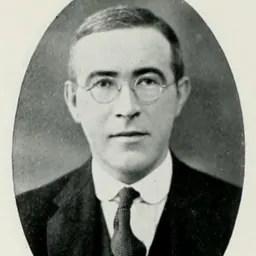


Related people
Same field, nearest in time




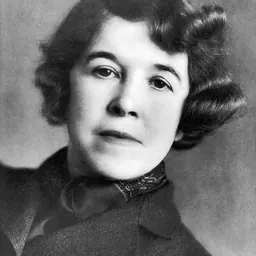
Contemporaries
People whose lives overlapped John Haslette Vahey's

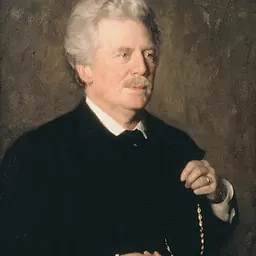

Frequently asked questions
Who was John Haslette Vahey?
British writer (1881-1938); detective Story Author from the Gold Age of Detective Novels
When was John Haslette Vahey born?
John Haslette Vahey was born on 5 March 1881 in Belfast.
When did John Haslette Vahey die?
John Haslette Vahey died on 15 June 1938 in Bournemouth, Hampshire.
What was John Haslette Vahey's occupation?
John Haslette Vahey was a novelist, military personnel and writer.
What nationality was John Haslette Vahey?
John Haslette Vahey was British.
Sources & further reading
· Wikipedia: John Haslette Vahey
· DBpedia: John Haslette Vahey
Cite this page
APA: Biography.guide. (2026). John Haslette Vahey. https://biography.guide/john-haslette-vahey/
MLA: "John Haslette Vahey." Biography.guide, https://biography.guide/john-haslette-vahey/.
Chicago: "John Haslette Vahey." Biography.guide. https://biography.guide/john-haslette-vahey/.
Data last updated: 2026-09-22 · Spot an error? Report a correction.
Page generated 2026-09-27 05:02 UTC