
About John Hasbrouck Van Vleck
Lived 1899 – 1980 (aged 81). John Hasbrouck Van Vleck was an American mathematician, physicist, university teacher and nuclear physicist, known for Crystal field theory and Van Vleck paramagnetism.
John Hasbrouck Van Vleck (; March 13, 1899 – October 27, 1980) was an American physicist and mathematician who won the Nobel Prize in Physics in 1977 for his contributions to the understanding of the behavior of electronic magnetism in solids. He shared the Prize with Philip W. Anderson and Nevill Mott.
Early life and education John Hasbrouck Van Vleck was born on March 13, 1899, to mathematician Edward Burr Van Vleck and Hester L. Raymond in Middletown, Connecticut, while his father was an assistant professor at Wesleyan University, and where his grandfather, astronomer John Monroe Van Vleck, was also a professor. He grew up in Madison, Wisconsin, and received an A.B. degree from the University of Wisconsin in 1920, before earning his Ph.D. at Harvard University in 1922 under the supervision of Edwin C. Kemble.
Career and research He joined the University of Minnesota as an assistant professor in 1923, then moved to the University of Wisconsin before settling at Harvard. He also earned Honorary D. Sc., or D. Honoris Causa, degree from Wesleyan University in 1936.
J. H. Van Vleck established the fundamentals of the quantum mechanical theory of magnetism, crystal field theory and ligand field theory (chemical bonding in metal complexes). He is regarded as the Father of Modern Magnetism.
During World War II, J. H. Van Vleck worked on radar at the MIT Radiation Lab. He was half time at the Radiation Lab and half time on the staff at Harvard. He showed that at about 1.25-centimeter wavelength water molecules in the atmosphere would lead to troublesome absorption and that at 0.5-centimeter wavelength there would be a similar absorption by oxygen molecules. This was to have important consequences not just for military (and civil) radar systems but later for the new science of radioastronomy.
Van Vleck (left) receives the Lorentz Medal from Hendrik Brugt Gerhard Casimir at the Royal Netherlands Academy of Arts and Sciences, Amsterdam, 1974. J. H. Van Vleck participated in the Manhattan Project. In June 1942, J. Robert Oppenheimer held a summer study for confirming the concept and feasibility of a nuclear weapon at the University of California, Berkeley. Eight theoretical scientists, including J. H. Van Vleck, attended it. From July to September, the theoretical study group examined and developed the principles of atomic bomb design.
J. H. Van Vleck's theoretical work led to the establishment of the Los Alamos Nuclear Weapons Laboratory. He also served on the Los Alamos Review committee in 1943. The committee, established by General Leslie Groves, also consisted of W. K. Lewis of MIT, Chairman; E. L. Rose, of Jones & Lamson; E. B. Wilson of Harvard; and Richard C. Tolman, Vice Chairman of NDRC. The committee's important contribution (originating with Rose) was a reduction in the size of the firing gun for the Little Boy atomic bomb, a concept that eliminated additional design weight and sped up production of the bomb for its eventual release over Hiroshima. However, it was not employed for the Fat Man bomb at Nagasaki, which relied on implosion of a plutonium shell to reach critical mass.
The philosopher and historian of science Thomas Kuhn completed a Ph.D. in physics under Van Vleck's supervision at Harvard.
From 1951, Van Vleck was Hollis Professor of Mathematics and Natural Philosophy at Harvard. He concurrently held the first deanship of Harvard's Division of Engineering and Applied Physics until 1957.
In 1961/62 he was George Eastman Visiting Professor at University of Oxford and held a professorship at Balliol College.
In 1950 he became foreign member of the Royal Netherlands Academy of Arts and Sciences. He was awarded the National Medal of Science in 1966 and the Lorentz Medal in 1974. For his contributions to the understanding of the behavior of electrons in magnetic solids, Van Vleck was awarded the Nobel Prize in Physics 1977, along with Philip W. Anderson and Sir Nevill Mott. Van Vleck transformations, Van Vleck paramagnetism and Van Vleck formula are named after him.
Van Vleck died in Cambridge, Massachusetts, aged 81. He was buried at Forest Hill Cemetery.
Awards and honors Van Vleck was elected to the American Academy of Arts and Sciences in 1934, the United States National Academy of Sciences in 1935, and the American Philosophical Society in 1939. He was awarded the Irving Langmuir Award in 1965, the National Medal of Science in 1966 and elected a Foreign Member of the Royal Society (ForMemRS) in 1967. He was related to Tom Van Vleck, a software engineer who co-authored an early email program.
Publications
The Absorption of Radiation by Multiply Periodic Orbits, and its Relation to the Correspondence Principle and the Rayleigh–Jeans Law. Part I. Some Extensions of the Correspondence Principle, Physical Review, vol. 24, Issue 4, pp. 330–346 (1924) The Absorption of Radiation by Multiply Periodic Orbits, and its Relation to the Correspondence Principle and the Rayleigh–Jeans Law. Part II. Calculation of Absorption by Multiply Periodic Orbits, Physical Review, vol. 24, Issue 4, pp. 347–365 (1924) The Statistical Interpretation of Various Formulations of Quantum Mechanics, Journal of the Franklin Institute, vol. 207, Issue 4, pp. 475–494 (1929) Quantum Principles and Line Spectra, (Bulletin of the National Research Council; v. 10, pt 4, no. 54, 1926) The Theory of Electric and Magnetic Susceptibilities (Oxford at Clarendon, 1932). Quantum Mechanics, The Key to Understanding Magnetism, Nobel Lecture, December 8, 1977 The Correspondence Principle in the Statistical Interpretation of Quantum Mechanics Proceedings of the National Academy of Sciences of USA, vol. 14, pp. 178–188 (1928)
Don’t just read it —
keep it.
Full-length biographies made to live with: read them, listen on the way to work, watch them tonight.
- E-book
- Audio
- Video
Instant download · yours to keep · every purchase keeps this site free
Important facts
People in John Hasbrouck Van Vleck's life
Named in this biography and alive at the same time

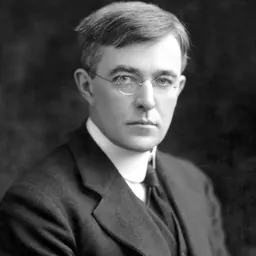


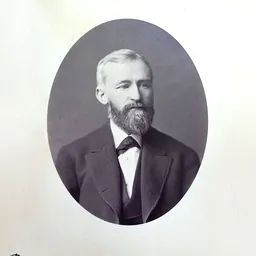


Related people
Same field, nearest in time
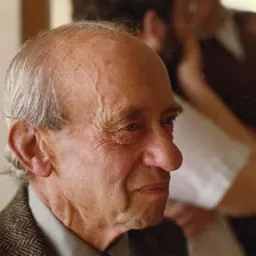

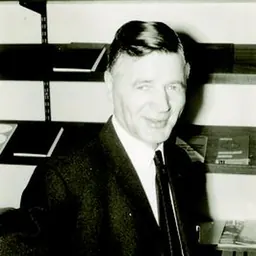
Contemporaries
People whose lives overlapped John Hasbrouck Van Vleck's



Frequently asked questions
Who was John Hasbrouck Van Vleck?
American physicist (1899–1980)
When was John Hasbrouck Van Vleck born?
John Hasbrouck Van Vleck was born on 13 March 1899 in Middletown.
When did John Hasbrouck Van Vleck die?
John Hasbrouck Van Vleck died on 27 October 1980 in Cambridge.
What was John Hasbrouck Van Vleck's occupation?
John Hasbrouck Van Vleck was a mathematician, physicist, university teacher and nuclear physicist.
What was John Hasbrouck Van Vleck known for?
John Hasbrouck Van Vleck was known for Crystal field theory and Van Vleck paramagnetism.
What nationality was John Hasbrouck Van Vleck?
John Hasbrouck Van Vleck was American.
Sources & further reading
· Wikipedia: John Hasbrouck Van Vleck
· DBpedia: John Hasbrouck Van Vleck
Cite this page
APA: Biography.guide. (2026). John Hasbrouck Van Vleck. https://biography.guide/john-hasbrouck-van-vleck/
MLA: "John Hasbrouck Van Vleck." Biography.guide, https://biography.guide/john-hasbrouck-van-vleck/.
Chicago: "John Hasbrouck Van Vleck." Biography.guide. https://biography.guide/john-hasbrouck-van-vleck/.
Data last updated: 2026-09-20 · Spot an error? Report a correction.
Page generated 2026-09-27 05:29 UTC