
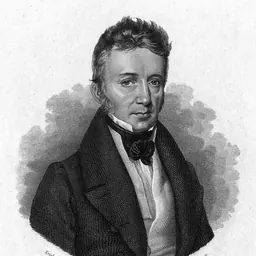
John Gregg Fee
American abolitionist
About John Gregg Fee
Lived 1816 – 1901 (aged 84). John Gregg Fee was an American christian minister, berea College and minister (Christianity).
John Gregg Fee (September 9, 1816 – January 11, 1901) was an abolitionist, minister and educator, as well as the founder of the town of Berea, Kentucky. He established The Church of Christ, the Union church in Berea, Berea College (1855), the first in the U.S. South with interracial and coeducational admissions, and late in his life, he founded another congregation that would become the First Christian Church (Disciples of Christ), two blocks from his first. (1890). During the American Civil War, Fee worked at Camp Nelson to have facilities constructed to support freedmen and their families, and to provide them with education and preaching. The camp was also where the formerly enslaved men who had joined the Union Army were taken to be mustered out in the last years of the Civil War.
Early life and education Fee was born in Bracken County, Kentucky, on September 9, 1816, the son of John Fee Jr., of Irish and Scots descent, and Sarah (Gregg) Fee, of Irish and English descent. His father inherited a bondsman who reached the term of his indenture. He then began to buy slaves, finally holding thirteen. Later he recognized more of its problems and invested in lands in free states, but held on to his slaves throughout his life and opposed his son's abolitionism.
Following a conversion to the Christian faith at age 14, John Fee Jr. wanted to join the Methodist Episcopal Church. His father encouraged him to wait, and a couple of years later they both joined the Presbyterian Church. He studied at Augusta College in Bracken County, Kentucky, and Miami University in Oxford, Ohio. He then entered Lane Seminary in Cincinnati, Ohio in 1842, where in studying for the ministry, he made lifelong friendships. The young Fee became a staunch abolitionist, vowing to "Love thy neighbor as thyself."
In Kentucky, Fee preached against slavery, but found it difficult to find a permanent position, due to widespread pro-slavery sentiment. He started in Lewis County, which had fewer slaveholders, so more people who supported his point of view. In the 1840s, he came into conflict with the Presbyterian Synod of Kentucky, which opposed his church's stance to refuse fellowship to slaveholders.
Fee left the Presbyterian Church over this matter and came to believe that Christianity had to be non-denominational and non-sectarian. He began writing about abolition, and some of his work was published by the American Missionary Association (AMA), established in 1846. By 1848 the AMA commissioned Fee as an itinerant preacher in Bracken and Lewis counties. In Lewis County, he and parishioners built a Free Church of Christ. It was especially Fee's statement from the pulpit, asking that the North send more people like John Brown south, "not to carry the Sword, but to carry the Gospel of Love" which riled up southeners still nervous from Brown's raid on Harpers Ferry, which had only recently taken place. This strategic error on Fee's part doomed his anti-slavery efforts in Kentucky.
In 1864 Fee and his wife returned to Berea. He soon was going frequently to Camp Nelson, where he became involved with preaching and teaching former slaves, who were being enlisted for military service in the Union Army. Their wives and children also came to the camp. Fee worked with the camp commandant and quartermaster on arrangements for a school, and urged building facilities for the families. He appealed to Salmon Chase, now with the national government, for funding, which was quickly approved. Barracks, a hospital and school buildings were constructed at Camp Nelson. Fee helped arrange for teachers for the freedmen and was closely involved in operations until after the end of the war. He and his wife used their own funds to help buy land in the area to be allocated as home lots, as well as raising a church and school near there.
After the war, Fee and Rogers returned with their families to Berea. For years, Fee had been determinedly non-sectarian. When the AMA became aligned with the Congregational Church in 1865, Fee felt that he no longer could accept their aid, as he believed the AMA, like other sects or denominations, would divide the people of the South. In later years, Fee and others went on to establish the Christian Missionary Association of Kentucky, made up of individuals rather than churches. He also devoted his efforts to Berea College, which grew after the war. The school accepted freedmen and women, and expanded from its one room. In 1873, it awarded its first college degree.
Don’t just read it —
keep it.
Full-length biographies made to live with: read them, listen on the way to work, watch them tonight.
- E-book
- Audio
- Video
Instant download · yours to keep · every purchase keeps this site free
Important facts
People in John Gregg Fee's life
Named in this biography and alive at the same time

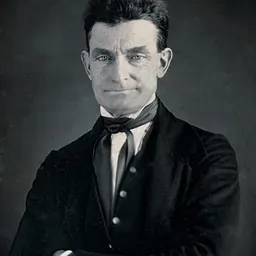
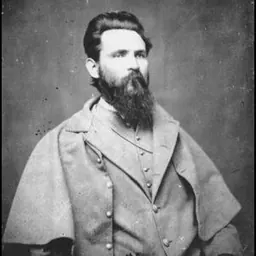
Related people
Same field, nearest in time
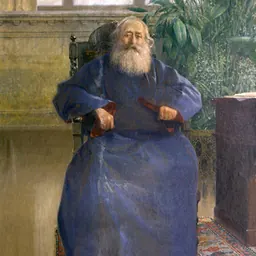
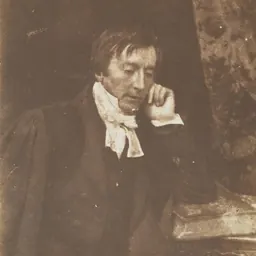
Contemporaries
People whose lives overlapped John Gregg Fee's





Frequently asked questions
Who was John Gregg Fee?
American abolitionist
When was John Gregg Fee born?
John Gregg Fee was born on 9 September 1816 in Bracken County.
When did John Gregg Fee die?
John Gregg Fee died on 11 January 1901.
What was John Gregg Fee's occupation?
John Gregg Fee was a christian minister, berea College and minister (Christianity).
What nationality was John Gregg Fee?
John Gregg Fee was American.
Sources & further reading
Cite this page
APA: Biography.guide. (2026). John Gregg Fee. https://biography.guide/john-gregg-fee/
MLA: "John Gregg Fee." Biography.guide, https://biography.guide/john-gregg-fee/.
Chicago: "John Gregg Fee." Biography.guide. https://biography.guide/john-gregg-fee/.
Data last updated: 2026-09-22 · Spot an error? Report a correction.
Page generated 2026-09-27 05:26 UTC