
John Gordon
Militia captain
About John Gordon
Lived 1759 – 1819 (aged 59). John Gordon was an American.
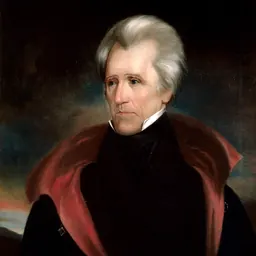
John Gordon (July 15, 1759 – June 6, 1819) was an American frontiersman, trader with Native Americans, planter, and militia captain in several Indian wars. Part of the post-Revolutionary War settlement of the trans-Appalachian frontier, Gordon was an early settler in the Nashville, Tennessee area. He gained notability and rank in the Tennessee Militia, fighting against the Creeks and Seminoles for Andrew Jackson. Jackson referred to him as his Captain of "the Spies," a unit of mounted scouts.
Partnering with a Chickasaw chieftain, Gordon helped improve the Natchez Trace, which gave access to the settlers pushing into western Tennessee and south into the Louisiana and Mississippi territories. He participated in the Creek War, including its conclusion at the Battle of Horseshoe Bend.
Early life and Tennessee settler John Gordon's house on the Duck River. Site of Gordon and Chief William Colbert's ferry, and the Gordon plantation. Now maintained as part of the Natchez Trace National Parkway.
Gordon was born in Spotsylvania County, Virginia, to an aristocratic landholding family. His father had fought in the War of Independence as a lieutenant, and settled the family in Nashville after the war.
As a young man, John Gordon made a name for himself as an Indian fighter, riding with the militia to investigate reports of attacks on cabins and farmsteads around Nashville. In 1793 he was commissioned by Territorial Governor William Blount as a captain in the militia. In 1794, he rode in the Nickajack campaign against the Chickamauga Cherokee, who violently defended their Tennessee River Gorge homeland. Gordon had a plantation in Nashville where he made money from horse racing,
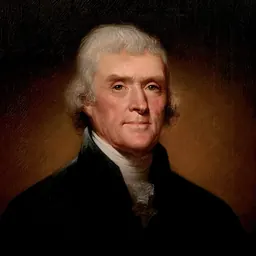
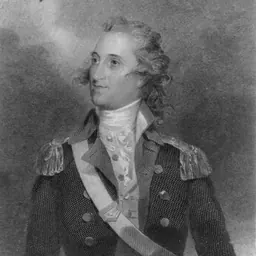
Later career In January 1805 he was a signatory to a petition protesting the court-martial of Thomas Butler, probably produced at the behest of Andrew Jackson and sent to Thomas Jefferson's government.
It was in the militia that Gordon first came in contact with the Chickasaw Indians, with whom he would maintain friendly contact throughout his life. He later acquired some land within the Chickasaw Nation in present day Hickman County on the Duck River. Here he established a plantation of over fifteen-hundred acres. The land was located at a spot where the Natchez Trace, the old Indian trail then used by settlers going into the Mississippi Territory, crossed the Duck River. In a partnership with Chickasaw Chief William "Chooshemataha" Colbert, Gordon provided ferry service and ran a trading post along the trace. The Gordon House is still there, now maintained by the National Park Service as part of the Natchez Trace National Parkway.
Leach is of the opinion that John Gordon and Andrew Jackson were acquainted with each other prior to the War of 1812.
The Creek War
Gordon commenced active duty on September 24, 1813 and continued to serve up to May 10, 1814. His mounted company of "Spies", utilized in a reconnaissance scouting role, were mobilized at Fayetteville, according to the surviving muster rolls. At the end of January 1814 his mounted company of "Spies" amounted to 30 men.
Now referred to as "Captain of the Spies" in the Tennessee state militia, Gordon led militiamen and friendly Indians against hostile Indians. It was during this time that the Muscogee Creek Confederacy dissolved into a civil war, with traditionalist Creek "Red Sticks" calling for the Creek people to stop ceding land to the United States and adopting western styles of society and agriculture. The Creek Nation called on Tennessee to help put down the so-called "Red Stick rebellion", named for the painted red war clubs brandished by the Creek priests. It was in the militia that Gordon made the acquaintance of Andrew Jackson, who led the campaign.
When starving Tennesseans threatened to mutiny against "Old Hickory", Gordon was the first to answer Jackson's plea "If only two men remain with me, I will never abandon this fort,"
Gordon fought against the Red Sticks in 1813 at the Battle of Talladega. Gordon was mentioned in despatches dated January 29, 1814 sent by Jackson and addressed to Thomas Pinckney as the administrator of American forces in the Southern United States at Fort Strother.
Gordon was mentioned in a report dated March 31, 1814 sent by Jackson and addressed to Willie Blount as the Governor of Tennessee at Fort Williams, mentioning the attack on Horseshoe Bend, 'the left extremity of the line by Capt Gordon of the Spies and Capt. McMurry, of Gen'l Johnston's Brigade of West Tennessee Militia.'.
With Gordon's affirmative report, Jackson captured the town with use of the Tennessee Militia, angering many in the Federal Government. Mission to Pensacola Jackson was concerned that the Spanish had not been maintaining a neutral stance towards the Americans and British, but his aggressive behavior would ultimately push the Spanish governor to align himself with the British. It became apparent that Jackson would be prepared to attack Pensacola. Jackson would force the issue, being well aware of Manrique's position of weakness.
Gordon traveled to Pensacola, arriving on July 20, 1814. He had spoken to Governor Manrique, to whom he delivered a letter from Jackson. Manrique's reply was dated July 26. Governor Manrique summonsed Gordon on the day that he received the letter. He considered the letter to be impertinent in its demands to surrender two Indian Chiefs to Jackson. Given that Americans were harming Indians in Spanish territory without the consent of the Governor, he felt authorized to arm the Indians, it being implied to Gordon this would take place. His report dated July 29 was provided to Jackson. It made mention of discovering there was now a British presence at Prospect Bluff, and others confirming that three thousand muskets had been supplied by the British. Based upon what others told him, it was rumored the Indians were being provided with arms and ammunition by the Spanish 'but did not see it myself.' There were further rumors of reinforcements from Havana, with a large British force to arrive in September. It was rumored that six hundred British troops were at Apalachicola, Florida. The evening before Gordon departed, it was rumored Spain had declared war. Jackson forwarded this report on July 30, 1814 to the Secretary of War. Manrique was in a precarious situation. He took the initiative, and in August 1814 approached the British, inviting them to Pensacola. The British were observed docking the 25th and unloading the 26th.
In his letter dated August 24, Jackson criticized Manrique for allowing British agents to operate in Pensacola and warned him that he would consider him personally responsible for any depredations suffered by American citizens. Gordon did not participate in neither the attack on Pensacola in November 1814, nor the subsequent Battle of New Orleans. Gordon and Dolly are buried at Rose Hill Cemetery in Columbia, Tennessee.
The author John Steele Gordon is a descendant.
Don’t just read it —
keep it.
Full-length biographies made to live with: read them, listen on the way to work, watch them tonight.
- E-book
- Audio
- Video
Instant download · yours to keep · every purchase keeps this site free
Important facts
People in John Gordon's life
Named in this biography and alive at the same time

Contemporaries
People whose lives overlapped John Gordon's






Frequently asked questions
Who was John Gordon?
militia captain (1759–1819)
When was John Gordon born?
John Gordon was born on 15 July 1759 in Spotsylvania County.
When did John Gordon die?
John Gordon died on 6 June 1819.
What nationality was John Gordon?
John Gordon was American.
Sources & further reading
· DBpedia: John Gordon (militia captain)
Cite this page
APA: Biography.guide. (2026). John Gordon. https://biography.guide/john-gordon-1759/
MLA: "John Gordon." Biography.guide, https://biography.guide/john-gordon-1759/.
Chicago: "John Gordon." Biography.guide. https://biography.guide/john-gordon-1759/.
Data last updated: 2026-09-20 · Spot an error? Report a correction.
Page generated 2026-09-27 05:31 UTC