
About John Goode
Lived 1829 – 1909 (aged 80). John Goode was an American politician and lawyer.
John Goode Jr. (May 27, 1829 – July 14, 1909) was a Virginia attorney and Democratic politician. He was Solicitor General of the United States during the presidency of Grover Cleveland. He was known as "the grand old man of Virginia".
Early life Goode was born in Liberty (now Bedford), the county seat of Bedford County, Virginia. His paternal grandfather, Edmund Goode, fought in the American Revolutionary War, then moved from Caroline County westward to the Peaks of Otter area of what became Bedford County.
Confederacy and Civil War
Goode joined Company A of the 2nd Virginia Cavalry (Confederate Army) as a private on May 11, 1861, under the command of Capt. William R. Terry. Cavalryman Goode fought at the First Battle of Manassas on July 21, 1861. In October 1861, he was promoted to Captain, serving as the Aid-de-Camp for Major General Jubal A. Early from October 5, 1861, through December 1862, and again in 1864. The Southern Opinion wrote on November 16, 1866, "Mr. Goode is a lawyer of methodical mind, that is in its astuteness reminds us of Edmund Burke. He is emphatically an easy speaker, but the most effective of orators, by the very force and correctness of his opinion. Physically considered he is an ideal legislator, and though the least presumptuous, is the most prominent member of the Virginia House of Delegates."
Goode moved his legal practice to Washington, D.C., after his election to Congress. He became a member of the boards of visitors of the University of Virginia, the College of William & Mary, and the Virginia Agriculture and Mechanical College (now Virginia Tech). Goode served in this capacity until August 1886. He retained the status of acting because he failed confirmation by the Senate due to differences between him and Virginia Senator William Mahone.
In 1892, Cleveland appointed Goode to the United States and Chilean Claims Commission which settled several disputes between the two countries. Fellow delegates unanimously elected Goode as the convention's president.
The convention ultimately stripped the 1868 state constitution's clauses which denounced Virginia's rebellion against the United States and outlawed slavery. The convention also forbade the education of white and black children in the same school. Disenfranchisement became the subject of much debate; delegate Carter Glass explained how it would inevitably cut 4/5ths of the African American voters. Large sections of the final document restricted voting to war veterans and their sons, property owners who paid at least $1,000 in taxes during the previous year, and any man who could give a satisfactory explanation of any portion of the state constitution. It also allowed the legislature to establish further voting restrictions.
Despite pre-convention promises that voters would have a choice of ratifying the final document, the delegates voted to proclaim it as in effect as of July 10, 1902 and never submitted it to voters. Lawyer and Readjuster John S. Wise pursued two federal cases contested that the lack of submission, as well as delegates' intent to disenfranchise African-American voters. However, federal judges relied on an 1895 case arising out of the South Carolina convention to find a lack of jurisdiction. When that decision was appealed, the U.S. Supreme Court declined to get involved. As of the 1904 election, fifty percent fewer white and ninety percent fewer black men voted in Virginia.
Yorktown Centennial and Jamestown Ter-Centennial Goode served as president of the Yorktown Centennial Commission.
Goode was the primary speaker at the 1875 dedication of a monument for Confederate war dead at Piedmont Hill in Bedford; the monument was eventually moved to Longwood Cemetery in Bedford. He published his memoir, Recollections of a Lifetime, in 1906. Goode, a community in Bedford County, Virginia, is named in his honor.
Don’t just read it —
keep it.
Full-length biographies made to live with: read them, listen on the way to work, watch them tonight.
- E-book
- Audio
- Video
Instant download · yours to keep · every purchase keeps this site free
Important facts
People in John Goode's life
Named in this biography and alive at the same time

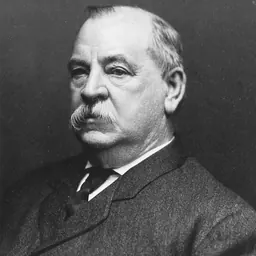


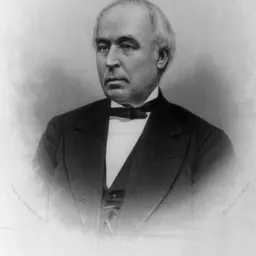
Related people
Same field, nearest in time
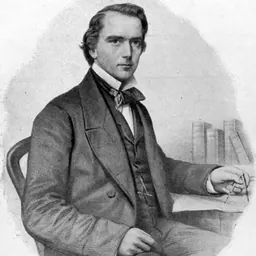




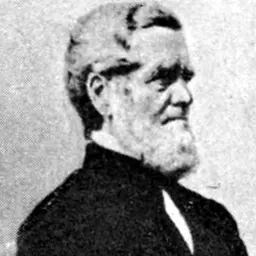
Contemporaries
People whose lives overlapped John Goode's



Frequently asked questions
Who was John Goode?
Confederate Army officer, lawyer and politician (1829-1909)
When was John Goode born?
John Goode was born on 27 May 1829 in Bedford County.
When did John Goode die?
John Goode died on 14 July 1909 in Norfolk, Virginia.
What was John Goode's occupation?
John Goode was a politician and lawyer.
What nationality was John Goode?
John Goode was American.
Sources & further reading
· DBpedia: John Goode (Virginia politician)
Cite this page
APA: Biography.guide. (2026). John Goode. https://biography.guide/john-goode/
MLA: "John Goode." Biography.guide, https://biography.guide/john-goode/.
Chicago: "John Goode." Biography.guide. https://biography.guide/john-goode/.
Data last updated: 2026-09-20 · Spot an error? Report a correction.
Page generated 2026-09-27 05:30 UTC