
About John Goldie
Lived 1717 – 1809 (aged 92). John Goldie was a philosopher, astronomer, cabinet maker, mathematician and miller.
Life and character
Often referred to as the philosopher, Goldie was born in 1717 at Craigmill (NS 482 329), a flour mill on the Cessnock Water that had once been the mill of the Barony of Haining-Ross, worked by his family for nearly 400 years. His parents were Anna Farquhar and John Goudie who married at Craigie in Ayrshire on 6 November 1714. He had four brothers and sisters, two of whom may have died in infancy.
He was "one of the most remarkable men of his time and place". He is said to have died in 1808 aged 92; some authors say 1809 or 1811.
At the age of 14 (1735), and with basic tools and materials, he designed and constructed a miniature corn mill at Craigmill on the Cessnock Water. Mr Wallace of Kelly, then living at Cessnock House near Galston was so impressed with the novel design of this mill that brought Earl of Marchmont to see it. The Earl gave Goldie three shillings as a reward with which to buy an iron spindle for the wheel. He had interests ranging from the study of astronomy and science to that of theology. He also speculated in canals, railways and coal mines.
Goldie was largely educated by his mother Anna, as well as being self-educated, as he was of a studious nature from boyhood reading many books and becoming conversant with "some of the more abstruse sciences." He had developed a strong 'free thinking' attitude through his reading of Dr Taylor of Norwich's publication On Original Sin.
He is recorded to have been a man of unblemished character who had many good friends, many of whom were the leading lights of Kilmarnock. He also corresponded with "literary men of celebrity". In 1808 he had printed at Kilmarnock a book titled Conclusive Evidences Against Atheism.
John Goldie the 'Philosopher' was God fearing, but had no truck with the presence on Earth of the Devil and made it known that he could solve this riddle in a Sherlock Holmes style of logical investigation. Despite his reservations the farmer invited him to the farm, accompanied by his friends, Mr Gillies of Kilmaurs, the 'New Licht' minister; and Robert Muir, a Kilmarnock merchant and Kirk elder. After a number of questions relating to possible enemies and an inspection of the broken ropes he declared that this was the work of man and not the Devil. Swearing the farmer to secrecy he advised him to hide in the byre that night. Once darkness had fallen the farmer, hiding in the byre as instructed, became aware of the usual disturbances and suddenly saw a shadowy figure of a man holding a trumpet-like instrument with which he was making the unnatural sounds that had scared him so. Rushing forward he seized the culprit only to find that it was his own son.
It transpired that the son had some knowledge of chemistry and had made what we would call coloured fireworks. The ropes had been severed with nitric acid, then known as aqua fortis (strong water). Goudie had logically deducted that the son, hoping to scare his father into retirement so that he could run the farm, was the 'Devil on Earth'. The 'philosopher's' reputation was greatly enhanced whilst the son was mortified and humiliated to the extent that he left Ayrshire and was never seen in these parts again.
Association with Robert Burns
Goldie was 40 years older than Robert Burns; here "Whig" means a Presbyterian of the Auld Licht school, the poet being of the New Licht
Tradition states that Goldie visited Robert Burns in 1785 at Mossgiel Farm while on a business trip to Mauchline during harvest time, the two men sat down behind a stook (sheaf) while the poet recited a few of his compositions. Goldie had first become aware of Burns through the circulation of manuscript copies of Burns' poem and satire "The Twa Herds".
So impressed was Goldie with Burn's poetry that he encouraged him to publish his work Such was their enthusiasm that several of these supporters appear in the subscription list of Poems, Chiefly in the Scottish Dialect (Edinburgh Edition).
It is recorded, probably from his son, that Goldie said "Robin, I’ll tell you what to do. Come your wa's down to Killie (Kilmarnock)some day next week, and tak' pat-luck wi' me. I ha'e twa or three guid friends that'll be able to set the press a-going."
James Mackay accepts that such a meeting may have taken place but without the immediate result of the publication of Burns' poems. Goldie is said to have been a powerful influence in dissuading Robert Burns from his avowed intention of emigrating to Jamaica.
Burns was a daily visitor to Goldie's house during the time in 1786 that his manuscripts were at the printing works of John Wilson and he corrected the proofs there and wrote many letters, meeting future patrons as subscribers to his first published work, the Kilmarnock volume. Goldie lived in the second flat of the building occupied by Messrs. Stewart who were ironmongers at the Cross.
David Sillar and Gavin Turnbull both composed verses on John Goldie, Turnbull writing that :-
"He was a man without a flaw; In's life he never err'd at a' ; His ain opinion was the law, Withouten feed; The world to him were madmen a' , But now he is dead!
Goldie's significance has perhaps been overlooked because the many manuscripts and letters from Burns, Lord Kames, and other celebrated men of the day were destroyed during his son's (Lieutenant Goldie R.N.) time away at sea.
Micro-history Kilmaurs church in 1880. John Goldie often walked to attend services here.
Goudie's Bible was often the subject of ridicule by his enemies and one incident is recorded that when in Ayr. He was entering a bookshop just as a clergyman, with whom he was acquainted, was leaving with a package of books and he asked him in an offhand friendly manner what he had purchased, the response was "Just buying a few ballads to make psalms for your bible."
He took a great interest in the construction of a canal from Kilmarnock to Troon and went so far as to survey a suitable route and indeed in 1796 the Kilmarnock Council considered requesting Parliament for an act to build a canal from Riccarton to Troon.
It is said that he lost money in mining speculations and was cheated by his partner towards the end of his life.
His portrait, supposedly a good likeness, was painted by a Mr. Whitehead with a globe in the background.
Don’t just read it —
keep it.
Full-length biographies made to live with: read them, listen on the way to work, watch them tonight.
- E-book
- Audio
- Video
Instant download · yours to keep · every purchase keeps this site free
Important facts
People in John Goldie's life
Named in this biography and alive at the same time

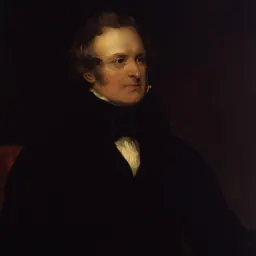

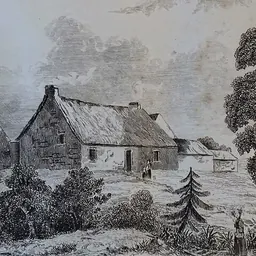
Related people
Same field, nearest in time


Contemporaries
People whose lives overlapped John Goldie's



Frequently asked questions
Who was John Goldie?
(1717–1809), religious controversialist
When was John Goldie born?
John Goldie was born on 17 January 1717 in East Ayrshire.
When did John Goldie die?
John Goldie died on 28 March 1809 in Kilmarnock.
What was John Goldie's occupation?
John Goldie was a philosopher, astronomer, cabinet maker, mathematician and miller.
Sources & further reading
· DBpedia: John Goldie (philosopher)
Cite this page
APA: Biography.guide. (2026). John Goldie. https://biography.guide/john-goldie-philosopher/
MLA: "John Goldie." Biography.guide, https://biography.guide/john-goldie-philosopher/.
Chicago: "John Goldie." Biography.guide. https://biography.guide/john-goldie-philosopher/.
Data last updated: 2026-09-22 · Spot an error? Report a correction.
Page generated 2026-09-27 05:29 UTC