
About John Glynn
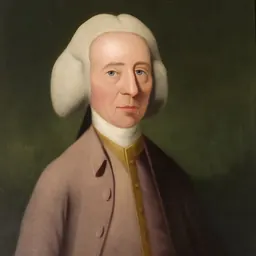
Lived 1722 – 1779 (aged 56–57). John Glynn was a British politician.
John Glynn Serjeant-at-law of Glynn (1722–1779) was an English lawyer and politician who sat in the House of Commons from 1768 to 1779. Glynn was born to a family of Cornish gentry. He inherited his father's estate at Glynn in the parish of Cardinham, Cornwall, on the deaths of his elder brother and his nephew.
Glynn was admitted to the Middle Temple on 21 January 1740–1741. On 28 January 1747/8, he was called to the Bar. In 1763, Glynn became serjeant-at-law, and in the following year Recorder of Exeter. Known for his skill as a pleader, Glynn was engaged in many celebrated cases. Elected to Parliament for Middlesex in 1768, Glynn served in Parliament until his death. In 1772, he was elected Recorder of London. Glynn's speeches in Parliament were highly praised. Glynn County, Georgia was named after John Glynn in recognition for his support for the cause of American independence in Parliament.
Early life The second son of William Glynn of Glynn House in Cardinham, Cornwall, who married Rose, daughter of John Prideaux of Prideaux Place, Padstow, he was baptised at Cardinham on 3 August 1722. He matriculated at Exeter College, Oxford, on 17 May 1738, but did not proceed to a degree. He was called to the bar at the Middle Temple in 1748. His elder brother died in June 1744, leaving an only son of weak intellect, against whom his uncle took out a commission in lunacy, and was appointed receiver of the family estates. The youth's mother was so much incensed that she left all her own property to distant connections. The lunatic died in December 1762, and Glynn came into the possession of his nephew's property.
Legal career On 24 January 1763 Glynn was created a serjeant-at-law, but as a result of his opinions in opposition to the court, he was never promoted to the rank of king's serjeant. In 1764 he was appointed recorder of Exeter. His position at the bar and his opinions brought Glynn to take the lead in the cases connected with John Wilkes. They were in close consultation throughout the summer of 1763. He then acted for Wilkes in his application for a writ of habeas corpus in May 1763, in the action against George Montagu-Dunk, 2nd Earl of Halifax, and in the trial which took place in 1764 on the republication of The North Briton in volumes. He was the advocate of John Almon in 1765, pleaded in the king's bench against the outlawry of Wilkes in 1768, and was counsel for Alderman James Townsend in his action in June 1772 against the collector of land tax, which Townsend had refused to pay, urging the nullity of Parliament through the irregularity of the Middlesex election.
Glynn also enjoyed a large share of general business. His advocacy secured the acquittal of Miss Butterfield, accused of poisoning William Scawen.
Glynn was one of the leading members of the Society of the Bill of Rights, which at the end of 1770 addressed a provocative letter to the American colonies. On 17 November 1772 Glynn was elected Recorder of London to replace James Eyre.
Family and death Glynn was married on 21 July 1763 to Susanna Margaret, third daughter of Sir John Oglander of Nunwell in the Isle of Wight. She had been born on 1 September 1744 and died at Catherine Place, Bath, on 20 May 1816. They had three sons and a daughter.
Glynn suffered from gout and had to be carried into the House in April 1769 to vote against the motion for seating Henry Luttrell for Middlesex. In 1778 a deputy was allowed on account of his illness to act for him as recorder. On 16 September 1779 he died, and was buried at Cardinham on 23 September.
Works Glynn edited in 1775–1776 eight numbers of The Whole Proceedings on the King's Commission of the Peace for the City of London.
Don’t just read it —
keep it.
Full-length biographies made to live with: read them, listen on the way to work, watch them tonight.
- E-book
- Audio
- Video
Instant download · yours to keep · every purchase keeps this site free
Important facts
People in John Glynn's life
Named in this biography and alive at the same time

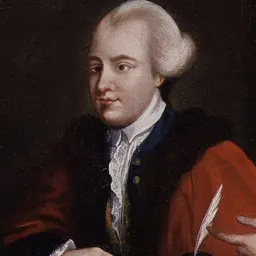
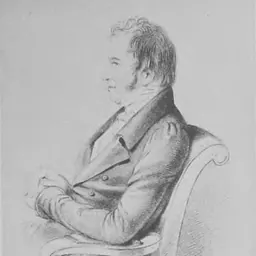
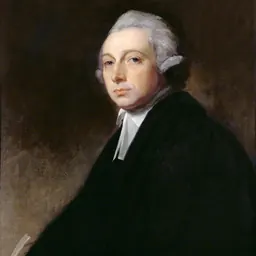
Related people
Same field, nearest in time

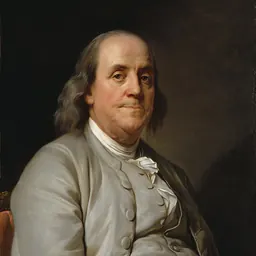



Contemporaries
People whose lives overlapped John Glynn's



Frequently asked questions
Who was John Glynn?
British politician; (1722-1779)
When was John Glynn born?
John Glynn was born in 1722 in Cardinham.
When did John Glynn die?
John Glynn died in 1779.
What was John Glynn's occupation?
John Glynn was a politician.
What nationality was John Glynn?
John Glynn was British.
Sources & further reading
Cite this page
APA: Biography.guide. (2026). John Glynn. https://biography.guide/john-glynn/
MLA: "John Glynn." Biography.guide, https://biography.guide/john-glynn/.
Chicago: "John Glynn." Biography.guide. https://biography.guide/john-glynn/.
Data last updated: 2026-09-26 · Spot an error? Report a correction.
Page generated 2026-09-27 05:14 UTC