
About John Gilchrist
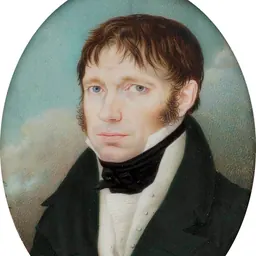
Lived 1759 – 1841 (aged 81). John Gilchrist was a British lexicographer, linguist, banker, surgeon, writer and philologist, known for Gilchrist Educational Trust and Hindustani language.
John Borthwick Gilchrist (19 June 1759 – 9 January 1841) was a Scottish surgeon, linguist, philologist and Indologist. Born and educated in Edinburgh, he spent most of his early career in India, where he made a study of the local languages. In later life, he returned to Britain and lived in Edinburgh and London. In his final years, he moved to Paris, where he died at the age of 81.
He is principally known for his study of the Hindustani language, which led to it being adopted as the lingua franca of northern India (including present-day Pakistan) by British colonists and indigenous people. He compiled and authored An English-Hindustani Dictionary, A Grammar of the Hindoostanee Language, The Oriental Linguist, and many more. His lexicon of Hindustani was published in Arabic script, Nāgarī script, and in Roman transliteration. He is also known for his role in the foundation of University College London and for endowing the Gilchrist Educational Trust.
Biography Early life and education Gilchrist was born on 19 June 1759 in Edinburgh, and baptised on 22 June 1759 with the names John Hay Gilchrist. His father was Walter Gilchrist, but very little is known about him except that he was a merchant who disappeared the year that John was born. His mother was Henrietta Farquharson (1730-1830), originally from Dundee, who lived to the very advanced age of 100. In later life, Gilchrist obtained a licence to use the name Borthwick, his maternal grandmother's surname, based on her descendancy from the Borthwick title in the Scottish peerage.
He was educated at George Heriot's School and the Edinburgh High School (1773–1775). At the age of 16, he travelled to the West Indies, where he gained a knowledge of the cultivation and production of indigo. He remained there for two or three years before returning to Edinburgh.
Career in India In 1782, Gilchrist was apprenticed as a surgeon's mate in the Royal Navy and travelled to Bombay, India. There, he joined the East India Company's Medical Service and was appointed assistant surgeon in 1784. He marched with the company's Bengal Army to Fatehgarh, and during this journey he noted the extent to which the Hindustani language could be understood in different parts of the country. However, he was surprised that the company neither required nor encouraged their employees to learn it, and subsequent experiences convinced him that officers in the army should also learn it in order to communicate effectively with the Indian soldiers or sepoys. In 1785 he requested a year's leave from duty to continue these studies. This leave was eventually granted in 1787 and Gilchrist never returned to the Medical Service. He spent 12 years living at various places, including Patna, Faizabad, Lucknow, Delhi, and Ghazipur. He travelled extensively to work with native speakers and also to garner material. In Ghazipur, to help finance his work, he also engaged in the production of indigo, sugar and opium – an enterprise which was initially successful but eventually failed.
Fort William College
On Gilchrist's suggestion, the Governor-General, the Marquess of Wellesley, and the East India Company decided to set up a training institution for its recruits in Calcutta. This started as the Oriental Seminary or Gilchrist ka madrasa, but was enlarged within a year to become Fort William College in 1800. Gilchrist served as the first principal of the college until 1804, and through the personal patronage of Wellesley received a generous salary of 1500 rupees a month, or about £1800 per year (about £180,000 in present-day terms).
Under Gilchrist's leadership, Fort William also became a centre for Urdu prose. The language they taught was meant for young British people to acquire a general practical knowledge for administrative purposes, and not for native speakers of the language. He gathered around him writers from all over India who were able to produce a simple Urdu style that was "intelligible to British officers and merchants who had no use for poetry". He not only discovered/invented the Hindustani language, but he was credited as a great patron of Urdu and indirectly the reinvigoration of Hindi. During his time at Fort William College, he encouraged the use of the purer form of Khariboli from which contemporary Hindi evolved. In the words of K.B. Jindal, author of A History of Hindi Literature: "Hindi as we know it today is the product of the nineteenth century."
Another view was that of George Abraham Grierson, an Irish linguist and civil servant, who said that the standard or pure Hindi which contemporary Indians use is "an artificial dialect the mother tongue of no native-born Indian, a newly invented speech, that wonderful hybrid known to Europeans as Hindi and invented by them." and decades later, his and Mary Anne's son, Major Charles Aeneas Burton, was murdered together with his two sons at Kotah in 1857, during the Indian mutiny.
It is also known that three other Indian-born daughters returned with Gilchrist to Britain: Henrietta (1797–1864) married James Wilson, a merchant, in Edinburgh in 1815. Elizabeth (b. 1801) married John Mann, a jeweller, in Edinburgh in 1818. Violet (1802–1872) married the writer and composer, George Linley, in Edinburgh in 1824.
After his return to Edinburgh, Gilchrist married Mary Ann Coventry on 15 May 1808, a woman nearly 30 years his junior, with whom he had no children. After he died, she married General Guglielmo Pepe, Prince of the Kingdom of Naples.
Final years, death and legacy
Gilchrist travelled to the Continent several times between 1825 and 1831, for reasons of ill health. He settled in Paris almost permanently from 1831 onwards, obtaining a French passport for himself, his wife and two servants, and resided in the Rue Matignon. He died there on 9 January 1841, aged 81, and was buried in the Père-Lachaise Cemetery.
Will Gilchrist left a considerable fortune, which included property and investments in London and Edinburgh, as well as the Balmain estate in Australia. In his will, he appointed the Member of Parliament, Joseph Hume, to be his principal executor, and instructed that his assets be sold and the proceeds held in a charitable trust. From the Trust's income, he granted annuities to his widow and surviving daughters. The residual income he instructed to be used "for the benefit and advancement and propagation of education and learning in every part of the world as far as circumstances will permit."
Legal battle The will was contested by some members of Gilchrist's family. The principal appellant was his nephew, Walter Gilchrist Whicker (son of his sister, Helen), who considered himself to be Gilchrist's legitimate heir-at-law. The case, known as Whicker v Hume, was complex and considered several issues:
Gilchrist's legal domicile at the time of his death. It was argued that this should be Scotland or France (his countries of birth and death, respectively), rather than England, where the will had been drawn up. The legitimacy of Gilchrist's Indian-born daughters. The jurisdiction which applied to the land in the colony of New South Wales, and whether the legal doctrine of mortmain applied to it. Whether Gilchrist's words "education and learning" constituted a valid charitable objective.
The case dragged on for many years and eventually went as far as the House of Lords, which handed down its final judgement upholding the validity of the will in July 1858, over 17 years after Gilchrist's death and after which time several of the parties, including both Whicker and Hume, had themselves died. It has become a significant legal precedent, regarding the definition of domicile and the jurisdiction under which a will must be executed. The collection includes administrative papers, material about John Borthwick Gilchrist and publications by the Trust.
Don’t just read it —
keep it.
Full-length biographies made to live with: read them, listen on the way to work, watch them tonight.
- E-book
- Audio
- Video
Instant download · yours to keep · every purchase keeps this site free
Important facts
People in John Gilchrist's life
Named in this biography and alive at the same time
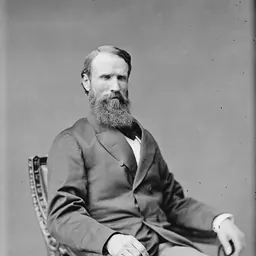

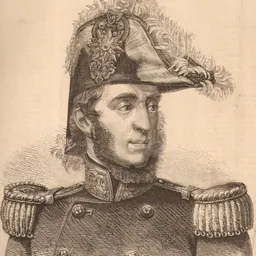
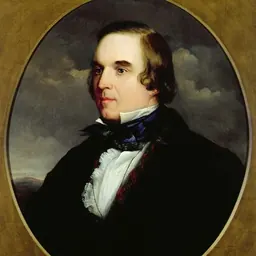

Related people
Same field, nearest in time
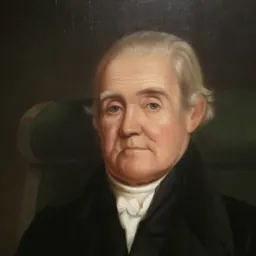

Contemporaries
People whose lives overlapped John Gilchrist's




Frequently asked questions
Who was John Gilchrist?
Scottish indologist
When was John Gilchrist born?
John Gilchrist was born on 19 June 1759 in Edinburgh.
When did John Gilchrist die?
John Gilchrist died on 9 January 1841 in Paris.
What was John Gilchrist's occupation?
John Gilchrist was a lexicographer, linguist, banker, surgeon, writer and philologist.
What was John Gilchrist known for?
John Gilchrist was known for Gilchrist Educational Trust and Hindustani language.
What nationality was John Gilchrist?
John Gilchrist was British.
Sources & further reading
· DBpedia: John Gilchrist (linguist)
Cite this page
APA: Biography.guide. (2026). John Gilchrist. https://biography.guide/john-gilchrist-lexicographer/
MLA: "John Gilchrist." Biography.guide, https://biography.guide/john-gilchrist-lexicographer/.
Chicago: "John Gilchrist." Biography.guide. https://biography.guide/john-gilchrist-lexicographer/.
Data last updated: 2026-09-20 · Spot an error? Report a correction.
Page generated 2026-09-27 05:17 UTC