
About John Gilbert
Lived 1812 – 1845 (aged 32–33). John Gilbert was a British explorer, ornithologist, naturalist, zoologist and zoological collector.
John Gilbert (c. 1812 – 28 June 1845) was an English naturalist and explorer. Gilbert is often cited in the earliest descriptions of many Australian animals, many of which were unrecorded in European literature, and some of these are named for him by those authors. Gilbert was sent to the newly founded Swan River Colony and made collections and notes on the unique birds and mammals of the surrounding region. He later joined expeditions to remote parts the country, continuing to make records and collections until he was killed during a violent altercation at Mitchell River (Queensland) on the Cape York Peninsula.
Early life John Gilbert was born in about 1812 in Newington Butts, south London, England, and was christened on 25 October 1812 at Spa Fields Lady Huntingdon's, Clerkenwell, London. His father was William, and his mother was Ann, who was from nearby villages in Kent.
Gilbert was a taxidermist for the Zoological Society of London, where he met John Gould. Gould had recruited Gilbert, four years his junior, to work there. But 18 months later, Gilbert was sacked for being absent without leave.
Australian expeditions Gilbert travelled to Australia in 1838 with the Goulds and was paid 100 pounds per annum plus expenses, but he was expected to keep his expenses as small as possible.
The party landed in Hobart, Van Diemen's Land in September, and in January, Gilbert and Gould travelled overland together to Launceston. Gould decided they should separate and sent Gilbert off on 4 February 1839 to the Swan River Colony, assuring him that he would look after all his personal possessions. Gilbert was instructed to collect as many specimens as possible, then meet up again in Sydney, where Gould would wait for him until the end of April the following year.
Gilbert disembarked from the ship Comet on 6 March 1839 at Fremantle, Western Australia. He met Francis Armstrong within a few days, who was acquainted with the Nyungar peoples of the region, and began to make collections in the area around the Swan River and York. His arrival began a period of ornithological research that saw a large number of his specimens described and depicted by the Goulds, many of which were "discovered", the field notes that accompanied these gave details of birds of the west that allowed inclusion in their ambitious publication.
When Gilbert arrived in Sydney on 30 April 1840, he found many of the possessions that Gould had promised to protect, had been stolen. Gilbert had provided Gould with thousands of specimens of every description, from quadrupeds to insects, from shells to crustacea, from plants to reptiles, but mainly and most importantly, birds and eggs. He had provided Gould with over 60 new species of birds.
Gilbert later travelled by boat to Port Essington, north of where Darwin is today. There, he collected, among many other things, a beautiful finch and returned with it to England in 1841. It was named as the Gouldian finch. Gould later named several species after Gilbert including the Gilbert's whistler, Gilbert's dunnart and Gilbert's potoroo.
Gilbert soon returned to Australia to collect again for Gould. This included obtaining a specimen of the now-extinct paradise parrot which he shot in the Darling Downs in June 1844.
The Coxen family who settled the Darling Downs region were related to Gould by marriage; Gould's wife was Elizabeth Coxen. The family allowed Gould and Gilbert to stay on their properties to collect fauna and flora of the district.
While residing in this region in September 1844, Gilbert encountered Ludwig Leichhardt, who was leading an overland expedition to Port Essington from Moreton Bay. Gilbert joined the expedition as a botanist and collector, travelling with the group through areas not previously traversed by white men. Gilbert recorded many natural specimens new to Europeans. The expedition also encountered many different groups of resident Indigenous Australians while being guided by Charlie Fisher, a Wiradjuri man from Bathurst, and Harry Brown, an Awabakal man from Newcastle.
Death
On 28 June 1845 at the Mitchell River delta on the Cape York Peninsula near the Gulf of Carpentaria, Gilbert was killed during a skirmish with a clan of the local Kokopera people.
However, both the accounts of Leichhardt and Phillips show that neither Charley nor Harry were targeted during the skirmish. Conversely, both record that John Roper and James Calvert were definitely focussed upon by the Kokopera.
Additionally, both Gilbert's diary and Leichhardt's journal state that the expedition on the day of the clash had wandered into a series of large areas cleared for ceremonial purposes with each surrounded by rings of small fires.
Legacy There is a memorial to John Gilbert in St James' Church, Sydney. John Gilbert's memorial at St James' church is inscribed with the Latin phrase Dulce et decorum est pro scientia mori, which may be translated as "it is sweet and fitting to die for science."
There is also a memorial to Gilbert at Gilbert's Lookout at Taroom.
Various geographic features have been named after him, including: Gilbert River, flowing into the Gulf of Carpentaria Gilberton, on the Gilbert River headwaters Gilbert River Telegraph Station, between Croydon and Georgetown Gilbert Range, near the Dawson Valley Gilbert's Dome, in the Peak Range in Central Queensland
Gilbert's potoroo (Potorous gilbertii ), a species of mammal, was named after him; as was Gilbert's dragon (Lophognathus gilberti ), a species of lizard.
On 28 June 1945, to mark the centenary of Gilbert's death, wreaths of Australian wildflowers were placed on the marble memorial tablet in St James' Church in Sydney by representatives of: the Royal Australian Historical Society of Sydney the Royal Ornithologists' Union of Sydney the Field Naturalists' Club of Victoria the Melbourne Bird Observers' Club
In the 1980s, the Australian Army searched for Gilbert's grave and have marked what they believe to be the probable location.
Don’t just read it —
keep it.
Full-length biographies made to live with: read them, listen on the way to work, watch them tonight.
- E-book
- Audio
- Video
Instant download · yours to keep · every purchase keeps this site free
Important facts
People in John Gilbert's life
Named in this biography and alive at the same time


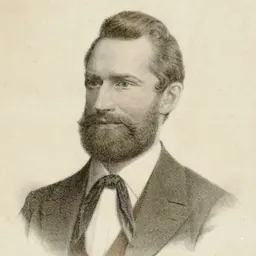

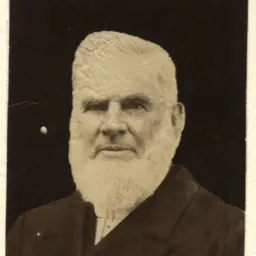

Related people
Same field, nearest in time


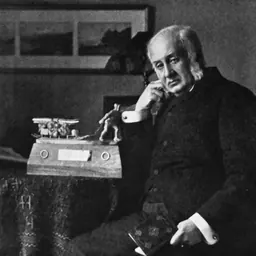
Contemporaries
People whose lives overlapped John Gilbert's




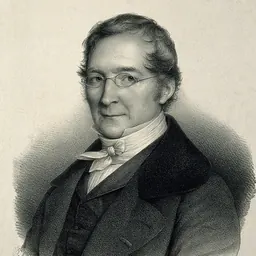
Frequently asked questions
Who was John Gilbert?
English naturalist and explorer (1812-1845)
When was John Gilbert born?
John Gilbert was born in 1812 in London.
When did John Gilbert die?
John Gilbert died on 28 June 1845 in Gulf of Carpentaria.
What was John Gilbert's occupation?
John Gilbert was an explorer, ornithologist, naturalist, zoologist and zoological collector.
What nationality was John Gilbert?
John Gilbert was British.
Sources & further reading
· DBpedia: John Gilbert (naturalist)
Cite this page
APA: Biography.guide. (2026). John Gilbert. https://biography.guide/john-gilbert-explorer/
MLA: "John Gilbert." Biography.guide, https://biography.guide/john-gilbert-explorer/.
Chicago: "John Gilbert." Biography.guide. https://biography.guide/john-gilbert-explorer/.
Data last updated: 2026-09-20 · Spot an error? Report a correction.
Page generated 2026-09-27 05:03 UTC