
About John Fulton Folinsbee
Lived 1892 – 1972 (aged 80). John Fulton Folinsbee was an American painter and landscape painter.
John Fulton "Jack" Folinsbee (March 14, 1892 – May 10, 1972) was an American landscape, marine and portrait painter, and a member of the art colony at New Hope, Pennsylvania. He is best remembered for his impressionist scenes of New Hope and Lambertville, New Jersey, particularly the factories, quarries, and canals along the Delaware River.
Biography He was born in Buffalo, New York, the middle son of Harrison and Louise Mauger Folinsbee. He attended The Gunnery, a boarding school in Washington, Connecticut, from 1907 to 1911, where he studied with Elizabeth Kempton and Herbert Faulkner. – daughter of William H. Baldwin, Jr. and Ruth Standish Baldwin – whom he had met in Washington, Connecticut. The couple moved to New Hope in 1916, and had two daughters, Elizabeth (1917–2016, married Elmer W. Wiggins, 1940); and Joan (1919–2016, married Peter G. Cook, 1938).
Early in his career, Folinsbee painted in a tonalist style, with an interest in light and atmosphere that grew directly from his time with Harrison and Carlson in Woodstock. By the late nineteen-teens, he had moved away from tonalism into a more structured, impressionist style. In the mid-1920s, Folinsbee began studying the work of Cézanne, which led to a trip to France in the summer of 1926. The paintings that resulted from this trip, and those that followed later in the decade, reflect a deep understanding of Cézanne's compositional strategies and a desire to reveal the underlying structure of forms. Folinsbee's exploration of structure led eventually to an analytical, highly individual expressionist style in which he painted for the remainder of his career. His palette darkened, his brushstrokes loosened further, and his sense of light and atmosphere became more dramatic. These later works are concerned with conveying a sense of mood and an intense emotional response to the world around him.
He exhibited at the Pennsylvania Academy of the Fine Arts most years from 1915 to 1952, and was awarded the 1931 Jessie Sesnan Medal (for Canal and River). He also won awards from the Connecticut Academy of Fine Arts, the Rhode Island School of Design, the Corcoran Gallery of Art, the Salmagundi Club, and other arts organizations. A bronze bust of him by his friend Harry Rosin is in the collection of the Pennsylvania Academy of the Fine Arts.
Folinsbee's students included artists Peter G. Cook and Evelyn Allen Faherty. Cook became his son-in-law, and wrote a personal memoir, John Folinsbee (1994).
Kirsten M. Jensen, senior curator at the James A. Michener Art Museum in Doylestown, Pennsylvania, is the author of Folinsbee Considered (2014), a scholarly biography and catalogue raisonné. The Michener Museum maintains an online version of the catalogue raisonné, which is updated as additional Folinsbee works are identified.
Selected works Landscapes Along the Canal (1916-1921), The Phillips Collection, Washington, D.C.
Poughkeepsie Bridge (1914), private collection. Awarded the 1914 Isidore Prize by the Art Students League of New York. Gloucester Hillside (1916), Princeton University Art Museum, Princeton, New Jersey. February (Village in Winter) (1916), Hood Museum of Art, Dartmouth College, Hanover, New Hampshire. Canal in Winter (1916-17), National Arts Club, New York City. Awarded the 1917 Second Hallgarten Prize by the National Academy of Design. Along the Canal (1916-21), The Phillips Collection, Washington, D.C. Oncoming Clouds (1918), North Carolina Museum of Art, Raleigh, North Carolina. Grey Thaw (1920), National Gallery of Art, Washington, D.C. (ex coll. Corcoran Gallery of Art). By the Upper Lock (1922), Smithsonian American Art Museum, Washington, D.C. Awarded the 1923 First Hallgarten Prize by the National Academy of Design. Canal at Trenton (1923), National Academy of Design Museum, New York City. Mill by the River, Fall (1923-25), James A. Michener Art Museum, Doylestown, Pennsylvania. Cloud Shadowed (1924), private collection Outskirts of Trenton (1924), Huntington Museum of Art, Huntington, West Virginia. Awarded a bronze medal at the 1926 Sesquicentennial Exposition. Lehigh Canal (1924-25), Palmer Museum of Art, Pennsylvania State University, State College, Pennsylvania. Canal at Goat Hill (1925), Rhode Island School of Design Museum, Providence, Rhode Island. Awarded the 1925 Gedney Bunce Prize by the Connecticut Academy of Fine Arts. Winter Nocturne (1926), Reading Public Museum, Reading, Pennsylvania. Shad Boat (1927), Huntington Museum of Art, Huntington, West Virginia. Slate Quarry, Bangor (1929), Woodmere Art Museum, Philadelphia, Pennsylvania. Bridge on the Cher (1929), Salmagundi Club of New York Canal Bridge, New Hope (1929-32), James A. Michener Art Museum, Doylestown, Pennsylvania. Canal and River (1930), private collection. Awarded the 1931 Jessie Sesnan Medal by the Pennsylvania Academy of the Fine Arts. Bowman's Hill (1936), James A. Michener Art Museum, Doylestown, Pennsylvania. River Ice (1936), James A. Michener Art Museum, Doylestown, Pennsylvania. Freeland (Study for Freeland, Pennsylvania Post Office Mural) (1938), Smithsonian American Art Museum, Washington, D.C. Evening at Swan's Island (1938), Ogunquit Museum of American Art, Ogunquit Maine. Hunterdon County (1940), New Jersey State Museum, Trenton, New Jersey. Awarded the 1941 Altman Prize by the National Academy of Design. Hazelton Brickyard (1950), Allentown Art Museum, Allentown, Pennsylvania. Zero Morning (1970), private collection. Folinsbee's last major work. Off Seguin (Ellingwood Rock) (1952), Portland Museum of Art, Portland, Maine. Awarded the 1952 Palmer Marine Prize by the National Academy of Design. Ellingwood Rock (1960), James A. Michener Art Museum, Doylestown, Pennsylvania.
Murals Freeland (1938), Post Office, Freeland, Pennsylvania View of Burgettstown (1942), Post Office, Burgettstown, Pennsylvania, with Peter G. Cook Federal Building and U.S. Courthouse, Paducah, Kentucky Early Town (Lewis and Clark in Paducah) (1942), with Peter G. Cook The River (Paducah, Kentucky) (1942), with Peter G. Cook
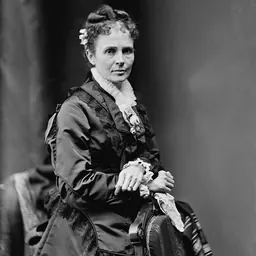
Portraits President James A. Garfield and First Lady Lucretia Garfield (posthumous portraits, 1920), James A. Garfield National Historic Site, Lake County, Ohio Self-Portrait (1919), National Academy of Design Museum, New York City. Ruth Standish Baldwin (1929), Smith College, Northampton, Massachusetts. Folinsbee's mother-in-law. James Kellum Smith (1942), National Academy of Design Museum, New York City. Justice of the New Jersey Supreme Court. Peter Geoffrey Cook (1964), National Academy of Design Museum, New York City. Folinsbee's son-in-law.
Don’t just read it —
keep it.
Full-length biographies made to live with: read them, listen on the way to work, watch them tonight.
- E-book
- Audio
- Video
Instant download · yours to keep · every purchase keeps this site free
Important facts
People in John Fulton Folinsbee's life
Named in this biography and alive at the same time





Related people
Same field, nearest in time


Contemporaries
People whose lives overlapped John Fulton Folinsbee's

Frequently asked questions
Who was John Fulton Folinsbee?
American artist (1892-1972)
When was John Fulton Folinsbee born?
John Fulton Folinsbee was born on 14 March 1892 in Buffalo.
When did John Fulton Folinsbee die?
John Fulton Folinsbee died on 10 May 1972 in New Hope.
What was John Fulton Folinsbee's occupation?
John Fulton Folinsbee was a painter and landscape painter.
What nationality was John Fulton Folinsbee?
John Fulton Folinsbee was American.
Sources & further reading
· Wikipedia: John Fulton Folinsbee
· DBpedia: John Fulton Folinsbee
Cite this page
APA: Biography.guide. (2026). John Fulton Folinsbee. https://biography.guide/john-fulton-folinsbee/
MLA: "John Fulton Folinsbee." Biography.guide, https://biography.guide/john-fulton-folinsbee/.
Chicago: "John Fulton Folinsbee." Biography.guide. https://biography.guide/john-fulton-folinsbee/.
Data last updated: 2026-09-20 · Spot an error? Report a correction.
Page generated 2026-09-27 05:24 UTC