
About John Edward Marr
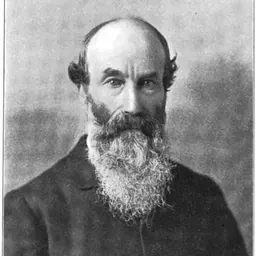
Lived 1857 – 1933 (aged 76). John Edward Marr was a British paleontologist, university teacher and geologist, known for Palaezoic and Silesian (series).
John Edward Marr (14 June 1857 – 1 October 1933) was a British geologist.
After studying at Lancaster Royal Grammar School, he matriculated to St John's College, Cambridge, graduating with First Class Honours in 1878. Following undergraduate work in the Lake District, he travelled to Bohemia to investigate the fossil collection of Joachim Barrande, where his work won him the Sedgwick Prize in 1882. In 1886, Marr became a lecturer at the University of Cambridge Department of Geology, a position he held for 32 years until he succeeded Thomas McKenny Hughes as Woodwardian Professor of Geology in 1917.
Early life and education Marr was born in Poulton-le-Sands on 14 June 1857 to John Marr, a retired silk merchant, and his wife Mary Simpson. After the family stayed in Caernarfon in 1863, Marr became interested in geology, having discovered a fossil which was named after him. From 1867 to 1875 he studied at the Lancaster Royal Grammar School, where he met R. H. Tiddeman, who took Marr on a number of field trips and geological surveys. In 1875, he matriculated to St John's College, Cambridge to study geology as an exhibitioner, having won a Foundation Scholarship. There he studied under Thomas George Bonney and Thomas McKenny Hughes, graduating with First Class Honours in 1878. In 1879, he became a Fellow of the Geological Society of London, and in 1881 was elected a Fellow of St John's College.
Research work and Later Life After graduation, Marr used two research funds from the Worts Fund of Cambridge University to investigate the work done in Bohemia and Scandinavia to reorder the older palaeozoic rocks, his work in the Lake District having convinced him that it was possible to order the confusing succession of paleozoic rocks as it then stood. He spent 13 years as Professor before retiring due to ill-health in 1930, followed by his death on 1 October 1933.
Marr served as Secretary of the Geological Society of London from 1888 to 1898, Vice-President and President from 1904 to 1906, serving on the council for 35 years and as Foreign Secretary for 3. and the Wollaston Medal in 1914. In 1891 he was made a Fellow of the Royal Society, serving on the Society council from 1904 to 1906, and was awarded their Royal Medal in 1930.
Publications The Scientific Study of Scenery (1900) The Geology of the Lake District (1916) Deposition of the Sedimentary Rocks (1929)
Don’t just read it —
keep it.
Full-length biographies made to live with: read them, listen on the way to work, watch them tonight.
- E-book
- Audio
- Video
Instant download · yours to keep · every purchase keeps this site free
Important facts
People in John Edward Marr's life
Named in this biography and alive at the same time




Related people
Same field, nearest in time


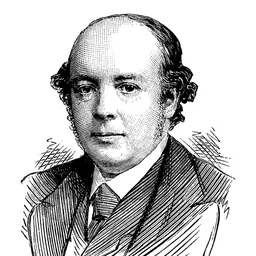
Contemporaries
People whose lives overlapped John Edward Marr's

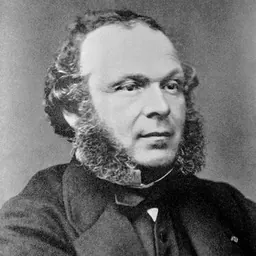


Frequently asked questions
Who was John Edward Marr?
British geologist (1857–1933)
When was John Edward Marr born?
John Edward Marr was born on 14 June 1857 in Poulton-le-Sands.
When did John Edward Marr die?
John Edward Marr died on 1 October 1933 in Cambridge.
What was John Edward Marr's occupation?
John Edward Marr was a paleontologist, university teacher and geologist.
What was John Edward Marr known for?
John Edward Marr was known for Palaezoic and Silesian (series).
What nationality was John Edward Marr?
John Edward Marr was British.
Sources & further reading
Cite this page
APA: Biography.guide. (2026). John Edward Marr. https://biography.guide/john-edward-marr/
MLA: "John Edward Marr." Biography.guide, https://biography.guide/john-edward-marr/.
Chicago: "John Edward Marr." Biography.guide. https://biography.guide/john-edward-marr/.
Data last updated: 2026-09-20 · Spot an error? Report a correction.
Page generated 2026-09-27 05:24 UTC