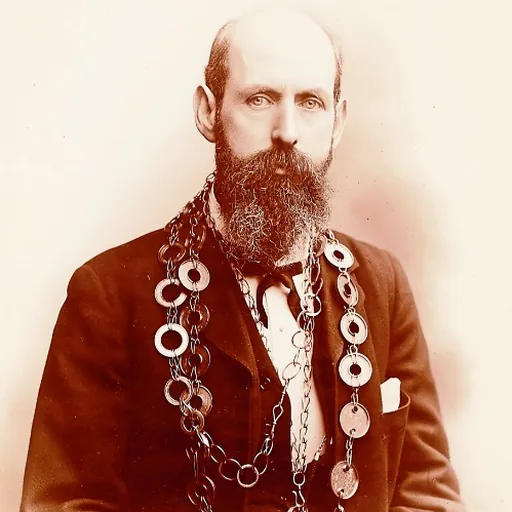
John Daly
Irish revolutionary and leading member of the Irish Republican Brotherhood
About John Daly
Lived 1845 – 1916 (aged 70). John Daly was an author and politician.
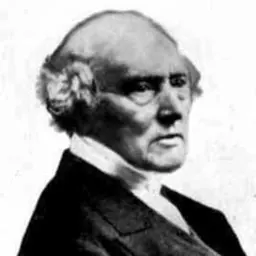
John Daly (18 October 1845 – 30 June 1916) was an Irish republican and a leading member of the Irish Republican Brotherhood. He was uncle to Kathleen Clarke, wife of Tom Clarke, who was executed for his part in the 1916 Rising and who was a leading member of the IRB, and her brother Ned Daly who was also executed in 1916. Daly briefly served as a member of the British Parliament but was resented for having previously been convicted for treason against the British state. Daly also served as Mayor of Limerick for 3 years at the turn of the century.
Early life
John Daly was born in Limerick city on 18 October 1845. His father, worked in James Harvey & Son's Timber Yard. At 16 John joined his father working as a lath splitter. At 18 he was sworn in as a member of the Irish Republican Brotherhood, also known as the Fenians, and became fully involved in Republican activities. When he was refused absolution in confession because he admitted to being a Fenian, he decided that from then on his loyalty would no longer be to "faith and Fatherland" but to "God and Fatherland."
On 22 November 1866, Daly and his brother Edward were arrested at their family home, having been betrayed by an informer, for running a munitions factory in the Pennywell district close to their home. He was released on bail in February 1867, toughened and more dedicated by the experience.
After this, Daly had to flee the country by stowing away, first on a boat the Hollywood, to England, and from London then on board the Cornelius Grenfel to the United States of America.
America Life in America for working-class immigrants was particularly tough, and his first job on leaving the ship was digging a cellar. He then obtained work in a white lead factory and worked for a while as a mason's helper before getting a reasonably good job as a brakeman on a tram system. Daly was to recall these experiences in his Recollections of Fenians and Fenianism.
In November 1869, a major tenants' rights meeting took place in the city. The IRB objected to the meeting because the issue of the prisoners was not on the agenda. In what became known as "The Battle of the Markets" the IRB charged the platform and succeeded in dismantling it. Though the organisers of the meeting attempted to hold some form of gathering, Daly and the IRB refused to relent. It was Daly's opinion that "it was one of the greatest moral victories ever achieved". The issue of political prisoners kept Daly occupied for much of the 1870s. In 1876, Daly was again arrested for disrupting another home rule gathering, though on being brought before the court he was acquitted.
During the Land War, Daly was a member of the Supreme Council of the IRB and served as an organiser for Connacht and Ulster.
Arrest
In the summer of 1883, Daly, moved to Birmingham, England, and settled in the home of James Egan, an old friend from Limerick and a generally inactive IRB man. E.G. Jenkinson, head of Special Branch, was informed that John Daly was on his way to Britain from America; Daly had been asked by the Supreme Council to deliver the graveside oration at the funeral of Charles J. Kickham while in the United States. When Daly arrived, a plain-clothes detective was assigned to follow him at all times. As a result of this, Special Branch as alerted to the importance of John Torley in Glasgow, Robert Johnston in Belfast and Mark Ryan in London of the IRB.
Jenkinson used agents provocateurs in his attempts to convict Republicans. One such recruit was a publican and local IRB man named Dan O'Neill. Both Jenkinson and Major Nicholas Gosselin persuaded O'Neill to betray Daly. O'Neill then asked Daly to deliver sealed cases to some associates in London, and on 11 April, Daly was arrested as he was about to board the train for London, and explosives were found in the case he was carrying. The police then raided the home of James Egan where explosives were "allegedly found buried" in Egan's garden in addition to some documents.
In Chatham prison, he became friends with Tom Clarke, who would later marry his niece Kathleen and who was a leader of the 1916 Easter Rising. While in prison he claimed that he was being poisoned with belladonna which caused an investigation by a commission of inquiry in 1890; it was admitted by prison officials as an error by a warder. A series of articles in the Daily Chronicle in 1894 analysed prison methods. Daly gave an interview to the Chronicle which appeared on 12 September 1896.
Released Daly was unopposed elected as a member of parliament (MP) for Limerick City at the general election in July 1895, as a member of the Parnellite Irish National League. However, he was disqualified on 19 August 1895 as a treason-felon. In August 1896, he went on a lecture tour of England with Maud Gonne and in 1897 on a tour of American which was organised by John Devoy. He later founded a prosperous bakery business in Limerick, and went on to become Mayor of his native city.
Mayor of Limerick John Daly was elected three times as Mayor of Limerick City, from 1899 to 1901. He jointly financed with Patrick McCartan the IRB newspaper Irish Freedom in 1910.
The Daly Cup In 1928, Madge Daly, a niece of John Daly, presented the Daly cup to William P. Clifford, the then-chairman of the Limerick GAA county board. Since then, the Daly cup is presented to the winners of the Limerick Senior Hurling Championship.
Don’t just read it —
keep it.
Full-length biographies made to live with: read them, listen on the way to work, watch them tonight.
- E-book
- Audio
- Video
Instant download · yours to keep · every purchase keeps this site free
Important facts
People in John Daly's life
Named in this biography and alive at the same time




Related people
Same field, nearest in time



Contemporaries
People whose lives overlapped John Daly's


Frequently asked questions
Who was John Daly?
Irish revolutionary and leading member of the Irish Republican Brotherhood
When was John Daly born?
John Daly was born on 18 October 1845 in Limerick.
When did John Daly die?
John Daly died on 30 June 1916.
What was John Daly's occupation?
John Daly was an author and politician.
Sources & further reading
Cite this page
APA: Biography.guide. (2026). John Daly. https://biography.guide/john-daly-author/
MLA: "John Daly." Biography.guide, https://biography.guide/john-daly-author/.
Chicago: "John Daly." Biography.guide. https://biography.guide/john-daly-author/.
Data last updated: 2026-09-22 · Spot an error? Report a correction.
Portrait: Wikimedia Commons · author & licence
Page generated 2026-09-27 05:03 UTC