
About John Dagworthy
Lived 1721 – 1784 (aged 62–63). John Dagworthy was an American military leader.
John Dagworthy (17211784) was from Trenton, New Jersey, and had a military career that spanned three wars. During King George's War Dagworthy recruited a company of soldiers and was given command over them. During the French and Indian War he was a captain in command at Fort Cumberland. When George Washington of the Virginia militia, returned with the survivors of the Braddock Expedition Dagworthy became involved in a lengthy dispute with Washington, challenging him over matters of rank and seniority. During the American Revolutionary War he was a brigadier general commanding the Sussex County (Delaware) militia.
Background John Dagworthy, born in 1721, came from a prominent Royalist family in Trenton, New Jersey and was a devoted member of the Anglican Church of England. He went on to serve in three different wars during his military career.
King George's War His first military service occurred when he served in King George's War against France. He was commissioned a captain on August 23, 1746, and recruited a company of soldiers that later would join the regiment of Colonel Peter Schuyler. His company participated in the proposed invasion of Canada up the Hudson valley, which never actually got underway. At this time the Council of New Jersey wrote to the Duke of Newcastle with the intention of getting a commission for Dagworthy. To this end the young captain Dagworthy sailed to England in the interest of his own cause, where he finally got his wish and received a royal commission in His Majesty's service.
In 1746, Dagworthy obtained a royal commission for an intended expedition against the French in Canada that never materialized—he only functioned as a recruiter for the proposed expedition. Dagworthy was under the notion that a royal commission, even though outdated, somehow rendered his rank superior to that of a colonial major. Dagworthy first encountered George Washington, who was then twenty-two, in 1755, on the Maryland frontier at Fort Cumberland. Although Washington possessed a superior rank, Dagworthy refused to recognize his command. The fort was built at the confluence of Wills Creek and the Potomac River, by troops of the Maryland militia under Dagworthy's command, in the fall of 1754.
Washington deeply resented the idea that a British captain considered himself to be of superior rank, especially since Dagworthy had obtained his royal commission for a price. Dinwiddie sent a letter of appeal to Massachusetts Governor William Shirley. Washington wanted Shirley to have his regiment absorbed into the British army. Dinwiddie then granted Washington permission to travel to Boston in February 1756 so he could discuss matters with Shirley in person. Shirley reasserted Washington's command over Dagworthy, but never granted Washington a royal commission.
Don’t just read it —
keep it.
Full-length biographies made to live with: read them, listen on the way to work, watch them tonight.
- E-book
- Audio
- Video
Instant download · yours to keep · every purchase keeps this site free
Important facts
People in John Dagworthy's life
Named in this biography and alive at the same time

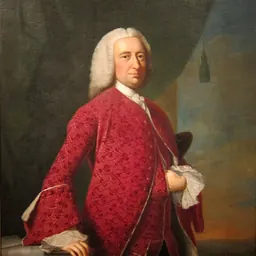

Related people
Same field, nearest in time


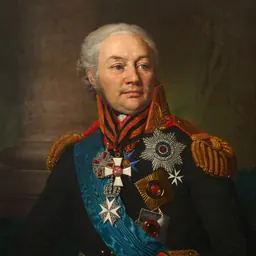

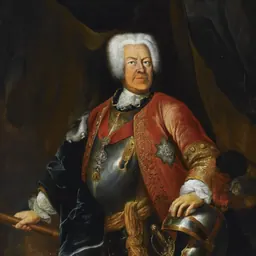
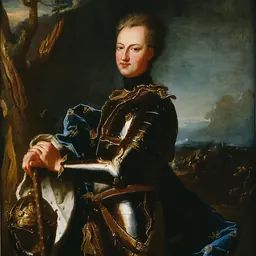
Contemporaries
People whose lives overlapped John Dagworthy's




Frequently asked questions
Who was John Dagworthy?
brigadier general during the American Revolutionary War (1721–1784)
When was John Dagworthy born?
John Dagworthy was born in 1721 in Trenton.
When did John Dagworthy die?
John Dagworthy died in 1784 in Dagsboro.
What was John Dagworthy's occupation?
John Dagworthy was a military leader.
What nationality was John Dagworthy?
John Dagworthy was American.
Sources & further reading
Cite this page
APA: Biography.guide. (2026). John Dagworthy. https://biography.guide/john-dagworthy/
MLA: "John Dagworthy." Biography.guide, https://biography.guide/john-dagworthy/.
Chicago: "John Dagworthy." Biography.guide. https://biography.guide/john-dagworthy/.
Data last updated: 2026-09-20 · Spot an error? Report a correction.
Page generated 2026-09-27 04:58 UTC