
About John Cyril Porte
Lived 1884 – 1919 (aged 35). John Cyril Porte was an Irish inventor, aircraft pilot and aviator, known for Air race, Anti-submarine warfare and Flying boat.
Transatlantic challenge London early 1914, the Woman's Aerial League silver trophy and $5,000 prize. In the Curtiss factory with the second prototype designed under Porte's supervision; appearing in The Sun 18 June 1914, "The latest photographs of the Wanamaker seaplane. Lieut. Porte standing by the machine." A cutting from Moving Picture World 25 July 1914: Glen Curtiss, actress Norma Phillips (Our Mutual Girl) and Porte with his characteristic straw hat in front of the Trans-Atlantic Flyer.
About 1911 Porte met American aircraft designer Glenn Curtiss and proposed a partnership to produce an aircraft to compete in the Daily Mail prize for the first transatlantic crossing. In 1912 Curtiss produced the two-seat Flying Fish that was classified as a flying boat because the hull sat in the water; it featured an innovative notch or "step" in the hull that Porte recommended for breaking clear of the water on takeoff.
Pursuing his interest in flying boats, over October 1913 Porte met Curtiss with Eric Gordon England at George Volk's Seaplane Base on Brighton sea front, where the Curtiss flying boat was demonstrated.
Captain Murray Sueter, now Director of the Admiralty Air Department was looking for a suitable aircraft to combat the German U-boat and Zeppelin forces in the North Sea. By March 1915 Porte convinced Sueter to purchase Curtiss H-4 flying boats, a military version of their earlier twin 100 horsepower America flying boat design, and permitted the assistant U.S. naval attache to London, Lieutenant John H. Towers, to fly RNAS aircraft on a regular basis between 1914 and 1916. These early flying boats did not have sufficient power, and the naval station at Felixstowe soon replaced their Curtiss engines with Anzani 10-cylinder powerplants. More Curtiss aircraft were ordered, but their 160 hp Curtiss engines were deemed unsatisfactory and replaced with 250 hp Rolls-Royce Falcon engines, being known as H-12s or Large Americas.
Once the project was under way, Porte assisted with the assembly and testing of the America flying boats at RNAS Felixstowe; he was officially posted to Felixstowe in September 1915 as commander of the Experimental Flying Wing where he would frequently fly on offensive patrols to gather what was required of the aircraft.
Porte modified a Curtiss H-4 (No.3580)
Bristol Scout C (C3028) from HMS Vindex atop Porte Baby (No.9800), RNAS Felixstowe, May 1916, Porte walking under the tailplane.
The Felixstowes were mainly used on long-range patrols to look for the High Seas Fleet or submarines of the Imperial German Navy. However, the aircraft were also initially used successfully to intercept Zeppelins. To avoid this danger, Zeppelins were forced to fly higher, resulting in Porte developing the first composite aircraft experiments in 1916, with a Porte Baby carrying a small Bristol Scout fighter piggyback. The flying boat would provide the long range, while the fighter would be able to climb rapidly to engage the enemy. With Porte at the controls of the flying boat, on 17 May 1916 Flight Lieutenant M. J. Day successfully flew the Baby launch craft over Harwich in its one and only trial flight, and, although on this occasion the parasite was successfully released, the scheme was abandoned as impractical for North Sea conditions.
Several hundred seaplanes of Porte's design were built for war-time patrolling of the east coast of England, for naval reconnaissance around the Mediterranean Sea, and were even sold to the US for coast patrols. Armed with torpedoes and depth charges, they could attack ships and U-boats. A measure of the success of Porte's work is that the Curtiss Aeroplane and Motor Company manufactured the F.5 as the F5L and Aeromarine 75.
Acutely aware of the flying boat's limitations, Porte pioneered the use of a small towing lighter with a planing hull to increase its effective range. The lighter was designed to be "trimmed down" with water ballast to enable the flying boat to taxi up on to the deck. Once the flying boat was in place, it was picked up by a destroyer and towed to the release area at 30 kts. The aircraft was then recovered. Culley intercepted and destroyed Zeppellin L 53 at the peak of the fighter's ceiling, rendezvoused with the destroyer and ditched his aircraft alongside the lighter.
During Porte's tenure at Felixstowe, due to the reorganisation of the different aerial services, he received various naval, RNAS and Royal Air Force ranks, and was known variously as lieutenant commander, wing commander and lieutenant colonel.
Profiteering trial On 25 July 1917, while he was engaged in his large flying boat design, and Patrick Hastings argued for Casson; Porte's solicitor Sir George Lewis (son of Sir George Lewis) instructed Richard David Muir and Ellis Hume-Williams.
During his time at Hammondsport before the war, Porte arranged with Seely, then Curtiss sales manager, to receive as an agent, 20–25% commission on all Curtiss flying boats that he sold after the projected trans-Atlantic flight. At the time of his hasty return from the United States in August 1914, Porte's connections with the Curtiss company had not been fully and legally dissolved; Porte continued to receive monies secretly through Casson as a commission agent between August 1914 and 24 July 1917, when he was in the position of ordering aircraft on behalf of the Navy and was accused of receiving £48,000 in this manner. On 19 November 1917 Casson admitted guilt but, on return of the money, the Attorney General entered a plea of nolle prosequi against Porte in light of his failing health and important war service. His health gravely impaired, Porte returned to Felixstowe where he was nursed to recovery by his wife. He was however, promoted to captain, RN and put in charge of all operational squadrons at RNAS Felixstowe in addition to the Experimental Wing. On 26 February 1918 (Porte's birthday), King George V made a special visit to the base to see Porte's work first hand and personally present medals to the station aircrew. His attention restored, Porte returned to work on the "PSB" with the assistance of his Chief Technical Officer, Squadron Commander J. D. Rennie, later chief designer of Blackburn Aircraft Company.
Porte was appointed a Companion of the Order of St Michael and St George in the 1918 Birthday Honours and still very sick, Porte joined the Gosport Aircraft Company in August 1919 as chief designer; he was buried in Brighton and then re-interred in June 1920 at West Norwood Cemetery alongside his mother and three of his brothers who pre-deceased him. His monument is a cross and anchor with an epitaph, "Colonel Porte was the inventor of the British flying boats."
Legacy Even into his last moments, Porte was thinking and talking about his future ideas; at the time of his death, there was a sense of real loss in the aviation world. C. G. Grey, Editor of The Aeroplane, stated in a long obituary, "The history of John Cyril Porte is a tragedy relieved by the example of indomitable will and loyalty which he has set to all who serve the King. Few have suffered more and none have done better work in spite of physical and mental suffering".
In recognition of his pioneering work, The award was announced posthumously in the London Gazette 12 December 1919
In 1922 Porte was recognised for an award from the Royal Commission on Awards to Inventors in relation to flying boats and later his widow received an award of £1500.00 from the Commission in respect of information passed to the US Government
All the Short Brothers flying boats that followed between 1930 and 1950 owe much to Porte's work.
Don’t just read it —
keep it.
Full-length biographies made to live with: read them, listen on the way to work, watch them tonight.
- E-book
- Audio
- Video
Instant download · yours to keep · every purchase keeps this site free
Important facts
People in John Cyril Porte's life
Named in this biography and alive at the same time

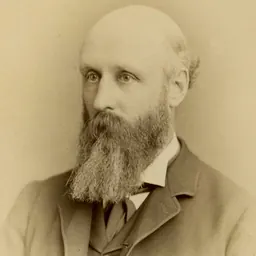
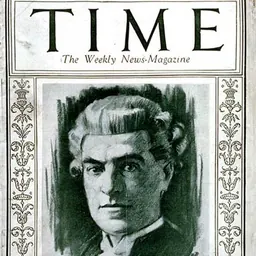
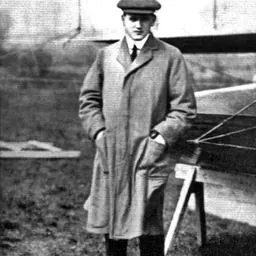



Related people
Same field, nearest in time
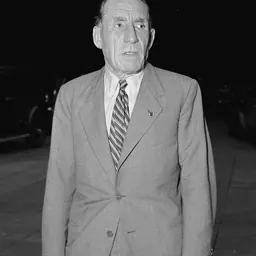

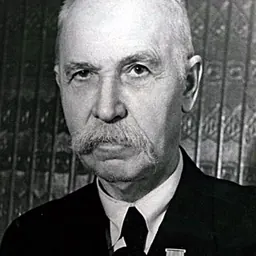
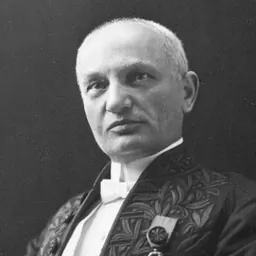

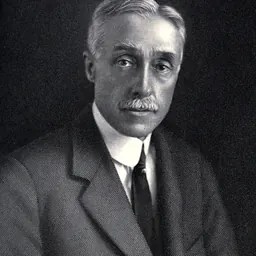
Contemporaries
People whose lives overlapped John Cyril Porte's

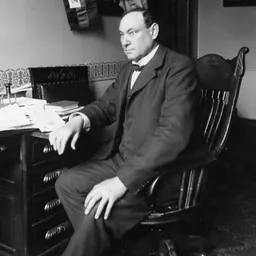
Frequently asked questions
Who was John Cyril Porte?
British aviator (1884–1919)
When was John Cyril Porte born?
John Cyril Porte was born on 26 February 1884 in Bandon.
When did John Cyril Porte die?
John Cyril Porte died on 22 October 1919 in Brighton.
What was John Cyril Porte's occupation?
John Cyril Porte was an inventor, aircraft pilot and aviator.
What was John Cyril Porte known for?
John Cyril Porte was known for Air race, Anti-submarine warfare, Flying boat, Navigation, Seaplane Experimental Station and Transatlantic flight.
What nationality was John Cyril Porte?
John Cyril Porte was Irish.
Sources & further reading
Cite this page
APA: Biography.guide. (2026). John Cyril Porte. https://biography.guide/john-cyril-porte/
MLA: "John Cyril Porte." Biography.guide, https://biography.guide/john-cyril-porte/.
Chicago: "John Cyril Porte." Biography.guide. https://biography.guide/john-cyril-porte/.
Data last updated: 2026-09-22 · Spot an error? Report a correction.
Page generated 2026-09-27 05:28 UTC