
About John Curr
Lived 1756 – 1823 (aged 66–67). John Curr was a British engineer.
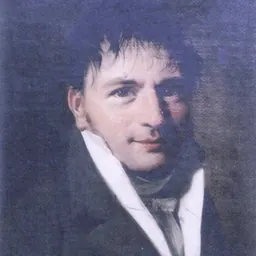
John Curr (c. 1756 – 27 January 1823) was an English mining engineer and inventor who was the viewer of the Duke of Norfolk's collieries in Sheffield, England from 1781 to 1801 . During this time he made a number of innovations that contributed significantly to the development of the coal mining industry and railways.
Personal life Curr was born in County Durham, England in around 1756. He was raised and remained a Catholic throughout his life. He moved to Sheffield some time before 1776. In 1780 he was appointed superintendent of the Duke of Norfolk's Sheffield collieries. ) in about 1785, and they had eight children, including Joseph Curr, a Catholic priest, and Edward Curr, who was Secretary of the Van Diemen's Land Company from 1824 to 1841. He died in Sheffield on 27 January 1823.
Career The career of John Curr has been subject to significant dispute, due to inaccurate statements by early authors about him and misinterpretation. Older works (such as (or those quoting them) often give the date of his colliery inventions as 1776. Curr probably came to Sheffield in 1778. That August, shortly before the expiry of the lease of Sheffield colliery (in Sheffield Park), he wrote a report on it for the Duke of Norfolk. Contrary to statements by his son, he was probably not there in 1774, when there were riots against the colliery lessees, who insisted on selling coal only at a yard in Sheffield. From Michaelmas 1779, he became superintendent of the Duke's Coal Works.
In 1787, John Buddle, senior reported on the transport system introduced by Curr. He reported Curr's method using L-shaped cast iron plates cost 6¼d per waggon, whereas the old method cost 10½d per waggon, a saving of 3¾d. He also referred to Mr Curr's method of 'drawing 2 corves abreast up a shaft 8½ to 9-foot diameter by means of steadying conductors'. Curr substituted small four-wheeled carriages for the sledges that had previously been used to transport coal underground, but this meant that underground haulage by boys, rather than ponies. The corf wheels and 'roadplates' came from Binks, Booth, and Hartop's nearby Park Ironworks.
The use of these rails was subsequently promoted by Benjamin Outram and adopted at many other English mines, 1813|3711|Applying flat ropes to horse-gins
Publications
Don’t just read it —
keep it.
Full-length biographies made to live with: read them, listen on the way to work, watch them tonight.
- E-book
- Audio
- Video
Instant download · yours to keep · every purchase keeps this site free
Important facts
People in John Curr's life
Named in this biography and alive at the same time

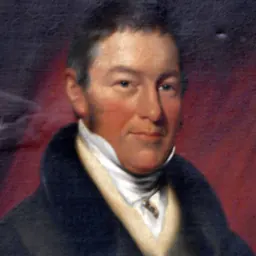


Related people
Same field, nearest in time
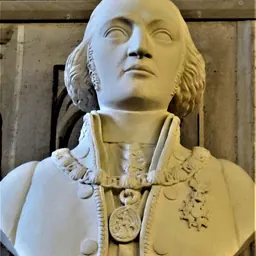
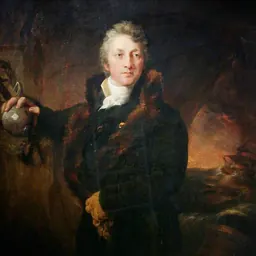
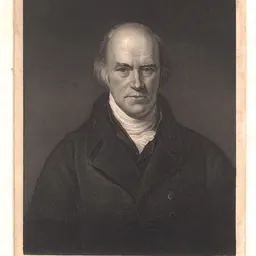
Contemporaries
People whose lives overlapped John Curr's




Frequently asked questions
Who was John Curr?
British engineer and inventor (c.1756-1823)
When was John Curr born?
John Curr was born in 1756.
When did John Curr die?
John Curr died in 1823.
What was John Curr's occupation?
John Curr was an engineer.
What nationality was John Curr?
John Curr was British.
Sources & further reading
Cite this page
APA: Biography.guide. (2026). John Curr. https://biography.guide/john-curr/
MLA: "John Curr." Biography.guide, https://biography.guide/john-curr/.
Chicago: "John Curr." Biography.guide. https://biography.guide/john-curr/.
Data last updated: 2026-09-20 · Spot an error? Report a correction.
Page generated 2026-09-27 05:13 UTC