
About John Cunningham
Lived 1917 – 2002 (aged 84). John Cunningham was a British test pilot and aircraft pilot.
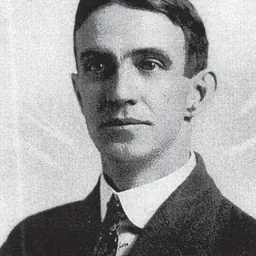
John 'Cat's Eyes' Cunningham (27 July 1917 – 21 July 2002) was a Royal Air Force (RAF) night fighter ace during the Second World War and a test pilot. During the war, he was nicknamed 'Cat's Eyes' by the British press to explain his success and to avoid communicating the existence of airborne radar to the Germans.
Cunningham was born near Croydon Airport, London's main aerodrome. As a teenager, he was keen on entering the aviation industry. Temporarily abiding by his father's wishes for him to avoid the military, he approached the de Havilland company, and was accepted as an engineering candidate. Concurrently, he joined the Royal Auxiliary Air Force (RAuxAF) and became a member of 604 (County of Middlesex) Squadron. Cunningham began his training in August 1935, flew solo in March 1936 and received his wings in 1937. He became an established test pilot, gaining considerable flying time on different aircraft.
In August 1939, Cunningham rejoined his squadron, now equipped with a version of the Bristol Blenheim. His observer was Jimmy Rawnsley, who would serve as his gunner and radio operator for most of the war and contribute to all but three of his victories. In July 1940, the squadron was converted to a specialist night fighter unit, and was one of the first to receive aircraft interception (AI) radar. Cunningham was promoted to squadron leader (Sqn Ldr) in September 1940.
On the night of 19 November 1940, Cunningham claimed his first victory. By the time the Blitz had ended in June 1941, he had destroyed thirteen enemy aircraft and claimed three as probable victories and two damaged. After a long rest, he was promoted to wing commander (Wg Cdr) in 1942. He was also appointed to command 85 Squadron, by which time, his tally had reached sixteen enemy aircraft destroyed. In 1943 and early 1944, he added a further four victories, one probable and one damaged. Cunningham's combat career ended with twenty aerial victories, three probables and six damaged. He spent the remainder of the conflict in various staff officer positions. By the end of the war in Europe in May 1945, he had attained the rank of group captain (Gp Cpt). He then flew commercial jets for a time in the early 1960s and continued flying in the industry until the late 1970s. He also worked for British Aerospace (BAe) as executive director, retiring in 1980. In recognition of his wartime exploits and his contribution to civil aviation, he was appointed a CBE.
Early life John Cunningham was born in Croydon in south London On the night of the 7 April, he became a fighter ace. A He 111 of 9./KG 26 was intercepted as its bombers attacked Portsmouth and Portland Harbour. Erwin Hartmann crashed into the Channel with his crew. A No. 87 Squadron RAF pilot, Flight lieutenant Derek Ward claimed the victory, as he saw a glow which he fired at before it hit the sea. Cunningham was credited with the victory, as the Heinkel was about to crash when Ward fired at it. The 87 Squadron war diary acknowledged this fact in its entry for that night.
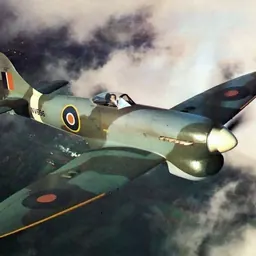
Bristol Beaufighter Mk.II with radar and Rolls-Royce Merlin engines. Cunningham flew the type in 1941 and 1942. Two nights later, on 9 April, he accounted for another He 111, followed by another plus a probable victory on 11 April. It is possible his victim on the later mission was He 111 P-2, 2002, 1G+HT of 9./KG 27. Pilot Leo Roth and crew members Wilhelm Franke, and Walter Rüggeberg and Fritz Unterieser were killed. A pilot from 307 Squadron also claimed the machine, which crashed at Prowers Farm, Lydlinch, Dorset at 01:35. On the night of 31 May/1 June 1941, Cunningham and Rawnsley accounted for another He 111, as the Luftwaffe completed its last major raid of the Blitz. It was one of 24 German bombers lost on that night. The following morning, Cunningham was promoted to temporary squadron leader.
Propaganda In early 1941, the British press, with permission from the Air Ministry, was allowed to approach Cunningham and write about his experiences. One of the motivating reasons for the lack of censorship was morale. In the early stages of the Blitz, the perception among the civilian population was that the Germans could attack at will over Britain during the night. Publication of Cunningham's exploits was an attempt to assure the public that the RAF was fighting back, and imposing losses upon the Luftwaffe. Cunningham was singled out for attention for this purpose, though Rawnsley's contribution to his success was virtually ignored.
The Air Ministry did not want to allow the enemy to learn that the RAF night fighter aircraft had aircraft interception radar. German night fighters would not be equipped with such devices on a large scale until much later. Instead, a legend was created to explain Cunningham's successes. As he was the first night fighter ace, the press was allowed to publish his picture. The captions read that his eyesight was so exceptional it allowed him to see in the dark with the same visual ability as a domestic cat. It was also said that his diet of carrots provided him with vitamin A, which allowed him to maintain excellent night vision. Cunningham detested the ensuing public adulation, but he accepted the 'Cat's Eyes' tag as a necessary deception. He was awarded the Segrave Trophy for his services in 1978. He is listed on a memorial plaque in honour of former Whitgift School pupils who were Battle of Britain pilots; the plaque was unveiled at the school in 2006.
Sale of medals Following Cunningham's death in 2002, his service medals and flying memorabilia passed to the de Havilland Aircraft Company Trust. The medals were subsequently sold on 6 September 2012 for £384,000 to help raise funds for an education centre, museum, and flying scholarships for young people on behalf of the Bentley Priory Battle of Britain Trust Appeal.
Don’t just read it —
keep it.
Full-length biographies made to live with: read them, listen on the way to work, watch them tonight.
- E-book
- Audio
- Video
Instant download · yours to keep · every purchase keeps this site free
Important facts
People in John Cunningham's life
Named in this biography and alive at the same time



Related people
Same field, nearest in time


Contemporaries
People whose lives overlapped John Cunningham's

Frequently asked questions
Who was John Cunningham?
British Royal Air Force night fighter ace (1917-2002)
When was John Cunningham born?
John Cunningham was born on 27 July 1917 in Croydon.
When did John Cunningham die?
John Cunningham died on 21 July 2002 in Welwyn Garden City.
What was John Cunningham's occupation?
John Cunningham was a test pilot and aircraft pilot.
What nationality was John Cunningham?
John Cunningham was British.
Sources & further reading
· DBpedia: John Cunningham (RAF officer)
Cite this page
APA: Biography.guide. (2026). John Cunningham. https://biography.guide/john-cunningham/
MLA: "John Cunningham." Biography.guide, https://biography.guide/john-cunningham/.
Chicago: "John Cunningham." Biography.guide. https://biography.guide/john-cunningham/.
Data last updated: 2026-09-20 · Spot an error? Report a correction.
Page generated 2026-09-27 05:32 UTC