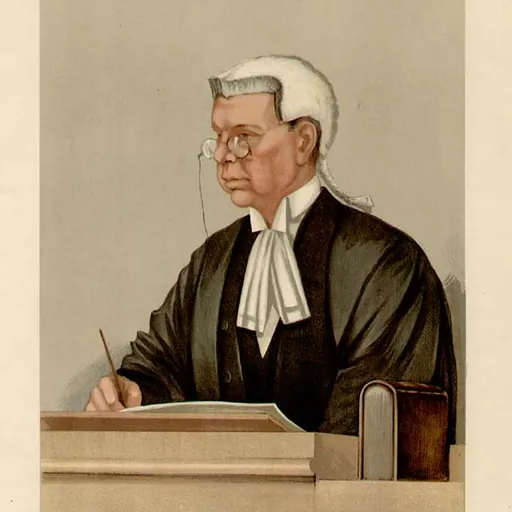
About John Compton Lawrance
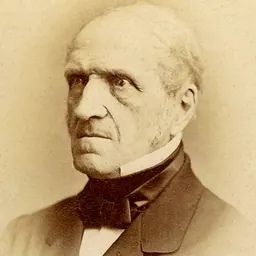
Lived 1832 – 1912 (aged 80). John Compton Lawrance was a British judge, politician and barrister.
Sir John Compton Lawrance, PC (30 May 1832 – 5 December 1912) was an English judge and Conservative Party politician. He was Conservative MP for South Lincolnshire from 1880 to 1885 and for Stamford from 1885 until 1890, when he was appointed to the High Court, where he served until 1912.
One of Lord Halsbury's political appointments to the bench as Lord Chancellor, Lawrance acquired a degree of notoriety for his incompetence as a judge, at least in commercial cases. His conduct of one commercial action was said to be so inept that it was credited with the creation of the Commercial Court, earning him the moniker "the Only Begetter of the Commercial Court". He was, however, said to be a good criminal judge and was personally well-liked.
Background and political career Lawrance was the only son of Thomas Munton Lawrance of Dunsby Hall, Lincolnshire and his wife Louisa, née Compton. He was called to the bar at Lincoln's Inn in 1859, became a Queen's Counsel in 1877, and a bencher of Lincoln's Inn in 1879. That constituency was abolished by the Redistribution of Seats Act 1885, and at the 1885 general election Lawrance was elected MP for Stamford. He was appointed a Deputy Lieutenant of Lincolnshire in 1886.
High Court judge
Appointment Lawrance was appointed a Justice of the High Court in 1890, in succession to Mr Justice Field. Lawrance had been nominated by Lord Halsbury, who had a reputation for choosing judges on party political grounds, especially from the ranks of "unsuccessful Tory M.P.s with large majorities and no incomes".
The appointment was greeted with "hoots of derision". The Daily News said Lawrance was unfit for the lowest judicial appointment. The Law Times wrote that "This is a bad appointment, for although a popular man and a thorough English gentleman, Mr. Lawrance has no reputation as a lawyer, and has been rarely seen of recent years in the Royal Courts of Justice". The Law Journal, however, cautiously welcomed the appointment, noting his professional experience, knowledge of business, and high character, though it also commented that "probably Mr. Lawrance does affect to be a great lawyer". It also noted that his appointment, "on personal grounds... will be very acceptable to every member of the profession."
"The Only Begetter of the Commercial Court" The case for which Lawrance achieved lasting notoriety was Rose v Bank of Australasia (1891), which involved a complex issue of general average contribution from cargo-owners. The case was tried without a jury by Lawrance J over 22 days in May 1891, who then reserved judgment. It was argued by some of the leading figures of the commercial bar: Arthur Cohen QC (with him Thomas Edward Scrutton) appeared for the plaintiffs; Gorell Barnes QC (with him J. A. Hamilton) appeared for the defendants. Sir Frank MacKinnon, who was later Scrutton's pupil, reported that:The judge knew as much about the principles of general average as a Hindoo about figure-skating. He listened with a semblance of interest to Cohen and Gorell Barnes, reserved judgment, and forgot all about the case. After a long delay he was somehow reminded that he ought to give judgment. This he did—in favour of the plaintiff. To his horror Gorell Barnes then rose and said he had failed to deal with a very important point. Not having the least idea what the point was, he pulled himself together and said: 'Oh, yes; I meant to say that having considered that I think the adjusters took the right view, and in that respect also I think the claim as made out by them ought to succeed'.
According to Scrutton and MacKinnon, Lawrance's performance in this case incensed the mercantile community so much that it led to the creation of the Commercial Court in 1895, thus making him "the Only Begetter of the Commercial Court".
Later years Lawrance continued to sit in the King's Bench Division, eventually becoming the most senior judge in the King's Bench Division. In 1898, he tried the Russian revolutionary Vladimir Burtsev and the typesetter Klement Wierzbicki for publishing a pamphlet which called for the murder of Nicholas II. The same year, he was one of the judges called upon by the House of Lords to provide an advisory opinion in Allen v Flood. Lawrance was strongly criticised in Lord William Beauchamp Nevill's book, Penal Servitude (1903), Lawrance having sent Nevill down for fraud in 1898 with a strong reprimand and five years in Wormwood Scrubs and Parkhurst.
In 1906, he was one of the two judges appointed to hear election petitions arising from that year's general election. At the hearing of the Maidstone petition, he sat with Mr Justice Grantham, another former Conservative MP elevated by Halsbury, who was subsequently the subject of a motion of censure in the House of Commons for his perceived partiality toward the Conservative candidate, but Lawrance's conduct was not questioned. and died on 5 December 1912, aged 80.
Assessments Assessments of Lawrance as a judge tend to be negative. Lord Justice MacKinnon wrote that:Mr. Justice J. C. Lawrance was a stupid man, a very ill-equipped lawyer, and a bad judge. He was not the worst judge I have appeared before: that distinction I would assign to Mr. Justice Ridley [another Conservative MP controversially elevated by Halsbury]. Ridley had much better brains than Lawrance, but he had a perverse instinct for unfairness that Lawrance could never approach. It is perhaps not without significance that Lawrance and Ridley both failed to get admission to the modern Valhalla, the Dictionary of National Biography." On his retirement, The Law Journal commented that although this "has not seriously reduced the judicial store of erudition, it has deprived the King's Bench Division of one of its most attractive personalities." Lawrance was nicknamed "Long Lawrance", both in reference to his height (he was said to be the tallest judge on the bench) and to distinguish him from A. T. Lawrence.
Don’t just read it —
keep it.
Full-length biographies made to live with: read them, listen on the way to work, watch them tonight.
- E-book
- Audio
- Video
Instant download · yours to keep · every purchase keeps this site free
Important facts
People in John Compton Lawrance's life
Named in this biography and alive at the same time



Related people
Same field, nearest in time

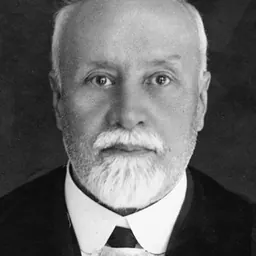
Contemporaries
People whose lives overlapped John Compton Lawrance's

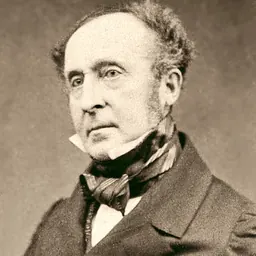
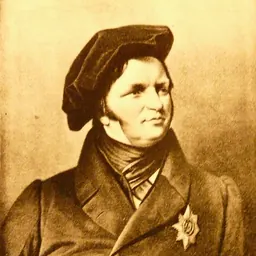

Frequently asked questions
Who was John Compton Lawrance?
British politician (1832-1912)
When was John Compton Lawrance born?
John Compton Lawrance was born on 30 May 1832.
When did John Compton Lawrance die?
John Compton Lawrance died on 5 December 1912.
What was John Compton Lawrance's occupation?
John Compton Lawrance was a judge, politician and barrister.
What nationality was John Compton Lawrance?
John Compton Lawrance was British.
Sources & further reading
· Wikipedia: John Compton Lawrance
Cite this page
APA: Biography.guide. (2026). John Compton Lawrance. https://biography.guide/john-compton-lawrance/
MLA: "John Compton Lawrance." Biography.guide, https://biography.guide/john-compton-lawrance/.
Chicago: "John Compton Lawrance." Biography.guide. https://biography.guide/john-compton-lawrance/.
Data last updated: 2026-09-20 · Spot an error? Report a correction.
Page generated 2026-09-27 05:10 UTC