
About John Collin Underhay
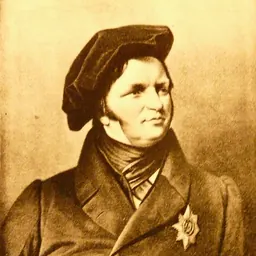
Lived 1829 – 1919 (aged 90). John Collin Underhay was a Canadian politician.
John Collier Underhay (15 January 1829 – 23 October 1919 ) was a farmer, land surveyor and political figure in Prince Edward Island. He represented 1st Kings from 1879 to 1882 and 2nd Kings from 1886 to 1893 in the Legislative Assembly of Prince Edward Island as a Liberal and then a Conservative member.
He was born in Bay Fortune, Prince Edward Island, the son of William Underhay and Marianne Withers.
In his twilight days as Leader of the Opposition, Neil McLeod participated in these discussions on print, ideas, memory, and public finance. McLeod discounted the notion that Special Committee members served as secondary editors because "that is no proof that the system now proposed is entirely wrong." He then questioned the Frederick Peters narrative of the appointment of reporters by "the late Government and their predecessors." McLeod declared that it was "a matter of fact" that "during the session of 1883 the late Government did dispense with reporters, and there is no Parliamentary Reporter for that year." Despite these alleged inaccuracies, McLeod concurred that previous sessions of the House of Assembly had "found that an official report was absolutely necessary, as they never could hold the then Opposition members to the statements which they had made in the course of debate without such a record." McLeod himself believed that, "under ordinary circumstances," it would "be better to have the debates published in the usual form, as it will have the effect of restraining honorable members of the Government, and holding them responsible for the language used by them in debate." In such "ordinary circumstances," he held, "as the Parliamentary Reporter is a record of the proceedings of the House, I think the system should be continued."
Neil McLeod, however, preferred an alternate publication because of the absence of many, but by no means all, financial records and speeches by Liberal representatives in the Parliamentary Reporter. In Liberal narratives, these particular sources purportedly confirmed Conservative deficits as causation for the need to "amalgamate." During the third session, "many important debates were not reported at all, for the discussions were carried on with closed doors, the reporters having been turned out." Certain debates over Conservative deficits and debentures that contributed to passage of the "Amalgamation Bill" were far from "ordinary," yet "not a sentence of those debates were reported or published in the Parliamentary Reporter or anywhere else." McLeod estimated that "about one-fourth of the Journal of the House is made up of statements that contain returns and statements [that] have been ordered not to be printed, and as the speeches on those documents are published in the Parliamentary Reporter, it will be well for us to have those speeches, for they afford us the only information respecting those documents." Liberal delegates retorted that Conservatives had made accusations of similar omissions prior to "amalgamation" bills, further denied any collusion with editor William Crosskill in source deletions, and then defeated Underhay's proposal. Aside from the (ironic) publication of these "Printing Debates" in the Reporter, observations and positions of Crosskill and his reporters remain subjects of scholarly inquiry.
Legislative reporter Frank H. Risteen's four editions of The Celestial City was another contemporaneous example, published after General Assembly debates over unicameralism in the capital of New Brunswick. The 1898 first edition narrated the origins of the provincial General Assembly in Fredericton and associated unicameral built environments. Risteen's depiction of Fredericton and wider New Brunswick infrastructure, ecologies, and commerce warrant critical examination, especially his passages on "a town of 2,500 inhabitants owned and controlled by one man more absolutely than the Czar of Russia controls his vast domains; but the reign of this industrial Alexander is a beneficient one; his subjects are contented and law-abiding, and Marysville is in all respects a model community." Periodicals published for "the social and political advancement" of Irish Roman Catholics and French Acadians in New Brunswick similarly illuminated the politics of "race and religion" for, and illustrated narratives crafted by, parliamentary reporters such as Michael McDade. In 1902, McDade recounted his early days as a "boy [sent] to Fredericton to take his first lessons in parliamentary reporting."
Don’t just read it —
keep it.
Full-length biographies made to live with: read them, listen on the way to work, watch them tonight.
- E-book
- Audio
- Video
Instant download · yours to keep · every purchase keeps this site free
Important facts
People in John Collin Underhay's life
Named in this biography and alive at the same time



Related people
Same field, nearest in time




Contemporaries
People whose lives overlapped John Collin Underhay's



Frequently asked questions
Who was John Collin Underhay?
Canadian politician (1829-1919)
When was John Collin Underhay born?
John Collin Underhay was born on 15 January 1829.
When did John Collin Underhay die?
John Collin Underhay died on 23 October 1919.
What was John Collin Underhay's occupation?
John Collin Underhay was a politician.
What nationality was John Collin Underhay?
John Collin Underhay was Canadian.
Sources & further reading
· Wikipedia: John Collin Underhay
· DBpedia: John Collier Underhay
Cite this page
APA: Biography.guide. (2026). John Collin Underhay. https://biography.guide/john-collin-underhay/
MLA: "John Collin Underhay." Biography.guide, https://biography.guide/john-collin-underhay/.
Chicago: "John Collin Underhay." Biography.guide. https://biography.guide/john-collin-underhay/.
Data last updated: 2026-09-20 · Spot an error? Report a correction.
Page generated 2026-09-27 05:13 UTC