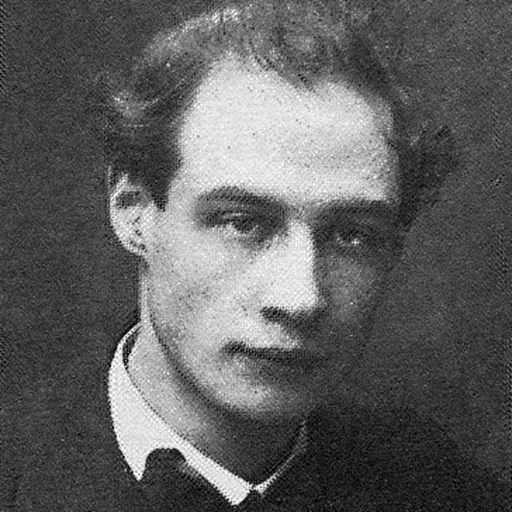
About John Clarke
Lived 1885 – 1959 (aged 73). John Clarke was a British politician, circus performer, peace activist, poet, socialist and writer.
John Smith Clarke (4 February 1885 – 30 January 1959) was a British author, newspaper editor, poet, socialist politician, and lion tamer.
Born in Jarrow, Tyne and Wear, Clarke began performing in a circus at age of 17 as a lion tamer. In his early life, he was also a sailor and gun runner for Russian revolutionaries. During the First World War, he wrote for publications that expressed an anti-war sentiment, which forced him to go into hiding. He was part of a group of Socialist Labour Party conscientious objectors called the 'flying corps' who evaded authorities and avoided prosecution. In 1920, he visited Russia as a delegate to the Second Congress of the Communist International.
Clarke joined the Independent Labour Party in the late 1920s and served on the Glasgow Corporation. In 1929 he was elected Labour MP for Maryhill in Glasgow. He lost the seat in 1931 and subsequently left the Independent Labour Party. Over his lifetime, he identified as a Bolshevik, anti-capitalist, and neither right nor left-wing.
Clarke was interested in the arts and held governance positions for the Society of Antiquaries of Scotland, the Royal Fine Art Commission for Scotland, the Scottish National Portrait Gallery and the Glasgow School of Art. He was a collector of antiquities and amassed a wealth of knowledge about military weapons, armour and Scottish history. He also continued to tame wild animals throughout his life; he demonstrated humane training methods in a lion and tiger cage whilst an MP, and brought a box of snakes to Parliament.
Early life
John Smith Clarke was born in Jarrow on 4 February 1885. His fatheralso named John Smith Clarke (1844-1906), a cloth salesman from Bath, Somersetand mother, Sarah Ann Chiswell (1844-1918) of Bishop Sutton, Somerset. He was the thirteenth of fourteen children, seven of whom survived into adulthood. At the age of ten he was able to ride a horse bareback and without a bridle. In 1897, at the age of twelve, he went to sea for the first time, working on a merchant ship.
At age 17, he was performing as a lion tamer and was attacked multiple times by animals. Clarke claimed he was the youngest lion tamer in the country at the time. During this time, Clarke was working as a messenger for North Eastern Railway. Marjory Newbold and Willie Gallacher but was not made a voting delegate. Whilst in Russia, Clarke cured Lenin's dog of an unspecified illness and received a photograph of Lenin signed "To Comrade Clarke, Vladimir Oulianoff 6.8.1920". Clarke recounted his experiences in Pen Pictures of Russia under the 'Red Terror'''. Upon his return from Russia, he escaped arrest by sailing across the North Sea alone. He lost his seat at the 1931 general election and left the ILP in 1932 when it split from the Labour Party. In the same year, he was in the news for missing jury service after being stranded on Ailsa Craig. From 1941 to 1951, Clarke returned to serving on the Glasgow Corporation. From 1930 to 1933, he was a trustee of the Scottish National Portrait Gallery. and was succeeded by Lord Duveen when he resigned from the position. Clarke was a board member of the Glasgow School of Art. In his personal life, Clarke was a collector of historical items, including Marie Antoinette's snuff box and multiple torture instruments.
Clarke's interest in animals, which began when he was a child in the circus, lasted throughout his life. He continued practising lion taming, including during his time as an MP. In 1930, Clarke was invited to visit Bertram Mills's menagerie in Hastings and entered the lion's cage. He opposed the Performing Animals Bill, which would have required stricter regulations on circuses, believing that humane training methods were possible. To collect evidence in support of his case, he demonstrated these humane methods himself at a menagerie in Glasgow. The trainer was impressed by Clarke, describing him as "the bravest man I have met". Clarke wrote about his thoughts on "gentling" dangerous animals in his book Circus Parade (1936), which also recounts the history of the circus. It was not just lions and tigers which interested Clarke; when an MP, he took a box of snakes into the House of Commons, much to the surprise of the other MPs, and demonstrated his skill at snake charming. In 1932, Clarke expressed support for a civic zoo in Glasgow, pointing to the success of the London civic zoo. During the Second World War, Clarke returned to circus lion taming, claiming to be the oldest lion tamer in the country.
Socialist and feminist historian Sheila Rowbotham wrote that Clarke's interpretation of Marxism focussed on the spiritual and material gains that revolution would manifest. She also wrote that he was against 'sexual puritanism' and religion. Clarke's interest in Robert Burns extended to the poet's politics: Clarke wrote a pamphlet in 1917 that rejected imperialist interpretations of Burns and instead offered a more revolutionary take; he published another pamphlet in 1925 which depicted Burns as a social reformer.
Death and legacy
alt=A blue plaque with the text "John S. Clarke (1885-1959) Seaman, Lion-tamer, Socialist Pioneer, Antiquary and Labour MP for Maryhill Glasgow; was born in this street at number 66 on 4th February." A blue plaque commemorating John S. Clarke is located on Albert Street, Jarrow.
Clarke died on 30 January 1959 at Southern General Hospital in Glasgow, aged 73.
In 1985, Tyne and Wear Council honoured Clarke with a blue plaque near his birthplace of Albert Street in Jarrow. The unveiling ceremony was conducted by Clarke's grandson, Major Ian C. Clarke. John S. Clarke is a character in Sheila Rowbotham's play Friends of Alice Wheeldon, based on the events which led to Wheeldon's death. He is described as "an ex-lion tamer and zoo owner". Clarke is mentioned in a poem by the Scottish poet Edwin Morgan which references his love of wild animals, specifically snakes:
Electoral history Cover of Clarke's 1927 book published by the press of the National Council of Labour Colleges.
+ Year Office Party Votes Result . Total % . 1929 MP Independent Labour 18,311 50.60% 1st 1931 Independent Labour 16,613 44.51% 2nd Source:
Publications
Satires, Lyrics and Poems (Chiefly Humorous). Glasgow: Socialist Labour Press, 1919. Pen Pictures of Russia under the "Red Terror": Reminiscences of a Surreptitious Journey to Russia to Attend the Second Congress of the Third International. Glasgow: National Workers' Committees, 1921. Marxism and History. London: N.C.L.C. Publishing Society, n.d. . Circus Parade''. London: B. T. Batsford, 1936.
Don’t just read it —
keep it.
Full-length biographies made to live with: read them, listen on the way to work, watch them tonight.
- E-book
- Audio
- Video
Instant download · yours to keep · every purchase keeps this site free
Important facts
People in John Clarke's life
Named in this biography and alive at the same time





Related people
Same field, nearest in time




Contemporaries
People whose lives overlapped John Clarke's



Frequently asked questions
Who was John Clarke?
British writer and politician (1885-1959)
When was John Clarke born?
John Clarke was born on 4 February 1885 in Jarrow.
When did John Clarke die?
John Clarke died on 30 January 1959.
What was John Clarke's occupation?
John Clarke was a politician, circus performer, peace activist, poet, socialist and writer.
What nationality was John Clarke?
John Clarke was British.
Sources & further reading
Cite this page
APA: Biography.guide. (2026). John Clarke. https://biography.guide/john-clarke-politician-1885/
MLA: "John Clarke." Biography.guide, https://biography.guide/john-clarke-politician-1885/.
Chicago: "John Clarke." Biography.guide. https://biography.guide/john-clarke-politician-1885/.
Data last updated: 2026-09-24 · Spot an error? Report a correction.
Portrait: Wikimedia Commons · author & licence
Page generated 2026-09-27 05:08 UTC