
About John Christopher Smith
Lived 1712 – 1795 (aged 82–83). John Christopher Smith was a British composer.
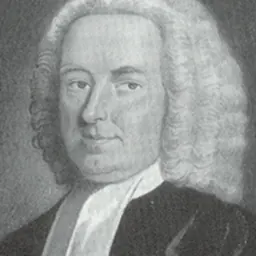
John Christopher Smith (born Johann Christoph Schmidt; 17123 October 1795) was an English composer who, following in his father's footsteps, became George Frideric Handel's secretary, student and amanuensis.
Life John Christopher Smith was the son of Johann Christoph Schmidt (John Christopher Smith Sr.) (died 1763), Handel's first copyist in London. His father, known to Handel from Halle, was summoned from Germany in 1716. He brought his family to London around 1720.
John Christopher Smith Jr. had a few lessons from Handel and Johann Christoph Pepusch but studied mostly with Thomas Roseingrave. He later became Handel's secretary, musical assistant and amanuensis, when blindness prevented Handel from writing or conducting in his later years. The last year when Handel conducted performances of his oratorios was 1752.
Handel fell out with Smith Sr. in the 1750s, but remained on good terms with the son. From 1753 to the composer's death in 1759, Smith conducted Handel's oratorios that were to be performed in those years. Handel bequeathed to Smith the keyboard instruments in his house at 25 Brook Street and his manuscripts.
There was interest in reproducing Handel's music mechanically, using clocks for example. After Handel's death Smith was involved with John Langshaw in a project to transcribe pieces by the composer for barrel organ.
In 1760, he married Martha Coxe, through whom he became step-father to William Coxe.
After the success of his oratorio Paradise Lost in 1760, he became artistic director of the Covent Garden Royal Theatre, a position that he was forced to relinquish for health reasons in 1772. When granted an annual pension by the King in 1774, Smith retired to Bath.
When his wife died in 1785, he moved to Carlisle Street in London's Soho district, where he died in 1795. The latter was discovered at the Bibliothèque Nationale de Paris in 1998.
Among his other works are five volumes of harpsichord music (1732–1763): Suites de pièces pour le clavecin, Op. 1 (John Walsh senior, 1732); 6 suites Suites de pièces pour le clavecin, Op. 2 (John Walsh senior, 1735); 6 suites Six Suits of Lessons for the Harpsicord, Op. 3 (John Walsh junior, 1755) A Collection of Lessons for the Harpsicord, Op. 4 (John Walsh junior, 1757) XII Sonatas for the Harpsichord, Op. 5 (John Walsh junior, 1765)
a book of hymns (1765), a funeral service (1772) for the dowager Princess of Wales, who was his harpsichord pupil, and two cantatas: Winter, or Daphne on Pope's Fourth Pastoral (1746) and Thamesi, Isi, e Proteo in honor of Frederick, Prince of Wales.
Don’t just read it —
keep it.
Full-length biographies made to live with: read them, listen on the way to work, watch them tonight.
- E-book
- Audio
- Video
Instant download · yours to keep · every purchase keeps this site free
Important facts
People in John Christopher Smith's life
Named in this biography and alive at the same time

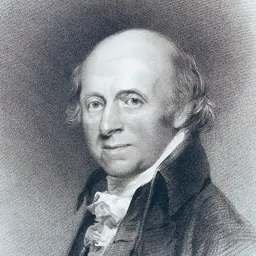
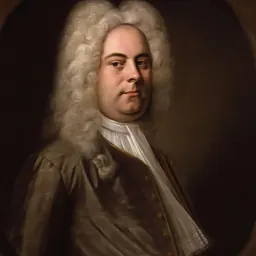
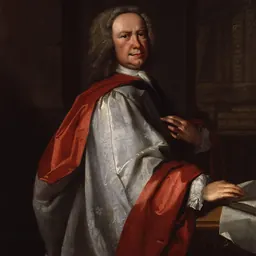

Related people
Same field, nearest in time
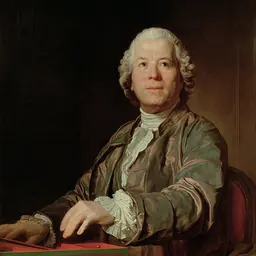
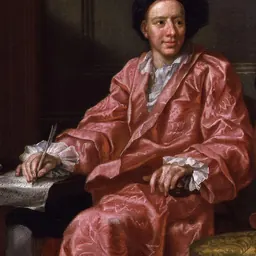
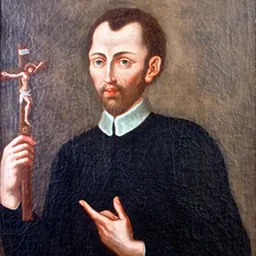

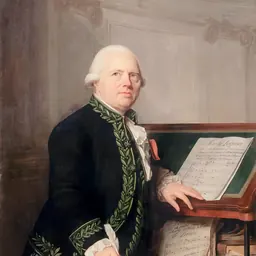
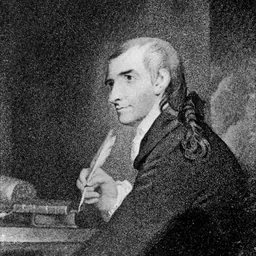
Contemporaries
People whose lives overlapped John Christopher Smith's




Frequently asked questions
Who was John Christopher Smith?
English composer (1712-1795)
When was John Christopher Smith born?
John Christopher Smith was born in 1712 in Ansbach.
When did John Christopher Smith die?
John Christopher Smith died on 3 October 1795 in London, Bath.
What was John Christopher Smith's occupation?
John Christopher Smith was a composer.
What nationality was John Christopher Smith?
John Christopher Smith was British.
Sources & further reading
· Wikipedia: John Christopher Smith
· DBpedia: John Christopher Smith
Cite this page
APA: Biography.guide. (2026). John Christopher Smith. https://biography.guide/john-christopher-smith/
MLA: "John Christopher Smith." Biography.guide, https://biography.guide/john-christopher-smith/.
Chicago: "John Christopher Smith." Biography.guide. https://biography.guide/john-christopher-smith/.
Data last updated: 2026-09-20 · Spot an error? Report a correction.
Page generated 2026-09-27 05:19 UTC