
About John Charles Lounsbury Fish
Lived 1870 – 1962 (aged 92). John Charles Lounsbury Fish was a civil engineer.
John Charles Lounsbury Fish (June 3, 1870 - June 15, 1962) was a Professor of Civil Engineering, Emeritus, at the School of Engineering, Stanford University. He is known for his works Mathematics of the Paper Location of a Railroad, Earthwork Haul and Overhaul: Including Economic Distribution (1913), Technique of Surveying Instruments and Methods (1917), Engineering Economics: First Principles... (1923), The Engineering Method (1950), Linear Drawing and Lettering for Beginners, Lettering of Working Drawings, and Descriptive Geometry, and also as a coauthor of Technic of Surveying Instruments and Methods (with Walter Loring Webb, 1917), The Transition Curve... (with Charles Lee Crandall), and The Engineering Profession (with Theodore Jesse Hoover, 1941).
Fish provided the critical bridge between the pioneering effort of Arthur M. Wellington in his engineering economics work of the 1870s and the first publication of the Principles of Engineering Economy in 1930 by Eugene L. Grant.
Early life and career John Charles Lounsbury Fish was born on June 3, 1870, in Erie County, Ohio, near Lake Erie to Job Fish (1828-1923) and Anna Elizabeth Peabody (1834-1904). He studied at Oberlin academy in 1886 and graduated as a civil engineer from Cornell University in 1892 and was an instructor for another year at that engineering school.
Stanford University (1893-1935) Fish left Cornell for Stanford University as an instructor in 1893. Fish completely rewrote the second edition in 1923 which proved to be more significant than his first. The Engineering Profession (1941) The Engineering Method (1950)
Legacy Fish was a lifelong member of the American society of civil engineers and the American railway engineering association.
Contributions to engineering economics Fish's contributions to engineering economics in the form of his book Engineering Economics: First Principles (1915, 1923) provided the critical bridge between the pioneering effort of Arthur M. Wellington in his work of the 1870s on the Economic location of railways and Eugene L. Grant's work on Principles of Engineering Economy in the 1930s. Fish wrote that "Every engineering structure, with few exceptions, is first suggested by economic requirements; and the design of every part, excepting few, and of the whole is finally judged from the economic standpoint. It is therefore apparent that the so-called principles of design are subordinate to the principles which underlie economic judgment." Fish wrote his text based upon his belief that to the civil engineer, "... working knowledge of first principles is as essential in the economics as in the mechanics' of structures." He also acknowledged influences such as Wellington's Economic theory of railway location (1886); Waddell's DePontibus," Horatio Alvah Foster's (1858-1913) "Engineering Valuation of Public Utilities and Factories," Halbert Powers Gillette's "Cost Data" and Henry Floy's "Valuation of Public Utility Properties".
Fish defined engineering economics primarily concerned with matters of economic selection and structure. Fish defined economic selection as a choice based solely upon a "long-run least cost." In modern engineering terminology, meeting a requirement implies some "sort of instrument which... will perform the service"
John Charles Lounsbury Fish is also the author of the coordinates of elementary surveying, a book that was first published in 1909.
Don’t just read it —
keep it.
Full-length biographies made to live with: read them, listen on the way to work, watch them tonight.
- E-book
- Audio
- Video
Instant download · yours to keep · every purchase keeps this site free
Important facts
People in John Charles Lounsbury Fish's life
Named in this biography and alive at the same time
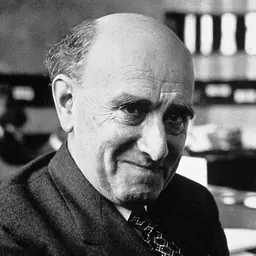


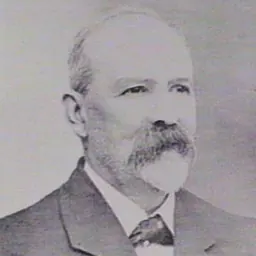
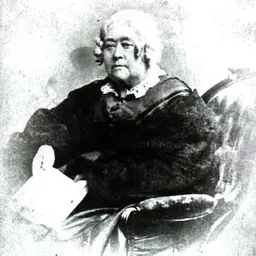

Related people
Same field, nearest in time



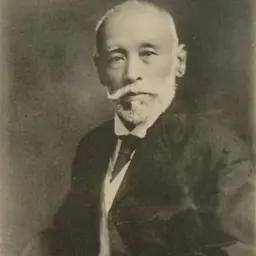
Contemporaries
People whose lives overlapped John Charles Lounsbury Fish's


Frequently asked questions
Who was John Charles Lounsbury Fish?
professor of civil engineering
When was John Charles Lounsbury Fish born?
John Charles Lounsbury Fish was born on 3 June 1870 in Huron County.
When did John Charles Lounsbury Fish die?
John Charles Lounsbury Fish died on 15 June 1962 in Santa Monica.
What was John Charles Lounsbury Fish's occupation?
John Charles Lounsbury Fish was a civil engineer.
Sources & further reading
· Wikipedia: John Charles Lounsbury Fish
· DBpedia: John Charles Lounsbury Fish
Cite this page
APA: Biography.guide. (2026). John Charles Lounsbury Fish. https://biography.guide/john-charles-lounsbury-fish/
MLA: "John Charles Lounsbury Fish." Biography.guide, https://biography.guide/john-charles-lounsbury-fish/.
Chicago: "John Charles Lounsbury Fish." Biography.guide. https://biography.guide/john-charles-lounsbury-fish/.
Data last updated: 2026-09-20 · Spot an error? Report a correction.
Page generated 2026-09-27 05:14 UTC