
About Halbert Powers Gillette
Lived 1869 – 1958 (aged 88–89). Halbert Powers Gillette was an American engineer.
Halbert Powers Gillette (1869–1958) was an American engineer and prolific author of textbooks and handbooks for the engineering and construction fields.
Biography Born on August 5, 1869, in Waverly, Iowa, to Theodore Weld and Laetitia S. (Powers), Gillette attended the Hammond Hall Academy in Salt Lake City, from which he graduated in 1886. Six years later in 1892, he received his engineering degree at the School of Mines at Columbia University,
After some years working in the industry, Gillette served as assistant New York State Engineer under Campbell W. Adams from 1896 to 1898. The next three years he worked as a contractor, and from 1903 to 1905 he was associate editor of the Engineering News. In its preface Gillette (1903) explained: There are few engineering works of magnitude that do not involve the excavation of earth. Indeed the cost of earthwork forms one of the greatest of cost items in canal, in reservoir and in railway construction, nor is it an inconsiderable item in the construction of roads, sewers or water works. What will this excavation cost? This is a question that the engineer first asks himself in making his preliminary estimates. Later the same question confronts the contractor. To the engineer an erroneous answer may mean loss of reputation, to the contractor it assuredly means ruin where the work is extensive. A glance at the wide range in contract bids for most earthwork jobs will convince anyone that few contractors do more than guess at costs. While the numberless engineering structures that have cost more than the preliminary estimates prove quite as conclusively that engineers too often guess also.
Gillette said that this was "the first published volume treating of earth economics in a comprehensive way."
In 1916, Gillette published the enlarged Handbook of Rock Excavation. Juniper Prize-winning author Steve Yates wrote, "Here was a book created when engineers could still write like Henry David Thoreau and think like James B. Eads. Gillette covered rock work and quarrying methods from ancient hand drills through steam's dominance in mining to just before the advent of gas-powered drills."
Construction cost keeping and management, 1900s In the 1900s Gillette published as series of books on the more topic of construction cost keeping and management, which included: Economics of road construction, first published in 1906. Handbook of cost data for contractors and engineers, first published in 1907. Concrete Construction: Methods and Cost, first published in 1908, and Construction Cost Keeping and Management, written with Richard T. Dana and first published in 1909.
Offices appliances In Construction Cost Keeping and Management, Dana & Gillette (1909) gave an overview of the many appliances which were used in his days to compile records, and process information in business offices, including time clocks, the mimeograph, mechanical calculators (separate adding machines and multiplying machines), etc.
Gillette wrote, "Such an appliance which may not, in general, be used in the field, but which is of immense value in the office and particularly in a shop, is the time clock. Various forms of time clocks are in common use, two types of which are illustrated. [The first] is a time card recorder, which is a clock so no made that it will automatically stamp on a card inserted in a slot in the clock by the workman the time of his arrival and of his departure. The cards are made to hold a record covering the pay period and need no attention from a timekeeper or clerk until the termination of this period. The record of the men's time can then be compiled very readily by one who need not be a skilled mathematician or time clerk."
And furthermore, "the time clock system has been developed very highly in shops for keeping track of time used in completing any job by workmen, but as this in a way is not in the realm of field cost keeping, it will not be entered into here. Another form of time clock, shown in [the second image], has the numbers of the employees fixed on the outer edge of a disk or ring and a record is made by the employee who shifts a revolving arm and punches his number upon entering the office and leaving."
Dana & Gillette continued that "every source of expense to a contracting business contributes to the total cost of the contracts carried by the firm. A certain proportion of the Office Rent, the Legal Expenses in connection with lawsuits, the cost of making unsuccessful tenders, etc., are just as much a part of the cost as wages paid to carpenters and bricklayers. To allocate these various costs seems a difficult problem, but the first step is simple, for each item can be readily classified..." This time sheet is arranged so that it may be used for a gang reporting time weekly, and is also used where the time sheet is turned in each day, in which latter case the lines under the column dates are ignored and the time placed in the total hour column. On the left hand side appears first the timekeeper's check column... in the Theosophy magazine summarized Gillette's efforts:thumb "Scientist's New Theories May Aid in Forecasting Weather Conditions", article 1930. For many years Mr. Halbert P. Gillette ... has made an intensive study of weather cycles. In the beginning his theories made such bizarre reading from the point of view of scientists, that little attention seems to have been paid to them. Essentially, they were based on theories of interflow of electrons between the earth, the sun, and the other planets. The real nature of electrons, and their ubiquity, now being better recognized, his ideas fall more into line with the thought of the day.Gillette has sought to tie up his theories to the clay varves, or seasonal layers, in lake deposits. Among the most important of the cycles discovered, is one of approximately 605 years, subdivided into three equal periods of less importance. This is equal to 51 orbital periods of Jupiter. He believes that it represents the orbital period of Pickering's undiscovered "Planet P." Pickering's estimate of this orbital period was 656 years. This figure was noted by the Foundation for the Study of Cycles as closely bracketing similar drought and climatic cycle lengths independently proposed by meteorologist David Brunt (7.50 years) and economist William Beveridge (7.42 years), a convergence the Foundation cited as evidence for the significance of a roughly 7½-year periodicity across independent datasets.
Selected publications Gillette, Halbert Powers. Earthwork and Its Costs: A Handbook of Earth Excavation. McGraw-Hill Book Company, Incorporated, 1903; 1907; 1912, 1920. Gillette, Halbert Powers. Rock excavation: methods and cost. New York : M.C Clark, 1904. Gillette, Halbert Powers. Economics of road construction. Engineering News Publishing Company, 1906. Gillette, Halbert Powers. Handbook of cost data for contractors and engineers, M. C. Clark, 1907. Gillette, Halbert Powers, and Charles S. Hill. Concrete Construction: Methods and Cost. Clark, 1908. Gillette, Halbert Powers, and Richard T. Dana. Construction Cost Keeping and Management. Gillette Publishing Company, 1909, 1922, 1927. Gillette, Halbert Powers, and Richard T. Dana. Cost Keeping and Management engineering. Gillette Publishing Company, 1909. Gillette, Halbert Powers. Handbook of Rock Excavation, Methods and Costs, New York, Clark book company, inc., 1916. Halbert Powers Gillette, Handbook of clearing and grubbing methods and cost. 1917. Gillette, Halbert Powers, and Richard T. Dana. Handbook of mechanical and electrical cost data, 1918 Halbert P. Gillette, A. R. Losh, James J. Tobin. Highway Cost Keeping. United States. Department of Agriculture, 1919 Gillette, Halbert Powers. Handbook of construction cost. McGraw-Hill book company, inc., 1922. Halbert P. Gillette. Climatic Cycles Reflected in Geological Data, 1937.
Periodicals: Gillette, Halbert Powers. Engineering & Contracting. Engineering and Contracting Publishing Company, 1906–1932.
Don’t just read it —
keep it.
Full-length biographies made to live with: read them, listen on the way to work, watch them tonight.
- E-book
- Audio
- Video
Instant download · yours to keep · every purchase keeps this site free
Important facts
People in Halbert Powers Gillette's life
Named in this biography and alive at the same time
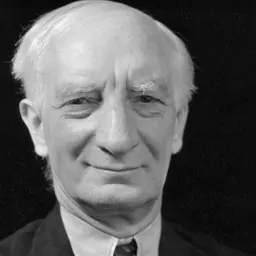
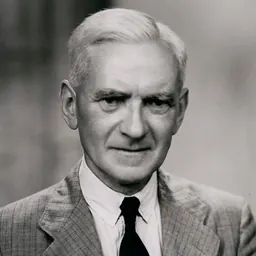

Related people
Same field, nearest in time
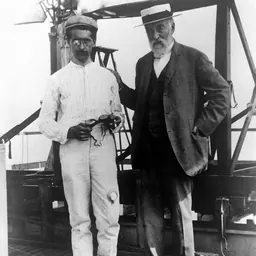


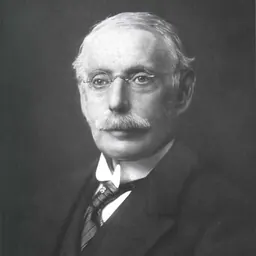
Contemporaries
People whose lives overlapped Halbert Powers Gillette's




Frequently asked questions
Who was Halbert Powers Gillette?
American mechanical engineer
When was Halbert Powers Gillette born?
Halbert Powers Gillette was born in 1869.
When did Halbert Powers Gillette die?
Halbert Powers Gillette died on 18 June 1958 in Glendale.
What was Halbert Powers Gillette's occupation?
Halbert Powers Gillette was an engineer.
What nationality was Halbert Powers Gillette?
Halbert Powers Gillette was American.
Sources & further reading
· Wikipedia: Halbert Powers Gillette
· DBpedia: Halbert Powers Gillette
Cite this page
APA: Biography.guide. (2026). Halbert Powers Gillette. https://biography.guide/halbert-powers-gillette/
MLA: "Halbert Powers Gillette." Biography.guide, https://biography.guide/halbert-powers-gillette/.
Chicago: "Halbert Powers Gillette." Biography.guide. https://biography.guide/halbert-powers-gillette/.
Data last updated: 2026-09-20 · Spot an error? Report a correction.
Page generated 2026-09-27 05:34 UTC