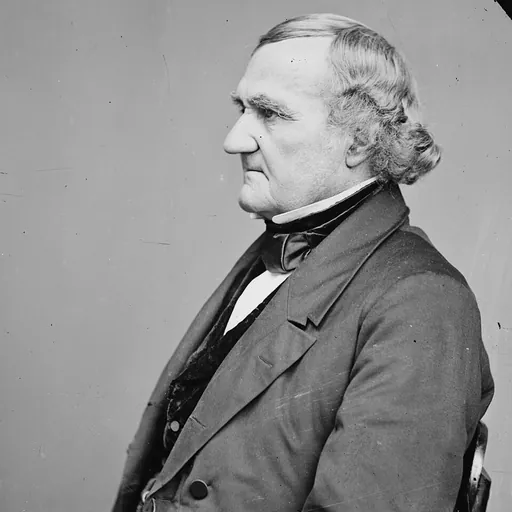
About John Catron
Lived 1786 – 1865 (aged 79). John Catron was an American lawyer and judge.
Law career and personal life After leaving the military, Catron returned to Sparta, Tennessee, where he read law and was admitted to the Tennessee bar in 1815. He began practicing law in the Cumberland Mountains of Sparta and later established a land-law practice in Nashville in 1818. Catron was appointed prosecuting attorney for Sparta and, from 1824 to 1834, served on the Tennessee Supreme Court of Errors and Appeals, eventually becoming its Chief Justice in 1831. He retired in 1834 after the Tennessee state legislature abolished the chief-justice position. He returned to private practice in Nashville. During the election of 1836, Catron directed Martin Van Buren's presidential campaign in Tennessee against native son Hugh Lawson White.
Catron married Matilda Childress, daughter of U.S. Marshal for western Tennessee, John Childress. Matilda Childress was the sister of George C. Childress, a political leader of the Texas Republic and chair of the committee that drafted the Constitution of the Republic of Texas. John and Matilda Catron had no children.
A lifelong slaveholder, Catron had a relationship with Sally Thomas, an enslaved woman in Tennessee who operated a laundry in Nashville. Catron fathered her third mixed-race son, James P. Thomas , who was born into slavery. Although Catron only gave Thomas 25 cents in his lifetime, Sally effectively secured her son's freedom when James was six. James later built a successful business as a barber in Nashville, gained manumission permission from the Tennessee legislature to stay in the state in 1851 due to his achievements, and eventually owned property in St. Louis valued at $250,000. Thomas was Catron's only known child.
Supreme Court tenure The number of seats on the Supreme Court was expanded from seven to nine in 1837, as a result of the Eighth and Ninth Circuits Act. This allowed President Andrew Jackson the opportunity to appoint two new justices, which he did on March 3, 1837, his last full day in office. The newly seated Senate of the 25th Congress confirmed Catron's nomination five days later by a vote of 28–15. The nominee for the other seat, William Smith, was also confirmed, but he subsequently declined to serve. Catron took the judicial oath on May 1, 1837, and served for 28 years, until his death in May 1865. However, he opposed secession and urged Tennessee to remain with the Union. For a brief time after Tennessee seceded from the Union but prior to Nashville being occupied by Federal troops, Catron left his residence in Nashville and temporarily lived in Louisville, Kentucky.
Some thoughts on freedom and slavery, from Justice Catron (Courier-Journal, Louisville, Ky., Dec. 13, 1859) While he wrote few opinions, it is still possible to decipher his stance on certain political issues and determine his importance to the court. John Catron's political views primarily coincided with the views of his fellow Tennessean Andrew Jackson. Just as Jackson opposed the idea of the national bank, Catron also became an outspoken critic of the national bank. This view coincides with his political view on corporations. While Catron ultimately believed that corporate power could threaten the livelihoods of American citizens, his views were not always this way. During his early years on the Court, particularly in the case of Bank of Augusta v. Earle (1839), Catron actually concurred with the majority and agreed with the idea that corporations had the ability to conduct business nationwide. The Justices ruled in Bank of Augusta that a state could exclude a foreign corporation from doing business within that state, but, that the state would have to do so explicitly.
Catron's overpowering anti-corporate views were more evident in . This case raised the issue of whether or not a corporate charter constituted a contract between the state and the bank and therefore could not be repealed due to the Contract Clause in Article 1, Section 10 of the Constitution. The Piqua Branch of the State Bank of Ohio's original charter granted an exemption from state taxation. However, a new legislature was attempting to repeal this exemption and impose a tax on the bank. The majority of the Court ruled in favor of the charter, citing the Contract clause. John Catron, along with Justices Campbell and Daniel, however, dissented. In his dissent, Catron argued, "The sovereign political power is not the subject of contract so as to be vested in an irrepealable charter of incorporation, and taken away from, and placed beyond the reach of, future legislatures." With this statement, Catron argued against the power of corporations and for the power of the federal government. Catron made the stance that political power was not only sovereign but that it also was not to be overruled by a contract, especially a corporate charter. Essentially Catron argued that in this case, corporate power exceeded federal power. Because John Catron was a Jacksonian, he felt the American Union should always be the most powerful entity within the United States and therefore dissented in this case which he saw as granting more power to corporations than to the federal government. Catron argued that because of this ruling, corporations could overrule the government as long as a contract was present. Another case that exemplified Catron's anti-corporation views was the case of . This case primarily dealt with the power to tax corporations, but took on bigger-picture questions such as the role of corporations in American society and whether they had begun to possess more power than the states had originally granted them. Catron again dissented from the majority and re-stated his Jacksonian beliefs when he voiced his concern about "the vast amount of property, power, and exclusive benefits, prejudicial to other classes of society that are vested in and held by these numerous bodies of associated wealth." Catron also stated "that a different doctrine would tend to sap and eventually might destroy the state constitutions and governments" Even to the end of his legal and judicial career, Catron held fast to his protection of the rights of states and his stance on preserving the Union whatever the cost.
Death Catron died on May 30, 1865, at the age of 79. Catron is the only Supreme Court judge to neither replace someone nor be replaced (he was appointed due to an expansion of the Court and his seat was abolished following his death).
Legacy and honors John Catron was an outspoken critic of the national bank, an advocate for federal power over corporate power, and a pro-Union, pro-slavery supporter. Many of his beliefs stemmed from the beliefs of his friend and battlefield leader, Andrew Jackson. Catron fought against corporations of accumulated wealth and privilege and for the rights of citizens. He remained true to his pro-slavery stance in the most important case the Supreme Court had ever seen until that point, Dred Scott v. Sandford. Despite his pro-slavery stance, Catron was a strong advocate for the Union and remained steadfast to this view, even leaving his wife and friends to help in the preservation of the United States. Ultimately, John Catron's most important contribution to the Supreme Court of the United States was his loyalty to the Constitution and his undying support of the Federal Union, despite the political costs.
During World War II the Liberty ship was built in Brunswick, Georgia, and named in his honor.
Don’t just read it —
keep it.
Full-length biographies made to live with: read them, listen on the way to work, watch them tonight.
- E-book
- Audio
- Video
Instant download · yours to keep · every purchase keeps this site free
Important facts
People in John Catron's life
Named in this biography and alive at the same time
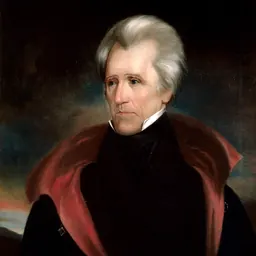




Related people
Same field, nearest in time

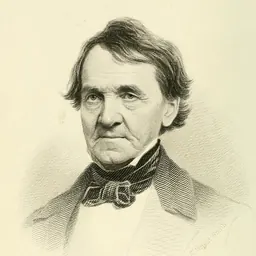

Contemporaries
People whose lives overlapped John Catron's

Frequently asked questions
Who was John Catron?
United States federal judge
When was John Catron born?
John Catron was born on 7 January 1786 in Wythe County.
When did John Catron die?
John Catron died on 30 May 1865 in Nashville.
What was John Catron's occupation?
John Catron was a lawyer and judge.
What nationality was John Catron?
John Catron was American.
Sources & further reading
Cite this page
APA: Biography.guide. (2026). John Catron. https://biography.guide/john-catron/
MLA: "John Catron." Biography.guide, https://biography.guide/john-catron/.
Chicago: "John Catron." Biography.guide. https://biography.guide/john-catron/.
Data last updated: 2026-09-22 · Spot an error? Report a correction.
Portrait: Wikimedia Commons · author & licence
Page generated 2026-09-27 05:04 UTC