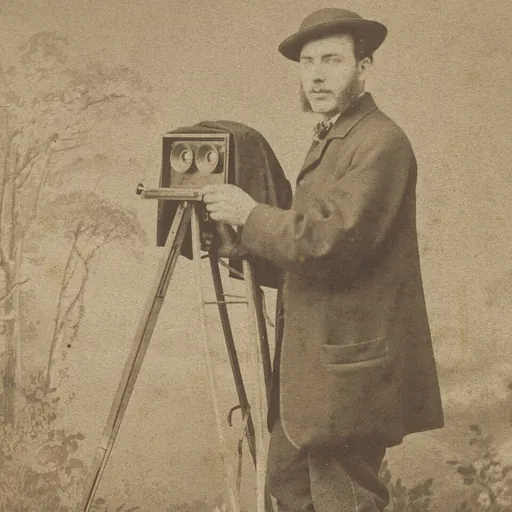
About John Carbutt
Lived 1832 – 1905 (aged 72–73). John Carbutt was a British photographer, businessperson and inventor.
John Carbutt (December 2, 1832– July 26, 1905) was an English photographer and businessman. He created stereograms of his excursions in Minnesota, along the Mississippi River, Niagara Falls, and the Rocky Mountains. He worked as a photographer for the Grand Trunk Railway and the Chicago and North Western Railway. He was the official photographer of the Canadian Pacific Railway and the Union Pacific Railroad during the construction of their transcontinental railroad lines.
In 1879, he founded the Keystone Dry Plate Works. He was an innovator in the development of photographic plates and the first to commercially produce gelatin dry plates in the United States. He was the first to produce celluloid film of high quality for photographic use. This film was provided to William Kennedy Dickson and Thomas Edison for usage in their Kinetoscope.
Early life He was born in Sheffield, England, on December 2, 1832, to Robert and Ann Carbutt. He moved to Canada in 1853 and worked as a photographer from 1853 to 1857 for the Grand Trunk Railway. He worked as a photographer at the Cosmopolitan Gallery in Plymouth, Indiana, from 1858 to 1861. He worked with ambrotype, melainotype, photographs, and stereograms. He returned to Sheffield, England, in 1861 and opened a photographic studio there but moved back to the United States later that year and opened a studio in Chicago, Illinois.
Career Carbutt photo of the Gathering the Directors of the Union Pacific Railroad on the 100th meridian. He was the first Chicago-based photographer to develop carte de visite. He gained experience with dry-plate photography as the official photographer during the construction of the Canadian Pacific Railway. He produced a series of stereograms titled Rail Road Excursion to the 100th Meridian
In 1867, he purchased stereographic negatives from William H. Illingworth of his images taken during James L. Fisk's 1866 expedition to find a wagon route from Minnesota to Montana. Carbutt published these images under the title Crossing the Plains with Capt. Fisk's Expedition, 1866. He was commissioned by the Chicago and North Western Railway to photograph the rail route including the iron mining activity near Lake Superior. He worked again with the Union Pacific Railroad and travelled west to Colorado to create stereograms of the Rocky Mountains. In 1869, he took part in an initiative to photograph a solar eclipse in Mount Pleasant, Iowa. This was supplied to William Kennedy Dickson and Thomas Edison for usage in their Kinetoscope. He later experimented with color photography and color screens used in photoengraving. and was interred at West Laurel Hill Cemetery in Bala Cynwyd, Pennsylvania.
Don’t just read it —
keep it.
Full-length biographies made to live with: read them, listen on the way to work, watch them tonight.
- E-book
- Audio
- Video
Instant download · yours to keep · every purchase keeps this site free
Important facts
People in John Carbutt's life
Named in this biography and alive at the same time
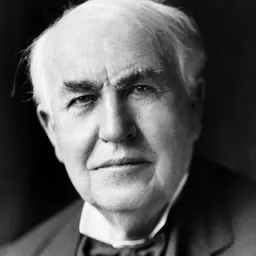
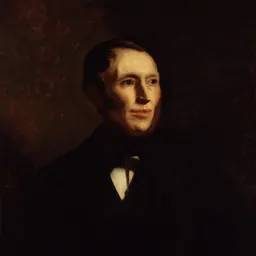
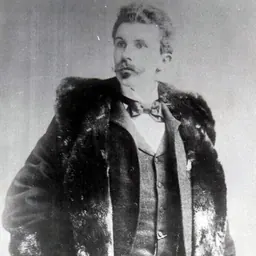

Related people
Same field, nearest in time


Contemporaries
People whose lives overlapped John Carbutt's



Frequently asked questions
Who was John Carbutt?
photographer (1832–1905)
When was John Carbutt born?
John Carbutt was born on 2 December 1832 in Sheffield.
When did John Carbutt die?
John Carbutt died in 1905.
What was John Carbutt's occupation?
John Carbutt was a photographer, businessperson and inventor.
What nationality was John Carbutt?
John Carbutt was British.
Sources & further reading
Cite this page
APA: Biography.guide. (2026). John Carbutt. https://biography.guide/john-carbutt/
MLA: "John Carbutt." Biography.guide, https://biography.guide/john-carbutt/.
Chicago: "John Carbutt." Biography.guide. https://biography.guide/john-carbutt/.
Data last updated: 2026-09-23 · Spot an error? Report a correction.
Portrait: Wikimedia Commons · author & licence
Page generated 2026-09-27 05:05 UTC