
About John Campbell White
Lived 1757 – 1847 (aged 89–90). John Campbell White was a physician.
John Campbell White (1757–1847) was an executive member of the Society of United Irishmen in 1798 as it prepared in Ireland for insurrection against the British Crown and Protestant-landed Ascendancy. In American exile, he became a leading physician, and prominent anti-Federalist, in the city of Baltimore.
Ireland 1757–1798 White was born in Templepatrick, County Antrim, where his father Robert (previously of Larne) had been ordained minister of the Presbyterian congregation in 1755. His father was also a schoolmaster. Among his father's pupils were David Manson who, in his own school in Belfast, was to pioneer the use of play in teaching basic literacy, and Rev. William Steel Dickson who later, with the younger White, was to be a United Irishman. After a "useless run of Irish country schools", Dickson credited the Rev. White with teaching him "to think". It is possible with other Presbyterian ministers of his generation the elder White, either at an academy in Dublin or at the University of Glasgow, had studied with "the father of the Scottish Enlightenment", Francis Hutcheson.
In 1778, while working as the apothecary to the Poor House in Belfast, White married Elizabeth Getty (1760–1839). He pursued medical studies at the University of Glasgow (MB 1782), at the University of Edinburgh and at Middlesex Hospital in London. In Belfast he became the attending physician to the Belfast Dispensary, which he had helped to establish in 1792; was an active member of the Belfast Reading Society, serving on its committee; and was a strong campaigner for the establishment of a Free School for poor children.
In the midst of early enthusiasm in Belfast for the revolutionary events in France and the revival of the Irish Volunteer movement, White's fellow Glasgow-trained physician, William Drennan, proposed to his friends "a benevolent conspiracy—a plot for the people", the "Rights of Man and [employing the phrase coined by Hutcheson] the Greatest Happiness of the Greater Number its end—its general end Real Independence to Ireland, and Republicanism its particular purpose." White gathered with Drennan's friends in Belfast in October 1791. Moved by an address from Theobald Wolfe Tone, the Protestant secretary of the Catholic Committee in Dublin, and calling themselves at Tone's suggestion the Society of United Irishmen, they resolved to form "a cordial union among all the people of Ireland" to oppose "the weight of English influence in Ireland" and to secure a "complete and radical reform" of representation in the Irish Parliament. The society rapidly reproduced itself in Dublin and across Ulster and the Irish midlands.
In a first test of this resolve, at a town meeting in January 1792, White helped propose and defend a petition calling for immediate Catholic Emancipation. and John Glendy (White's minister in the city's Second Presbyterian Church). White practiced medicine (on the corner of East and Holliday Streets), He was naturalised as a U.S. citizen in 1801 (albeit as "John Campbell", a clerical error corrected in 1839); was an officer of the Medical and Chirurgical Faculty of Maryland in 1802; a founder and first president of the Baltimore Benevolent Hibernian Society in 1803;
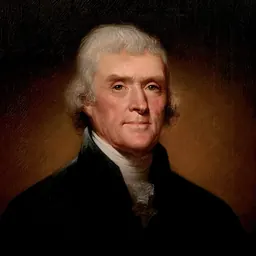
Hailing the United States (in a letter to Robert Simms) as "a young country where civil, religious and political liberty are enjoyed to the fullest extent, and where no more taxes are levied on the Citizens than are barely necessary … to the interests and security of the state", White positioned himself as an anti-Federalist and as a supporter of Thomas Jefferson. It was a politics shared by other Irish immigrants whom the Benevolent Hibernian Society sought to assist. An advertisement placed by the society in a Baltimore paper in 1803 speaks of many of these arriving "in a friendless and forlorn condition, deprived of health and an asylum" but with "a claim upon those who have preceded them". The republican sympathies, both American and Irish, of the Society were made plain in a series of St Patrick’s day toasts following White's re-election a president in 1804: "Our Native Land", ‘Our Adopted Country", "Thomas Jefferson", "Lately Imported Patriots", "United States as Asylum for the Persecuted", "Civil and Religious Liberty to All Mankind", "Our Distressed Brethren in Ireland", and "Fair Daughters of Erin, may they never smile on the enemies of their country". White remained as president of the Society until 1811–12.
Don’t just read it —
keep it.
Full-length biographies made to live with: read them, listen on the way to work, watch them tonight.
- E-book
- Audio
- Video
Instant download · yours to keep · every purchase keeps this site free
Important facts
People in John Campbell White's life
Named in this biography and alive at the same time





Related people
Same field, nearest in time


Contemporaries
People whose lives overlapped John Campbell White's





Frequently asked questions
Who was John Campbell White?
Irish activist (1757–1847)
When was John Campbell White born?
John Campbell White was born in 1757 in County Antrim, Kingdom of Ireland, Templepatrick.
When did John Campbell White die?
John Campbell White died in 1847 in Baltimore, Maryland, United States of America.
What was John Campbell White's occupation?
John Campbell White was a physician.
What nationality was John Campbell White?
John Campbell White's recorded nationality: Kingdom of Ireland.
Sources & further reading
· Wikipedia: John Campbell White
· DBpedia: John Campbell White (United Irishman)
Cite this page
APA: Biography.guide. (2026). John Campbell White. https://biography.guide/john-campbell-white/
MLA: "John Campbell White." Biography.guide, https://biography.guide/john-campbell-white/.
Chicago: "John Campbell White." Biography.guide. https://biography.guide/john-campbell-white/.
Data last updated: 2026-09-22 · Spot an error? Report a correction.
Page generated 2026-09-27 05:10 UTC