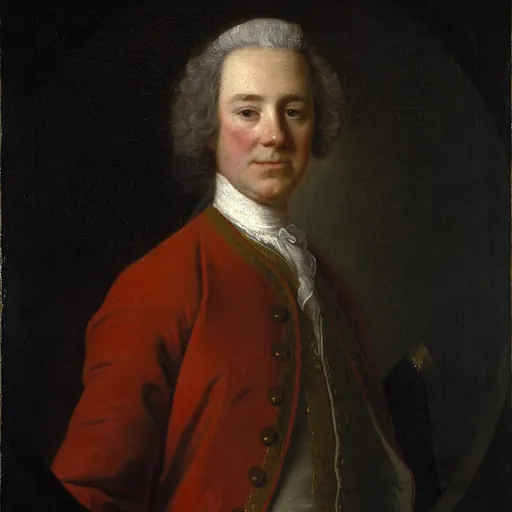
About John Campbell, 4th Earl of Loudoun
Lived 1705 – 1782 (aged 76). John Campbell, 4th Earl of Loudoun was a British military officer.
General John Campbell, 4th Earl of Loudoun (5 May 1705 – 27 April 1782) was a British Army officer who served as Commander-in-Chief, North America from 1756 to 1757.
Early life
Born in Scotland two years before the creation of Great Britain in which his father, Hugh Campbell, 3rd Earl of Loudoun, was a significant figure, Campbell enlisted in the British Army as a cornet in 1727 and inherited his father's estates and peerages in 1731, becoming Lord Loudoun. He raised a Highland regiment known as Loudon's Highlanders, which took part in the suppression of the Jacobite rising of 1745. The regiment consisted of twelve companies, with Loudoun as colonel and John Campbell as lieutenant colonel. The regiment served in several different parts of Scotland. Three of the regiment's companies, raised in the Scottish Lowlands, were captured by the Jacobite Army at the Battle of Prestonpans.
Eight companies, under Loudoun's personal command, were stationed in Inverness. Loudoun set out in February 1746 with that portion of his regiment and several Independent Highland Companies in an attempt to capture the Jacobite Army's commander-in-chief, Charles Edward Stuart. The expedition was met by a ruse of war by only four Jacobites, which suggested a large Jacobite force was protecting Stuart, and Loudoun returned to Inverness without engagement. That was later publicised as the Rout of Moy. Loudoun then fell back to join the Duke of Cumberland's army up and gave up the town of Inverness to the rebels. After the Battle of Culloden, Loudoun led his mixed force of regulars, militia and Highlanders in mopping-up operations against the remaining rebels.
As Commander-in-Chief during the Seven Years' War, called the French and Indian War in the Thirteen Colonies, he planned an expedition to seize Louisbourg from the French in 1757 but he called it off when intelligence, possibly including a French deception, indicated that the French forces there were too strong for him to defeat. While Loudoun was thus engaged in Canada, French forces captured Fort William Henry from the British, and he was replaced by James Abercrombie and returned to London. Francis Parkman, a 19th-century historian of the Seven Years' War, rates Loudun's martial conduct of the affair poorly.
Many historians debate whether he played a fundamental part in the Seven Years' War. Arguably, he was an influential figure as he embarked on reforms for the army such as replacing the ordinary musket with the flintlock musket for greater accuracy. He made improvements by embarking on a road improvement programme and recognised the need to supply the army as he replaced the traditional supply line with army wagons. His focus was centralising the system of supplies and had built storehouses in Halifax and Albany and recognised the importance of waterways as a means of transport. Most notably, he integrated regular troops with local militias, and the irregulars were to fight a different kind of war from the linear European style of warfare in which the British had previously been trained.
Benjamin Franklin's anecdotes of Lord Loudon
Benjamin Franklin provides several first-hand anecdotes of Loudon's North American days in his Autobiography, none of which is complimentary. The following are excerpts:
Portugal
In 1762, he was sent to Portugal to counter the Spanish invasion of Portugal as second in command, and he became overall commander in 1763. Despite being unable to prevent the loss of Almeida, the British forces soon launched a counter-attack that drove the Franco-Spanish invaders back across the border.
Later life
Back in Scotland, Loudon in 1763 was made Governor of Edinburgh Castle, a post that he held for the rest of his life. In 1770, he was promoted to general. Loudoun's interest in horticulture led to his estate being renowned for its landscaping. He collected willow species in particular from around the globe. On 23 January 1773, the town of Loudon, New Hampshire, was incorporated and named in his honor. Loudonville, New York, was also named after him as well as the unincorporated town of Loudon, Massachusetts, which was renamed to Otis upon its incorporation. Campbell remained a bachelor and on his death on 27 April 1782 was succeeded as earl by his cousin, James Mure-Campbell.
Coat of arms
Don’t just read it —
keep it.
Full-length biographies made to live with: read them, listen on the way to work, watch them tonight.
- E-book
- Audio
- Video
Instant download · yours to keep · every purchase keeps this site free
Important facts
People in John Campbell, 4th Earl of Loudoun's life
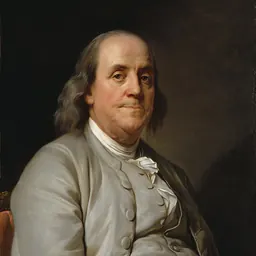
Named in this biography and alive at the same time
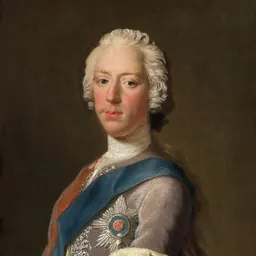
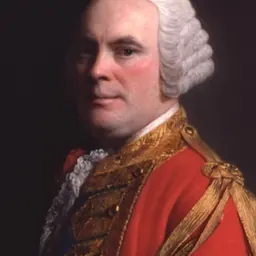
Related people
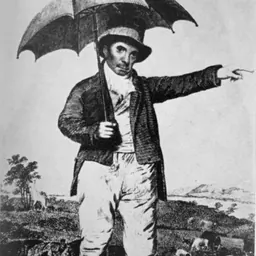
Same field, nearest in time
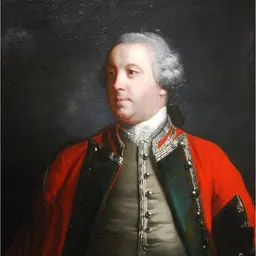
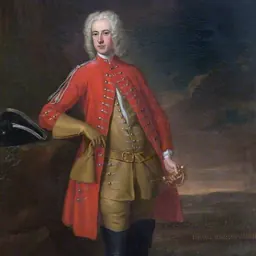


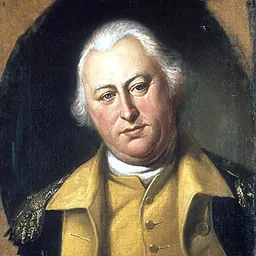
Contemporaries
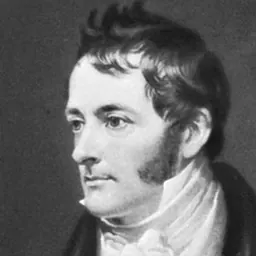
People whose lives overlapped John Campbell, 4th Earl of Loudoun's





Frequently asked questions
Who was John Campbell, 4th Earl of Loudoun?
British Army general
When was John Campbell, 4th Earl of Loudoun born?
John Campbell, 4th Earl of Loudoun was born on 5 May 1705 in Loudoun Castle.
When did John Campbell, 4th Earl of Loudoun die?
John Campbell, 4th Earl of Loudoun died on 27 April 1782 in Loudoun Kirk.
What was John Campbell, 4th Earl of Loudoun's occupation?
John Campbell, 4th Earl of Loudoun was a military officer.
What nationality was John Campbell, 4th Earl of Loudoun?
John Campbell, 4th Earl of Loudoun was British.
Sources & further reading
· Wikipedia: John Campbell, 4th Earl of Loudoun
· DBpedia: John Campbell, 4th Earl of Loudoun
Cite this page
APA: Biography.guide. (2026). John Campbell, 4th Earl of Loudoun. https://biography.guide/john-campbell-4th-earl-of-loudoun/
MLA: "John Campbell, 4th Earl of Loudoun." Biography.guide, https://biography.guide/john-campbell-4th-earl-of-loudoun/.
Chicago: "John Campbell, 4th Earl of Loudoun." Biography.guide. https://biography.guide/john-campbell-4th-earl-of-loudoun/.
Data last updated: 2026-09-23 · Spot an error? Report a correction.
Portrait: Wikimedia Commons · author & licence
Page generated 2026-09-27 05:07 UTC