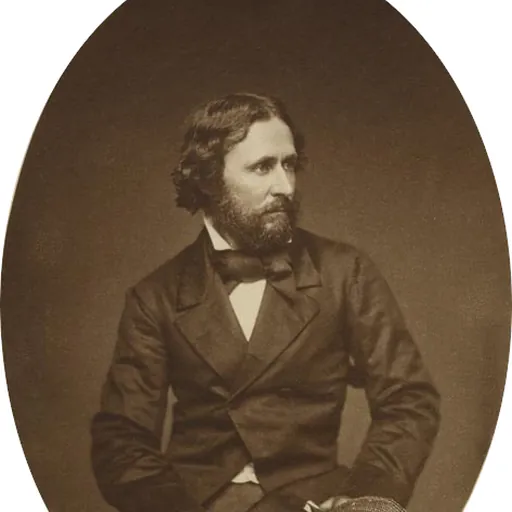
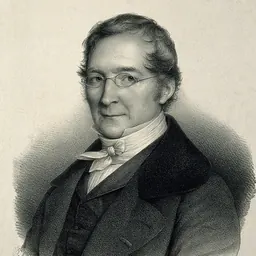
John C. Frémont
American politician, explorer and military officer
About John C. Frémont
Lived 1813 – 1890 (aged 77). John C. Frémont was an American politician, explorer, military officer, botanist, engineer and writer.
Major-General John Charles Frémont (January 21, 1813 – July 13, 1890) was a United States Army officer, explorer, and politician. He was a United States senator from California and was the first Republican nominee for president of the U.S. and founder of the California Republican Party upon being nominated. Frémont lost the 1856 United States presidential election to Democrat James Buchanan.
A native of Georgia, he attended the College of Charleston for two years until he was expelled after irregular attendance. In the 1840s, Frémont led five expeditions into the western states, for which he was called The Pathfinder. During this time, he directed several massacres of the indigenous peoples in California as part of the California genocide. During the Mexican–American War, he was a major in the United States Army and took control of a portion of California north of San Francisco from the short-lived California Republic in 1846. Frémont was court-martialed and convicted of mutiny and insubordination after a conflict over who was the rightful military governor of California. His sentence was commuted, and he was reinstated by President James K. Polk, but Frémont resigned from the Army. Afterwards, he settled in California at Monterey while buying cheap land in the Sierra foothills. Gold was found on his Mariposa ranch, and Frémont became a wealthy man during the California Gold Rush. He became one of the first two U.S. senators elected from the new state of California in 1850.
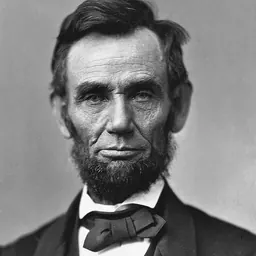
At the beginning of the American Civil War in 1861, he was given command of the Department of the West by President Abraham Lincoln. Frémont had successes during his brief tenure there, though he ran his department autocratically and made hasty decisions without consulting President Lincoln or Army headquarters. He opposed slavery and issued an unauthorized emancipation edict, which led to him being relieved of his command for insubordination by Lincoln. After a brief service tenure in the Mountain Department in 1862, Frémont resided in New York, retiring from the army in 1864. He was nominated for president in 1864 by the Radical Democratic Party, a breakaway faction of abolitionist Republicans, but he withdrew before the election. After the Civil War, he lost much of his wealth in the unsuccessful Pacific Railroad in 1866, and he lost more in the Panic of 1873. Frémont served as Governor of the Arizona Territory from 1878 to 1881. After his resignation as governor, he retired from politics and died destitute in New York City in 1890.
Historians portray Frémont as controversial, impetuous, and contradictory. Some scholars regard him as a military hero of significant accomplishment, while others view him as a failure who repeatedly defeated his own best interests. The keys to Frémont's character and personality, several historians argue, lie in his having been born "illegitimate" (to unwed parents) and in his drive for success, need for self-justification, and passive-aggressive behavior. His biographer Allan Nevins wrote that Frémont lived a dramatic life of remarkable successes and dismal failures.
Early life, education, and early career John Charles Frémont was born on January 21, 1813, the son of Charles Frémon, a French-Canadian immigrant, and Anne Beverley Whiting, the youngest daughter of socially prominent Virginia planter Col. Thomas Whiting. At age 17, Anne married Major John Pryor, a wealthy resident of Richmond in his early 60s. In 1810, Pryor hired Frémon to teach his young wife French. The two began an affair, and Pryor, on discovering this, turned them out of the house. The couple fled first to Norfolk and then to Williamsburg, taking with them several household slaves Anne had inherited. American and European fur trappers, including Peter Skene Ogden and Jedediah Smith, explored much of the American West in the 1820s. Frémont, who would later be known as The Pathfinder, carried on this tradition of Western overland exploration, building on and adding to the work of earlier pathfinders to expand knowledge of the American West. Frémont's talent lay in his scientific documentation, publications, and maps made based on his expeditions, making the American West accessible for many Americans. Beginning in 1842, Frémont led five western expeditions; however, between the third and fourth expeditions, Frémont's career took a fateful turn because of the Mexican–American War. Frémont's initial explorations – specifically, his timely scientific reports (co-authored by his wife Jessie) and their romantic writing style – encouraged Americans to travel West. A series of seven maps produced from his findings, published by the Senate in 1846, served as a guide for thousands of American emigrants, depicting the entire length of the Oregon Trail.
First expedition (1842)
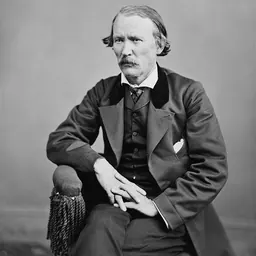
When Nicollet was too ill to continue any further explorations, Frémont was chosen to be his successor. His first important expedition was planned by Benton, Senator Lewis Linn, and other Westerners interested in acquiring the Oregon Territory. The scientific expedition started in the summer of 1842 and was to explore the Wind River of the Rocky Mountains, examine the Oregon Trail through the South Pass, and report on the rivers and the fertility of the lands, find optimal sites for forts, and describe the mountains beyond in Wyoming. By chance meeting, Frémont was able to gain the valuable assistance of mountain man and guide Kit Carson. Frémont and his party of 25 men, including Carson, embarked from the Kansas River on June 15, 1842, following the Platte River to the South Pass, and starting from Green River he explored the Wind River Range. Frémont climbed a , Frémont's Peak, planted an American flag, claiming the Rocky Mountains and the West for the United States. On Frémont's return trip he and his party carelessly rafted the swollen Platte River losing much of his equipment. His five-month exploration, however, was a success, returning to Washington in October. Frémont and his wife Jessie wrote a Report of the Exploring Expedition to the Rocky Mountains (1843), which was printed in newspapers across the country; the public embraced his vision of the west not as a place of danger but wide open and inviting lands to be settled.
Third expedition (1845) With the backdrop of an impending war with Mexico, after James K. Polk had been elected president, Benton quickly organized a third expedition for Frémont. The plan for Frémont under the War Department was to survey the central Rockies, the Great Salt Lake region, and part of the Sierra Nevada. Back in St. Louis, Frémont organized an armed surveying expedition of 60 men, with Carson as a guide, and two distinguished scouts, Joseph Walker and Alexis Godey. Working with Benton and Secretary of Navy George Bancroft, Frémont was secretly told that if war started with Mexico he was to turn his scientific expedition into a military force. President Polk, who had met with Frémont at a cabinet meeting, was set on taking California. Frémont desired to conquer California for its beauty and wealth, and would later explain his very controversial conduct there.
On June 1, 1845, Frémont and his armed expedition party left St. Louis having the immediate goal to locate the source of the Arkansas River, on the east side of the Rocky Mountains. Frémont and his party struck west by way of Bent's Fort, The Great Salt Lake, and the "Hastings Cut-Off". When Frémont reached the Ogden River, which he renamed the Humboldt, he divided his party in two to double his geographic information. Upon reaching the Arkansas River, Frémont suddenly made a blazing trail through Nevada straight to California, having a rendezvous with his men from the split party at Walker Lake in west-central Nevada.
Attacks against Native Americans in California and Oregon Country (1845–1846) Taking 16 men, Frémont split his party again, arriving at Sutter's Fort in the Sacramento Valley on December 9. Frémont promptly sought to stir up patriotic enthusiasm among the American settlers there. He promised that if war with Mexico started, his military force would protect the settlers. Frémont went to Monterey, California, to talk with the American consul, Thomas O. Larkin, and Mexican commandant Jose Castro, under the pretext of gaining fuller supplies. In February 1846, Frémont reunited with 45 men of his expedition party near Mission San José, giving the United States a relatively strong military presence in California. Castro and Mexican officials were suspicious of Frémont and he was ordered to leave the country. Frémont and his men withdrew and camped near the summit of what is now named Fremont Peak. Frémont raised the United States Flag in defiance of Mexican authority.
After a four-day standoff and Castro having a superior number of Mexican troops, Frémont and his men went north to Oregon, bringing about the Sacramento River massacre along the way. Estimates of the casualties vary. Expedition members Thomas E. Breckenridge and Thomas S. Martin claim the number of Native Americans killed as "120–150" and "over 175" respectively, but the eyewitness Tustin claimed that at least 600–700 Native Americans were killed on land, with another 200 or more dying in the water. There are no records of any expedition members being killed or wounded in the massacre. Kit Carson, one of the mounted attackers, later stated, "It was a perfect butchery."
Fremont and his men eventually made their way to camp at Klamath Lake, killing Native Americans on sight as they went. On May 8, Frémont was overtaken by Lieutenant Archibald Gillespie from Washington, who gave him copies of dispatches he had previously given to Larkin. Gillespie told Frémont secret instructions from Benton and Buchanan justifying aggressive action and that a declaration of war with Mexico was imminent. On May 9, 1846, Native Americans ambushed his expedition party in retaliation for numerous killings of Native Americans that Frémont's men had engaged in along the trail, killing three members of Frémont's party in their sleep, including a Native American who was traveling with Frémont. Frémont retaliated by attacking a Klamath fishing village named Dokdokwas the following day in the Klamath Lake massacre, although the people living there might not have been involved in the first action. The village was at the junction of the Williamson River and Klamath Lake. On May 12, 1846, the Frémont group completely destroyed it, killing at least fourteen people. Frémont believed that the British were responsible for arming and encouraging the Native Americans to attack his party. Afterward, Carson was nearly killed by a Klamath warrior. As Carson's gun misfired, the warrior drew to shoot a poison arrow; however, Frémont, seeing that Carson was in danger, trampled the warrior with his horse. Carson felt that he owed Frémont his life. Commodore Sloat had his proclamation read and posted in English and Spanish: "... henceforth California would be a portion of the United States." On July 10, Frémont received a message from Montgomery that the U.S. Navy had occupied Monterey and Yerba Buena. Two days later, Frémont received a letter from Sloat, describing the capture of Monterey and ordering Frémont to bring at least 100 armed men to Monterey. Frémont would bring 160 men. On July 15, Commodore Robert F. Stockton arrived in Monterey to replace the 65-year-old Sloat in command of the Pacific Squadron. Sloat named Stockton commander-in-chief of all land forces in California. On July 19, Frémont's party entered Monterey, where he met with Sloat on board the Savannah. When Sloat learned that Frémont had acted on his own authority (thus raising doubt about a war declaration), he retired to his cabin. On July 23, Stockton mustered Frémont's party and the former Bear Flaggers into military service as the "Naval Battalion of Mounted Volunteer Riflemen" with Frémont appointed major in command of the California Battalion, which he had helped form with his survey crew and volunteers from the Bear Flag Republic, now totaling 428 men. Stockton incorporated the California Battalion into the U.S. military giving them soldiers pay. Frémont and about 160 of his troops went by ship to San Diego, and with Stockton's marines took Los Angeles on August 13. Frémont afterwards went north to recruit more Californians into his battalion. In late 1846, under orders from Stockton, Frémont led a military expedition of 300 men to capture Santa Barbara. In September, Mexican Californians unwilling to be ruled by the United States, under José María Flores, fought back and retook Los Angeles, driving out Americans.
Signing of the treaty at Campo de Cahuenga by Andrés Pico and John C. Frémont
In December 1846, U.S. Brigadier General Stephen W. Kearny arrived in California under "orders from President Polk" after taking New Mexico, then to march onto California, where, "Should you conquer and take possession of California, you will establish a civil government." Kearny, who had earlier trimmed his forces from 300 to 100 dragoons, based upon Kit Carson's dispatches he was carrying to Washington, stating that Stockton and Fremont had successfully taken control of California. Unknown to Carson at this time, the Californians had revolted, which would lead Kearny to a disastrous attack on waiting Mexican lancers at the Battle of San Pasqual, losing 19 men killed and being himself seriously lanced. He was later reinforced when Stockton sent troops to drive off Pio Pico and his forces. It was at this time a dispute began between Stockton and Kearny over who had control of the military, but the two managed to work together to stop the Los Angeles uprising. Frémont led his unit over the Santa Ynez Mountains at San Marcos Pass in a rainstorm on the night of December 24, 1846. Despite losing many of his horses, mules and cannons, which slid down the muddy slopes during the rainy night, his men regrouped in the foothills (behind what is today Rancho Del Ciervo) the next morning, and captured the Presidio of Santa Barbara and the town without bloodshed. A few days later, Frémont led his men southeast towards Los Angeles. Fremont accepted Andres Pico's surrender upon signing the Treaty of Cahuenga on January 13, 1847, which terminated the war in upper California. It was at this time Kearny ordered Frémont to join his military dragoons, but Frémont refused, believing he was under authority of Stockton.
Court martial and resignation Brigadier General Stephen W. Kearny humiliated Frémont by having him arrested and court-martialed. On January 16, 1847, Commodore Stockton appointed Frémont military governor of California following the Treaty of Cahuenga, and then left Los Angeles. Frémont functioned for a few weeks without controversy, but he had little money to administer his duties as governor. Previously, unknown to Stockton and Frémont, the Navy Department had sent orders for Sloat and his successors to establish military rule over California. These orders, however, postdated Kearny's orders to establish military control over California. Kearny did not have the troop strength to enforce those orders, and was forced to rely on Stockton's Marines and Frémont's California Battalion until army reinforcements arrived. On February 13, specific orders were sent from Washington through Commanding General Winfield Scott giving Kearny the authority to be military governor of California. Kearny, however, did not directly inform Frémont of these orders from Scott. Kearny ordered that Frémont's California Battalion be enlisted into the U.S. Army and Frémont bring his battalion archives to Kearny's headquarters in Monterey.
Frémont delayed obeying these orders, hoping Washington would send instructions for Frémont to be military governor. Also, the California Battalion refused to join the U.S. Army. Frémont gave orders for the California Battalion not to surrender arms, rode to Monterey to talk to Kearny, and told Kearny he would obey orders. Kearny sent Col. Richard B. Mason, who was to succeed Kearny as military governor of California, to Los Angeles, both to inspect troops and to give Frémont further orders. Frémont and Mason, however, were at odds with each other and Frémont challenged Mason to a duel. After an arrangement to postpone the duel, Kearny rode to Los Angeles and refused Frémont's request to join troops in Mexico. Ordered to march with Kearny's army back east, Frémont was arrested on August 22, 1847, when they arrived at Fort Leavenworth. He was charged with mutiny, disobedience of orders, assumption of powers, and several other military offenses. Ordered by Kearny to report to the adjutant general in Washington to stand for court-martial, Frémont was found innocent of mutiny, but was convicted on January 31, 1848, of disobedience toward a superior officer and military misconduct.
While approving the court's decision, President James K. Polk quickly commuted Frémont's sentence of dishonorable discharge and reinstated him into the Army, due to his war services. Polk felt that Frémont was guilty of disobeying orders and misconduct, but he did not believe Frémont was guilty of mutiny. Additionally, Polk wished to placate Thomas Hart Benton, a powerful senator and Frémont's father-in-law, who felt that Frémont was innocent. Frémont, only gaining a partial pardon from Polk, resigned his commission in protest and settled in California. Despite the court-martial, Frémont remained popular among the American public.
Historians are divided in their opinions on this period of Frémont's career. Mary Lee Spence and Donald Jackson, editors of a large collection of letters by Fremont and others dating from this period, concluded that "...in the California episode, Frémont was as often right as wrong. And even a cursory investigation of the court-martial record produces one undeniable conclusion: neither side in the controversy acquitted itself with distinction." Allan Nevins states that Kearny: was a stern-tempered soldier who made few friends and many enemies – who has been justly characterized by the most careful historian of the period, Justin H. Smith, as "grasping, jealous, domineering, and harsh." Possessing these traits, feeling his pride stung by his defeat at San Pasqual, and anxious to assert his authority, he was no sooner in Los Angeles than he quarreled bitterly with Stockton; and Frémont was not only at once involved in this quarrel, but inherited the whole burden of it as soon as Stockton left the country.
Theodore Grivas wrote that "It does not seem quite clear how Frémont, an army officer, could have imagined that a naval officer [Stockton] could have protected him from a charge of insubordination toward his superior officer [Kearny]". Grivas goes on to say, however, that "This conflict between Kearny, Stockton, and Frémont perhaps could have been averted had methods of communication been what they are today."
Fourth expedition (1848–1849) Intent on restoring his honor and explorer reputation after his court martial, in 1848, Frémont and his father-in-law Sen. Benton developed a plan to advance their vision of Manifest Destiny. With a keen interest in the potential of railroads, Sen. Benton had sought support from the Senate for a railroad connecting St. Louis to San Francisco along the 38th parallel, the latitude which both cities approximately share. After Benton failed to secure federal funding, Frémont secured private funding. In October 1848 he embarked with 35 men up the Missouri, Kansas and Arkansas rivers to explore the terrain. The artists and brothers Edward Kern and Richard Kern, and their brother Benjamin Kern, were part of the expedition, but Frémont was unable to obtain the valued service of Kit Carson as guide as in his previous expeditions.
On his party's reaching Bent's Fort, he was strongly advised by most of the trappers against continuing the journey. Already a foot of snow was on the ground at Bent's Fort, and the winter in the mountains promised to be especially snowy. Part of Frémont's purpose was to demonstrate that a 38th parallel railroad would be practical year-round. At Bent's Fort, he engaged Richens Lacey Wootton (years later, "Uncle Dick Wootton") as guide, and at what is now Pueblo, Colorado, he hired the eccentric Old Bill Williams and moved on.
Had Frémont continued up the Arkansas, he might have succeeded. On November 25 at what is now Florence, Colorado, he turned sharply south. By the time his party crossed the Sangre de Cristo Range via Mosca Pass, they had already experienced days of bitter cold, blinding snow and difficult travel. Some of the party, including the guide Wootton, had already turned back, concluding that further travel would be impossible.
Although Mosca Pass through the Sangre de Cristo had proven too steep for a railroad, Frémont pressed on. From this point the party might still have succeeded had they gone up the Rio Grande to its source, or gone by a more northerly route, but the route they took brought them to the very top of Mesa Mountain. By December 12, on Boot Mountain, it took ninety minutes to progress three hundred yards. Mules began dying and by December 20, only 59 animals remained alive.
It was not until December 22 that Frémont acknowledged that the party needed to regroup and be resupplied. They began to make their way south to Taos in the New Mexico Territory. By the time the last surviving member of the expedition made it to Taos on February 12, 1849, 10 of the party had died, at least one of whom was partly eaten. Except for the efforts of member Alexis Godey, another 15 would have been lost. After recuperating in Taos, Frémont and only a few of the men left for California via an established southern trade route.
Benjamin Kern and "Old Bill" Williams were killed by Ute warriors while retracing the expedition trail to look for expedition notes, gear and survivors.
Aftermath Edward and Richard Kern joined J.H. Simpson's military reconnaissance expedition to the Navajos in 1849, and gave the American public some of its earliest authentic graphic images of the people and landscape of Arizona, New Mexico, and southern Colorado; with views of Canyon de Chelly, Chaco Canyon, and El Morro (Inscription Rock).
In 1850, Frémont was awarded the Patron's Medal by the Royal Geographical Society for his various exploratory efforts.
Rancho Las Mariposas
On February 10, 1847, Frémont purchased a 70-square-mile parcel of land in the Sierra foothills through land speculator Thomas Larkin for $3,000 ($ in ). Known as Las Mariposas (Spanish for "The Butterflies"), an allusion to the great number of Monarch butterflies found there, the land had previously been owned by former California governor Juan Bautista Alvarado and his wife Martina Caston de Alvarado. Frémont had hoped that Las Mariposas was near San Francisco or Monterey, but was disappointed to learn that it was further inland, near Yosemite, on the Miwok Indians' hunting and gathering grounds.
After his court martial in 1848, Frémont moved to Las Mariposas and became a rancher, borrowing money from his father-in-law Benton and Senator John Dix to construct a house, corral, and barn. Frémont ordered a sawmill and had it shipped by the Aspinwall steamer Fredonia to Las Mariposas. Frémont was informed by Sonora Mexicans that gold had been discovered on his property. Frémont was instantly a wealthy man; a five-mile quartz vein produced hundreds of pounds of placer gold each month. (His wife, Jessie Frémont, said enormous bags of gold weighing one hundred pounds were produced.) Billings later embarked on several trips to Europe in an unsuccessful effort to sell Frémont's Mariposa mine shares.
Republican Party presidential candidate (1856)
In 1856, Frémont (age 43) became the first presidential candidate of the newly-formed Republican Party. The Republicans, whose party had been established in 1854, were united in their opposition to the Pierce Administration and the spread of slavery into the West. Initially, Frémont was asked to be the Democratic candidate by former Virginia Governor John B. Floyd and the powerful Preston family. As the daughter of a senator, Jessie had been raised in Washington, and she understood politics more than Frémont. Many treated Jessie as an equal political professional, while Frémont was treated as an amateur. She received popular attention much more than potential First Ladies, and Republicans celebrated her participation in the campaign calling her Our Jessie. Jessie and the Republican propaganda machine ran a strong campaign, but she was unable to get her powerful father, Senator Benton, to support Frémont. While praising Frémont, Benton announced his support for Buchanan.
Frémont, along with the other presidential candidates, did not actively participate in the campaign, and he mostly stayed home at 56 West Street, in New York City. This practice was typical in presidential campaigns of the 19th century. To win the presidency, the Republicans concentrated on four swing states, Pennsylvania, New Jersey, Indiana, and Illinois. Republican luminaries were sent out decrying the Democratic Party's attachment to slavery and its support of the repeal of the Missouri Compromise. The experienced Democrats, knowing the Republican strategy, also targeted these states, running a rough media campaign, while illegally naturalizing thousands of alien immigrants in Pennsylvania.
The campaign was particularly abusive, as the Democrats attacked Frémont's illegitimate birth and alleged Frémont was Catholic. Frémont was defeated, having placed second to James Buchanan in a three-way election; he did not carry his home state of California. Frémont received 114 electoral votes to 174 votes received by Buchanan. Millard Fillmore ran as a third-party candidate representing the American (Know Nothing) Party. The popular vote went to Buchanan who received 1,836,072 votes to 1,342,345 votes received by Frémont on November 4, 1856. Instead, Lincoln appointed Frémont Union Army Major General on May 15, 1861. He arrived in Boston from England on June 27, 1861, and Lincoln promoted him commander of the Department of the West on July 1, 1861. The Western department included the area west of the Appalachian Mountains to the Mississippi River.
After Frémont arrived in Washington, D.C., he conferred with Lincoln and Commanding General Winfield Scott, himself making a plan to clear all Confederates out of Missouri and to make a general campaign down the Mississippi and advance on Memphis. According to Frémont, Lincoln had given him carte blanche authority on how to conduct his campaign and to use his own judgement, while talking on the steps of the White House portico. Frémont's main goal as commander of the Western Armies was to protect Cairo, Illinois, at all costs in order for the Union Army to move southward on the Mississippi River. Both Frémont and his subordinate, General John Pope, believed that Ulysses S. Grant was the fighting general needed to secure Missouri from the Confederates. Frémont had to contend with a hard-driving Union General Nathaniel Lyon, whose irregular war policy disturbed the complex loyalties of Missouri.
Department of the West (1861) Command and duties On July 25, 1861, Frémont arrived in St. Louis and formally took command of a Department of the West that was in crisis. Frémont was forty-eight years old, grey-haired and considered handsome. He brought with him the great reputation as "the Pathfinder of the West", for his eleven years of topographical service, and he was focused on driving the Confederate forces from Missouri. Frémont had to organize an army in a slave state that was largely disloyal, having a limited number of Union soldiers, supplies, and arms. Guerilla warfare was breaking out and two Confederate armies were planning on capturing Springfield and invading Illinois to capture Cairo. Frémont's duties upon taking command of the Western Department were broad, his resources were limited, and the secession crisis in Missouri appeared to be uncontrollable. Frémont's mission was to organize, equip, and lead the Union Army down the Mississippi River, reopen commerce, and break off the Western part of the Confederacy. Frémont was given only 23,000 men, whose volunteer 3-month enlistments were about to expire. Frémont had surrounded himself with California associates, who made huge profits by securing army contracts without the competitive bidding required by federal law. Frémont's supply line, headed by Major Justus McKinstry, also came under scrutiny for graft and profiteering. Frémont's biographer Nevins stresses that much of Frémont's trouble stemmed from the fact that the newly created Western Department was without organization, war materials, and trained recruits, while waste and corruption were endemic in the War Department under Lincoln's first appointed secretary, Simon Cameron.
Confederate capture of Springfield Frémont was blamed for Nathaniel Lyon's Union defeat at Wilson's Creek. Earlier in May, a tough, impetuous Regular Army captain, Nathaniel Lyon, exercising irregular authority, led troops who captured a legal contingent of Missouri state militia camped in a Saint Louis suburb; during the capture, civilians were killed. A primary concern for Frémont, after he assumed command, was the protection of Cairo, a Union-occupied city on the Mississippi River, vital to the security of the Union Army's western war effort. It contained too few troops to defend against a Confederate attack. Frémont was severely criticized for the defeat and for Lyon's death, having sent troops to reinforce Cairo, rather than to help Lyon's depleted forces south of Springfield.
Response to Confederate threat Ulysses S. Grant, whom Frémont put in command of the Union advance to secure the Mississippi River and split the Confederacy in two Responding the best he could to the Confederate and state militia threat, Frémont raised volunteer troops, purchased open market weapons and equipment, and sent his wife, Jessie, to Washington, D.C., where she lobbied President Lincoln for more reinforcements. At first Frémont was going to appoint John Pope, but upon the recommendation of Major McKinstry, he interviewed unobtrusive Brigadier General Ulysses S. Grant. Grant had a reputation for being a "drifter and a drunkard" in the Old Army, but Frémont viewed Grant independently using his own judgment. Frémont concluded that Grant was an "unassuming character not given to self elation, of dogged persistence, of iron will".
With Price retreating, Frémont became more aggressive and went on the offensive. Frémont knew the key to victory in the West was capturing control of the Mississippi River for the Union forces. Frémont decided to meet Confederate General Leonidas Polk head-on to control the trunk of the Mississippi. With Frémont's approval, Grant proceeded to capture Paducah, Kentucky, without firing a shot, after Polk had violated Kentucky neutrality and had captured Columbus. The result was that the Kentucky legislature voted to remain in the Union.
Recaptured Springfield
Desiring to regain the upper hand and make up for Union losses at the Battle of Wilson's Creek and the occupation of Lexington, Frémont and about 40,000 troops set out to regain Springfield. On October 25, 1861, Frémont's forces, led by Major Charles Zagonyi, won the First Battle of Springfield. This was the first and only Union victory in the West for the year 1861. On November 1, Frémont ordered Grant to make a demonstration against Belmont, a steamboat landing across the river from Columbus, in an effort to drive Confederate General Price from Missouri. Grant had earlier requested to attack Columbus, but Frémont had overruled Grant's initiative.
Emancipation edict controversy
President Abraham Lincoln ordered Frémont to rescind his emancipation edict. Frémont came under increasing pressure for decisive action, as Confederates controlled half of Missouri, Confederate troops under Price and McCulloch remained ready to strike, and rebel guerillas were wreaking havoc, wrecking trains, cutting telegraph lines, burning bridges, raiding farms, and attacking Union posts. Confederate sympathies in stronger slave-holding counties needed to be reduced or broken up. Confederate warfare was causing thousands of Union loyalists to take refuge, destitute, in Illinois, Iowa, and Kansas. Radicals in his camp and his wife Jessie urged Frémont to free the slaves of known Confederate supporters. They argued that these men were in rebellion and no longer protected by the Constitution, and it was legal to confiscate rebel property, including their slaves.
So, on the morning of August 30, 1861, at dawn, Frémont, without notifying President Lincoln, issued a proclamation putting Missouri under martial law. The edict declared that civilians taken in arms against would be subject to court martial and execution, that the property of those who aided secessionists would be confiscated, and that the slaves of all rebels were immediately emancipated. This last clause caused much concern. Kentucky was still "neutral", and Unionists there feared Frémont's action would sway opinion there toward secession. One group in Louisville implored President Abraham Lincoln's friend Joshua Speed to tell Lincoln:
here is not a day to lose in disavowing emancipation or Kentucky is gone over the mill dam.
Lincoln, fearing that Frémont's emancipation order would tip Missouri (and other Border states) to secession, asked Frémont to revise the order. Frémont refused to do so, and sent his wife to plead his case. President Lincoln told Jessie that Frémont "should never have dragged the Negro into the war". When Frémont remained obdurate, Lincoln publicly revoked the emancipation clause of the proclamation on 11 September. Frémont's abolitionist allies attacked Lincoln for this, creating more bad feeling. Meanwhile, the War Department compiled a report on Frémont's misconduct as commander in Missouri. This included the arrest of Frank Blair, which ended Frémont's alliance with the Blair family, who had backed him for the presidential nomination in 1856.
Finally Lincoln decided Frémont had to go. He issued an order removing Frémont from command of the Western Department, which was hand-delivered to him by Lincoln's friend Leonard Swett on 2 November. Lincoln's actions prompted much hostility among Radical Republicans throughout the North, including from old friends like Senator Orville Browning. Lincoln himself later privately stated his sympathy for Frémont, noting that the first reformer in some area often overreaches and fails, but he continued to insist that Frémont had exceeded his authority and endangered the Union cause.
Mountain departments (1862) After being dismissed by Lincoln, Frémont left Springfield and returned to St. Louis. On the outside Frémont expressed joy being free from the cares of duty, but on the inside Frémont was smolderingly angry believing the Republicans ran an incompetent war and that the Blairs, acting under malicious motives, were responsible for what he believed to be his unjustified firing by Lincoln. More humiliations followed: Frémont's Zagonyi Guard was mustered out of the Army without pay, and all the contracts he made were suspended upon approval from Washington. Pressure soon mounted among Radicals and Frémont supporters for his reinstatement of command in the Army. In March 1862, Lincoln placed Frémont in command of the Mountain Department, which was responsible for parts of western Virginia, eastern Tennessee and eastern Kentucky, although he had clearly lost trust in the Pathfinder.
Battles of Cross Keys and Port Republic
Frémont fought Stonewall Jackson's Army at the Battle of Cross Keys. Frémont and his army and two other generals, Nathaniel P. Banks and Irvin McDowell, and their respective armies, were in charge of protecting the Shenandoah Valley and Washington D.C. Rather than having these armies under one command, Lincoln and Stanton micromanaged their movements. Confederate General Stonewall Jackson took advantage of this divided command and systematically attacked each Union Army, putting fear in Washington, D.C., taking spoils and thousands of prisoners. Early in June 1862 Frémont pursued the Confederate General Stonewall Jackson for eight days, finally engaging part of Jackson's force, led by Richard S. Ewell, at Battle of Cross Keys. Frémont commanded 10,500 Union troops while Ewell commanded about 5,000 Confederate troops. Frémont had moved down the Valley Pike from the northwest through Harrisonburg to Cross Keys, while Union Brigadier General James Shields closed in from the northeast, hoping to entrap Jackson's forces. Ewell, who was in charge of defending Jackson's western flank, established strong defensive positions.
On June 8, 1862, at 10:00 am Frémont's infantry, composed of German immigrants, advanced on the Confederate line opening the Battle of Cross Keys and slowly pushed back the Confederate advance. The 15th Alabama Infantry held off Frémont's attack for a half hour, followed by a long range artillery duel. The Confederates, reinforced by the 44th Virginia regiment, beat back several Union assaults. Frémont launched a major attack, but the Confederates held their fire until the German Union soldiers were up close, releasing a devastating volley that repelled the Union assault. Frémont withdrew, declining to launch a second assault, and the Confederates gained the territory previously occupied by the Union Army. Fronting Frémont's Army by a holding brigade, Ewell's men, on order's from Jackson, retreated to Port Republic. At the Battle of Port Republic the following day, Frémont attacked Jackson's rear flank using artillery, but did not launch a major assault. By that afternoon Jackson put his army in motion to Brown's Gap beyond the reach of Frémont's artillery. Jackson and his army managed to slip out of the Shenandoah Valley and rejoin Robert E. Lee in Richmond. Lincoln ordered Shields and Frémont to withdraw from the Shenandoah Valley. Frémont was criticized for being late in linking up with McDowell at Strasburg and allowing Jackson's army to escape.
Army of Virginia, New York, and resignation (1862–1864)
When the Army of Virginia was created on June 26, 1862, to include General Frémont's corps with John Pope in command, Frémont declined to serve on the grounds that he was senior to Pope, and for personal reasons. He went to New York City, where he remained throughout the war, expecting to receive another command, but none was forthcoming. In 1863, African Americans in Poughkeepsie, New York, tried to raise "a 10,000-man all-Black army to be known as the 'Fremont Legion.' It would be commanded by General John C. Frémont, a hero to many African Americans because of his August 1861 unilateral order freeing slaves in Missouri.... Ultimately, nothing came of the Fremont Legion proposal." Recognizing that he would not be able to contribute further to the Union Army's efforts, Frémont resigned his commission in June 1864.
Radical Democratic Party presidential candidate (1864)
In 1860 the Republicans nominated Abraham Lincoln for president, who won the presidency and then ran for re-election in 1864. The Radical Republicans, a group of hard-line abolitionists, were upset with Lincoln's positions on the issues of slavery and postwar reconciliation with the southern states. These radicals had bitterly resented Lincoln's dismissal of Frémont in 1861 over his emancipation edict in St. Louis. On May 31, 1864, the short-lived Radical Democratic Party nominated Frémont (age 51) for president in Cleveland. Frémont was supported by Radical Republicans, immigrants from Western Germany, and War Democrats. This fissure in the Republican Party divided the party into two factions: the anti-Lincoln Radical Republicans, who nominated Frémont, and the pro-Lincoln Republicans. On September 22, 1862, Lincoln had issued his own Emancipation Proclamation, effective January 1, 1863, that "forever" freed slaves in Southern states fighting under the Confederacy. Frémont reluctantly withdrew from the election on September 22, 1864; the following day, in a prearranged compromise, Lincoln removed the more conservative Montgomery Blair from his cabinet.
Rancho Pokahoe In 1864, the Frémonts purchased an estate ranch in present-day Sleepy Hollow, New York, previously owned by the newspaper publisher James Watson Webb (Webb had sold it to the former New York City mayor Ambrose Kingsland, who never lived in it and quickly resold it to Frémont). Either Webb or the Frémonts named it Pokahoe. For Jessie, it was a chance to recapture some of the charm and isolation of living in the countryside, now that John had retired from politics. The house, now at 7 Pokahoe Drive in Sleepy Hollow, is currently a private residence. The General John C. Frémont Memorial Fountain (also known as the Cold Spring Fountain), with a commemorative plaque, still exists.
Later life, Arizona territorial governor, and death
The state of Missouri took possession of the Pacific Railroad in February 1866, when the company defaulted in its interest payment. In June 1866 the state conveyed the company to Frémont in a private sale. He reorganized its assets as the Southwest Pacific Railroad in August, but less than a year later (June 1867), the railroad was repossessed by the state after Frémont was unable to pay the second installment of the purchase price. The Panic of 1873, caused by over speculation in the railroad industry, and the depression that followed, wiped out much of Frémont's remaining wealth. Their financial straits required the Frémonts to sell Pokahoe in 1875, and to move back to New York City.
Frémont was appointed governor of the Arizona Territory by President Rutherford B. Hayes and served from 1878 to 1881. He spent little time in Arizona, and was asked to resume his duties in person or resign; Frémont chose resignation. Destitute, the family depended on the publication earnings of his wife Jessie.
Frémont lived on Staten Island in retirement. In April 1890, he was reappointed as a major general and then added to the Army's retired list, an action taken to ease his financial condition by enabling him to qualify for a pension.
On Sunday, July 13, 1890, at the age of 77, Frémont died of peritonitis at his residence at 49 West Twenty-fifth Street in New York. His death was unexpected and his brief illness was not generally known. On Tuesday, July 8, Frémont had been affected by the heat of a particularly hot summer day. On Wednesday he came down with a chill and was confined to his bedroom. His symptoms progressed to peritonitis (an abdominal infection) which caused his death. At the time he died, Frémont was popularly known as the "Pathfinder of the Rocky Mountains".
Upon Fremont's death, his wife Jessie received a Civil War pension with an annual income of $2,000 .
Historical reputation
Frémont's legacy has been shrouded in considerable polarizing controversy. He played a major role in opening up the American West to settlement by white American pioneers, and did so in large part by ordering and engaging in attacks on Native Americans that killed indigenous men, women, and children, driving them from their land. Throughout the course of his career, Frémont became a major advocate for what would later be referred to as Native American genocide, and his actions within California positioned him as a key player in the waging of the California genocide.
In contrast, during his lifetime Frémont was widely considered an American hero, with the public nicknaming him "The Pathfinder". His reliable accounts, including published maps, narrations, and scientific documentations of his expeditions, guided American emigrants overland into the West starting in the mid-1840s. Many contemporary Americans believed that Frémont's arrest and court-martial by Kearny during the Mexican–American War were unjustified.
During the Civil War, Frémont's victory over the Confederates at Springfield was the only successful Union battle in the Western Department in 1861. Frémont's reputation, however, was damaged after he was relieved of command by Lincoln for insubordination. After leaving the Mountain Department in 1862, Frémont's active service career in the war virtually ended. Frémont's 1861 promotion of Ulysses S. Grant, going against the grain of Army gossip, was fruitful; Grant went on to become the greatest Union general. He invested heavily in the railroad industry, but the Panic of 1873 wiped out Frémont's fortune, and his appearance thereafter looked tired and aging.
Frémont is remembered for his planting of the American flag on the Rocky Mountains during his first expedition, symbolically claiming the West for the United States. For his botanical records and information collected on his explorations, many plants are named in honor of Frémont. A large statue/sculpture of Frémont is displayed at Pathfinder Regional Park near Florence, Colorado.
In his memoirs, Frémont coined the phrase "Golden Gate" for the strait between Marin County and San Francisco County.
Frémont's biographer Allan Nevins said there were two fascinating things about Frémont. The first was the "unfailing drama of his life; a life wrought out of the fiercest tempests and most radiant bursts of sunshine". The second was Frémont's dramatic career asking, "How could the man who sometimes succeeded so dazzlingly at other times fail so abysmally?" Nevins said that Frémont's psychological problem was in part attributed to his inheritance of impulsiveness and brilliancy from his "emotionally and ill-balanced" parents. Nevins said Frémont was encouraged by his parents to heighten his inherited self-reliant, heedless, and adventuresome traits and that he lacked the discipline his passionate spirit and quick mind most needed.
Concerning Frémont's tenure as commander of the West, Lincoln thought Frémont was personally honest, but his "cardinal mistake" was that "he isolates himself, and allows nobody to see him; and by which he does not know what is going on in the very matter he is dealing with." Many historians are in agreement with Lincoln.
According to Rebecca Solnit, the celebrated murders of Californios Berryessa and his two nephews on the shores of San Rafael, commanded by Frémont during the Bear Flag Revolt on June 28, 1846, highlighted a dubious path to California's statehood. Solnit wrote that Frémont's unpopularity in California, while Frémont was a Republican candidate during the presidential election of 1856, and losing the state, was in part due to this incident. Although their killings are not disputed, the events surrounding their deaths are in controversy. Frémont and his men may have been taking revenge on the deaths of two Osos by Californios. Frémont may have mistaken the de Haro brothers for soldiers, while one person contends that the murders represented the racism of the white Osos. Berryessa and his two nephews may have been considered Native Americans by European Americans, and received harsher treatment from Frémont and Carson.
Family John C. Frémont Jr. was a career officer in the United States Navy, and attained the rank of rear admiral. The Frémonts were the parents of five children: Elizabeth Benton "Lily" Frémont was born in Washington, D.C., on November 15, 1842. She died in Los Angeles on May 28, 1919. Benton Frémont was born in Washington on July 24, 1848; he died in St. Louis before he was a year old. John Charles Frémont Jr. was born in San Francisco on April 19, 1851. He served in the United States Navy from 1868 to 1911, and attained the rank of rear admiral. He served as commander of the monitor USS Florida (1903–05), naval attaché to Paris and St. Petersburg (1906–08), commander of the battleship USS Mississippi (1908–09) and, finally as commandant of the Boston Navy Yard (1909–11). He died in Boston, Massachusetts on March 7, 1911. Anne Beverly Fremont was born in France on February 1, 1853, and died five months later. Francis Preston Fremont was born on May 17, 1855. He died in Cuba in September 1931.
Legacy Frémont is commemorated by many places, organizations, plant names, and other public and private tributes.
Places
US counties: Fremont County, Colorado Fremont County, Idaho Fremont County, Iowa Fremont County, Wyoming
Cities and towns Fremont, California (the largest city that bears his name) Fremont, Indiana Fremont, Iowa Fremont, Michigan Fremont, Minnesota and Fremont Township, Minnesota Fremont, Nebraska Fremont, New Hampshire Fremont, Ohio Fremont, Clark County, Wisconsin Fremont (village) and Fremont (town) Waupaca County, Wisconsin Fremont Hills, Missouri
Also Fremont, Seattle, a neighborhood established by migrants from Fremont, Nebraska. Fort Fremont, South Carolina – one of two surviving coastal fortifications in the United States from the Spanish–American War era
Geographical features Fremont Peak (Wyoming) in the Wind River Range Fremont Peak (Arizona) in the San Francisco Peaks Fremont Pass (Colorado), a pass over the Continental Divide near the headwaters of the Arkansas River Pathfinder Reservoir on the North Platte, just upstream from Fremont Canyon Fremont River (Utah), a tributary of the Colorado River The John C. Fremont Trail (the path of Fremont's march into Santa Barbara, California in December 1846) Fremont Campground in the Los Padres National Forest Fremont Bridge (Portland, Oregon) Fremont Street (Las Vegas, Nevada) Fremont Street in San Francisco, California Fremont Ave in Springfield, Missouri Fremont Ave in Staten Island, New York Fremont Ave in Sunnyvale, California
Organizations Hospitals John C. Fremont Hospital, Mariposa, California (where Frémont and his wife lived during the Gold Rush) Fremont Hospital, Yuba City, California
Libraries John C. Fremont Branch Library on Melrose Avenue in Los Angeles. John C. Fremont Library in Florence, Colorado
Schools and school districts
Plant eponyms
Over 20 plants include Fremont in their botanical names.
Other commemorations
The prehistoric Fremont culture, first discovered near the Fremont River
The SS John C. Fremont, laid down on 24 May 1941 and launched on 27 September 1941, was the first Liberty ship delivered by a West Coast shipyard. It struck a mine in Manila harbor in 1945. The Fremont Cannon, the "largest and most expensive trophy in college football is a replica of a cannon that accompanied Captain John C. Frémont on his expedition through Oregon, Nevada and California in 1843–44". The annual game between the University of Nevada, Reno and the University of Nevada, Las Vegas is for possession of it. The Fremont monument in Joaquin Miller Park in Oakland, California, marking the spot of his first view of the San Francisco Bay. The Fremont Pathfinders Artillery Battery, an American Civil War reenactment group from Fremont, Nebraska. The U.S. Army's (now inactive) 8th Infantry Division (Mechanized) is called the Pathfinder Division, after Frémont. The gold arrow on the 8th ID crest is called the "Arrow of General Frémont". The 8th Division was based at Camp Fremont in Menlo Park, California during World War I. In 2000, Frémont was inducted into the Hall of Great Westerners of the National Cowboy & Western Heritage Museum. In 2013, the Georgia Historical Society erected a historical marker at the birthplace of native son John C. Frémont in Savannah, Georgia. In 2006, the society published an award-winning website titled The 1856 Handbook, which documented Frémont's first presidential campaign and the world in which it was embedded.
Don’t just read it —
keep it.
Full-length biographies made to live with: read them, listen on the way to work, watch them tonight.
- E-book
- Audio
- Video
Instant download · yours to keep · every purchase keeps this site free
Important facts
more
John Charles FremontPeople in John C. Frémont's life
Named in this biography and alive at the same time



Related people
Same field, nearest in time




Contemporaries
People whose lives overlapped John C. Frémont's




Frequently asked questions
Who was John C. Frémont?
American politician, explorer and military officer (1813–1890)
When was John C. Frémont born?
John C. Frémont was born on 21 January 1813 in Savannah.
When did John C. Frémont die?
John C. Frémont died on 13 July 1890 in Manhattan.
What was John C. Frémont's occupation?
John C. Frémont was a politician, explorer, military officer, botanist, engineer and writer.
What nationality was John C. Frémont?
John C. Frémont was American.
Sources & further reading
Cite this page
APA: Biography.guide. (2026). John C. Frémont. https://biography.guide/john-c-fremont/
MLA: "John C. Frémont." Biography.guide, https://biography.guide/john-c-fremont/.
Chicago: "John C. Frémont." Biography.guide. https://biography.guide/john-c-fremont/.
Data last updated: 2026-09-23 · Spot an error? Report a correction.
Portrait: Wikimedia Commons · author & licence
Page generated 2026-09-27 05:05 UTC