
John Butler
Loyalist who led an irregular militia unit known as Butler's Rangers on the northern frontier in the American Revolutionary War
About John Butler
Lived 1728 – 1796 (aged 67–68). John Butler was a British diplomat.
Lieutenant-Colonel John Butler ( – May 12, 1796) was a British Indian Department officer, landowner and merchant. During the American Revolutionary War, he was a prominent Loyalist who commanded Butler's Rangers. Born in New London, Connecticut, he moved to New York with his family, where he learned several Iroquoian languages and worked as an interpreter in the fur trade. He was well-prepared to work with the Mohawk and other Iroquois nations who became allies of the British during the rebellion.
During the Revolutionary War, Butler persuaded the Seneca and Cayuga to participate in the St. Leger's Expedition in New York. Afterwards he was given permission to raise a "corps of rangers" to work closely with Britain's Indigenous allies. Butler's Rangers participated in raids in New York and Pennsylvania, including the Battle of Wyoming and the Cherry Valley massacre. After the war Butler resettled in Upper Canada, where he was given a grant of land by the Crown for his services. Butler continued his leadership in the developing colony, serving in public office, and helping to establish the Anglican Church and the Masonic Order in what is now Ontario.
Early life John Butler, the son of Walter Butler and Deborah Ely, was born in 1728 in New London, Connecticut. In 1742, his father moved the family to Fort Hunter on the frontier in the Mohawk Valley near the modern village of Fonda, New York. John married Catharine (Catalyntje) Bradt of Dutch ancestry about 1752. The couple raised five children including Walter Butler. Two others died in infancy. Having learned several Iroquoian languages, Butler was frequently employed as an interpreter in the lucrative fur trade.
French and Indian War In 1755, John Butler was appointed to the rank of lieutenant in the British Indian Department.
Pre-American Revolution years After the war, Butler returned to the Mohawk Valley in New York. He acquired more land, building an estate of at Butlersbury near the major Mohawk village of Caughnawaga. He was second only to Sir William Johnson, British Superintendent of Indian Affairs, as a wealthy frontier landowner, and worked under Johnson for the British Indian Department.
Butler commanded his Rangers from his headquarters at Fort Niagara. In 1779, he was defeated at the Battle of Newtown, the only major engagement of the Sullivan Expedition against the Iroquois. He was promoted from major to lieutenant colonel in the winter of 1780.
In 1780, Butler commanded the four companies of Rangers that participated in the large-scale raid on the Schoharie and Mohawk valleys. The raid culminated in the inconclusive Battle of Klock's Field on October 19, 1780. Later in the war, the Rangers were active from Niagara to Illinois County, Virginia.
Post-war years and death
At the end of the Revolution, John Butler was given a land grant in the Niagara region by the Crown for his services during the war and as compensation for his property in New York having been confiscated. He developed it for agriculture. He became one of the political leaders of Upper Canada, later called Ontario. He was appointed as a Deputy Superintendent for the Indian Department, a Justice of the Peace, and the local militia commander. He was also prominent in establishing the Anglican Church and Masonic Order in what is now Ontario. Butler worked with his superior in the Indian Department, Sir John Johnson, 2nd Baronet, in negotiating the acquisition (Johnson-Butler Purchase or Gunshot Treaty of 1787–1788) of lands east of the Toronto Purchase of 1787.
Butler died at his home at age 68 in Niagara, Upper Canada (now Niagara-on-the-Lake, Ontario) on May 12, 1796. His wife had died three years previously. Butler was survived by three sons and a daughter. John Butler is interred in the family burial ground in Niagara-on-the-Lake.
Legacy
Col. John Butler School in Niagara-on-the-Lake was named after him, as are numerous other public and private establishments, including a Best Western Hotel, a sports bar, a street leading to the family burial ground on land that was his former property, and the Butler's Barracks established after the War of 1812. The latter has been designated as a National Historic Site. In 2006, a life-sized bronze bust of Butler was installed at the Valiants Memorial in Ottawa. Alongside Mohawk leader Joseph Brant, he is considered a key player in the founding of British North America and late eighteenth-century Canada. In 2010, a bust was installed on top of a memorial cairn at the site of his homestead on Balmoral Drive in Niagara-on-the-Lake, Ontario.
Don’t just read it —
keep it.
Full-length biographies made to live with: read them, listen on the way to work, watch them tonight.
- E-book
- Audio
- Video
Instant download · yours to keep · every purchase keeps this site free
Important facts
People in John Butler's life
Named in this biography and alive at the same time

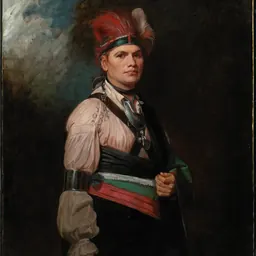
Related people
Same field, nearest in time


Contemporaries
People whose lives overlapped John Butler's





Frequently asked questions
Who was John Butler?
Loyalist who led an irregular militia unit known as Butler's Rangers on the northern frontier in the American Revolutionary War
When was John Butler born?
John Butler was born in 1728 in New London.
When did John Butler die?
John Butler died on 13 May 1796 in Niagara Falls.
What was John Butler's occupation?
John Butler was a diplomat.
What nationality was John Butler?
John Butler was British.
Sources & further reading
· DBpedia: John Butler (Ranger)
Cite this page
APA: Biography.guide. (2026). John Butler. https://biography.guide/john-butler-diplomat/
MLA: "John Butler." Biography.guide, https://biography.guide/john-butler-diplomat/.
Chicago: "John Butler." Biography.guide. https://biography.guide/john-butler-diplomat/.
Data last updated: 2026-09-26 · Spot an error? Report a correction.
Page generated 2026-09-27 05:14 UTC